Fontilles. A 100 year struggle for a leprosy-free world
|
Fontilles
A 100 year struggle for a
leprosy-free world
From 2 December 2010 to 27 February 2011
Exhibition room – Palau de Cerveró (Pl.
Cisneros, 4)
From Monday to Friday, from 9 to 20 h.
|
|
Palacio de Cerveró [+] |
| |
|
 |
| |
|
Organised by López Piñero History of Medicine and
Science Institute / UV Department for Culture
Curators: Daniel Benito / Nuria Blaya / Josep Bernabé /
Teresa Ballester
Anniversaries of hundred-year-old events, like that of
Fontilles Sanatorium (Vall de Laguar, Marina Alta) on 17
January 2009, usually prompt a number of events and
initiatives that help understand long-standing and vital
projects, as is the case with Fontilles. From the
initiatives put forward for the celebration, two
exhibitions about Fontilles and its 100 year struggle
for a leprosy-free world stand out. They will
be held at López Piñero Institute (CSIC-Universitat
de València). Though from different approaches, both
exhibitions complement each other in their view of the
history of Fontilles from its outset to date. |
| |
|
 |
 |
| |
|
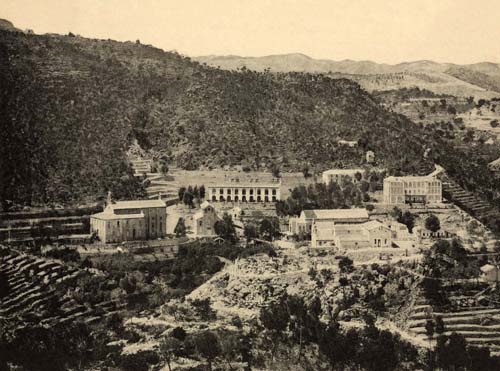
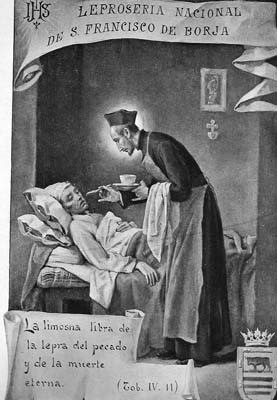
Entitled Saint Francis Borgia Leper Colony. The onset
of a centenarian project, the first exhibition was
organised by the Centre d’Estudis i Investigacions
Comarcals Alfons el Vell of Gandia, following their wish
to join the celebrations with a series of photographs
that show the philanthropic, healthcare, and scientific
principles that guided the project in the 1910s and
1920s. The curators are Josep Bernabeu-Mestre and Teresa
Ballester Artigues, and it includes more than 50 images,
most of them from the Tivoli collection of Alcoi. Many
of these photographs were taken by the photographers
Isidro Laporta and Josep Tomás. The pictures allow us to
get to know the transformation of Fontilles in the early
years, the patients’ features, the leprosy varieties
they suffered, the type of healthcare, or the rules of
the sanatorium –named after Saint Francis Borgia– that
those hit by disease had to observe. The exhibition also
shows the epidemiological dimension of leprosy and the
propaganda system that allowed the project to be spread
and alms and donations to be collected for the
construction of the Sanatorium. |
| |
|
 |
| |
|
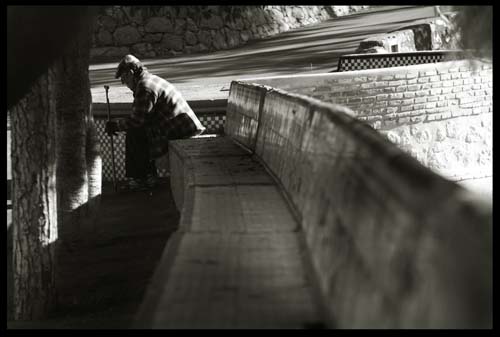
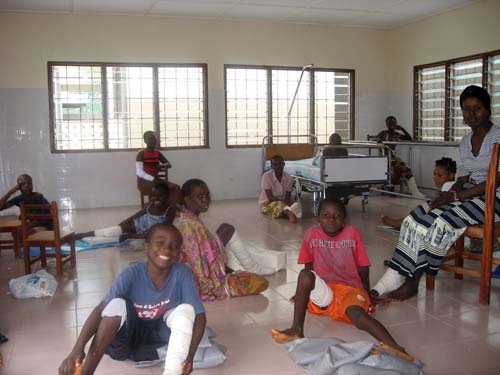
Curated by Daniel Benito and Nuria Blaya, the second
exhibition was organised for the anniversary by
Fontilles Association, and now is also part of the
current show. It is focused on the philosophy and
objectives behind the foundation of the sanatorium
which, a hundred years later, continue being at the
basis of the activities of the Association: putting an
end to the disease’s stigma, taking care of sufferers,
and developing research and training. And, above all,
trying to bring citizens closer to the more humane side
of Fontilles. The exhibition aims to give an optimistic
overview of one of the most dreaded diseases in history,
and to remind us that it can be cured. But a lot of work
still needs to be done in some countries. A hundred
years later, Fontilles keeps on struggling in and out of
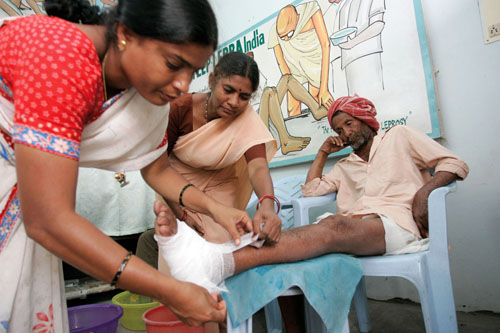
the valley where it is located. Fontilles has a history,
but Fontilles is not history. |
| |
|
|
|
|
|
 |
|
|
|
 |
|
|
|
|
| |
|
|
|

