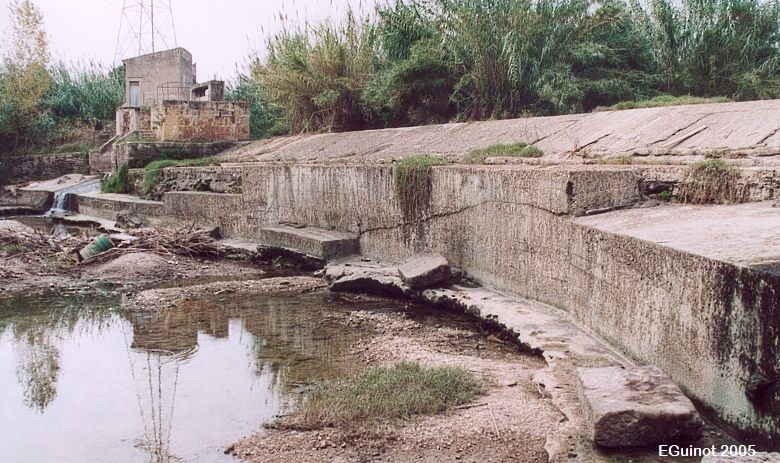
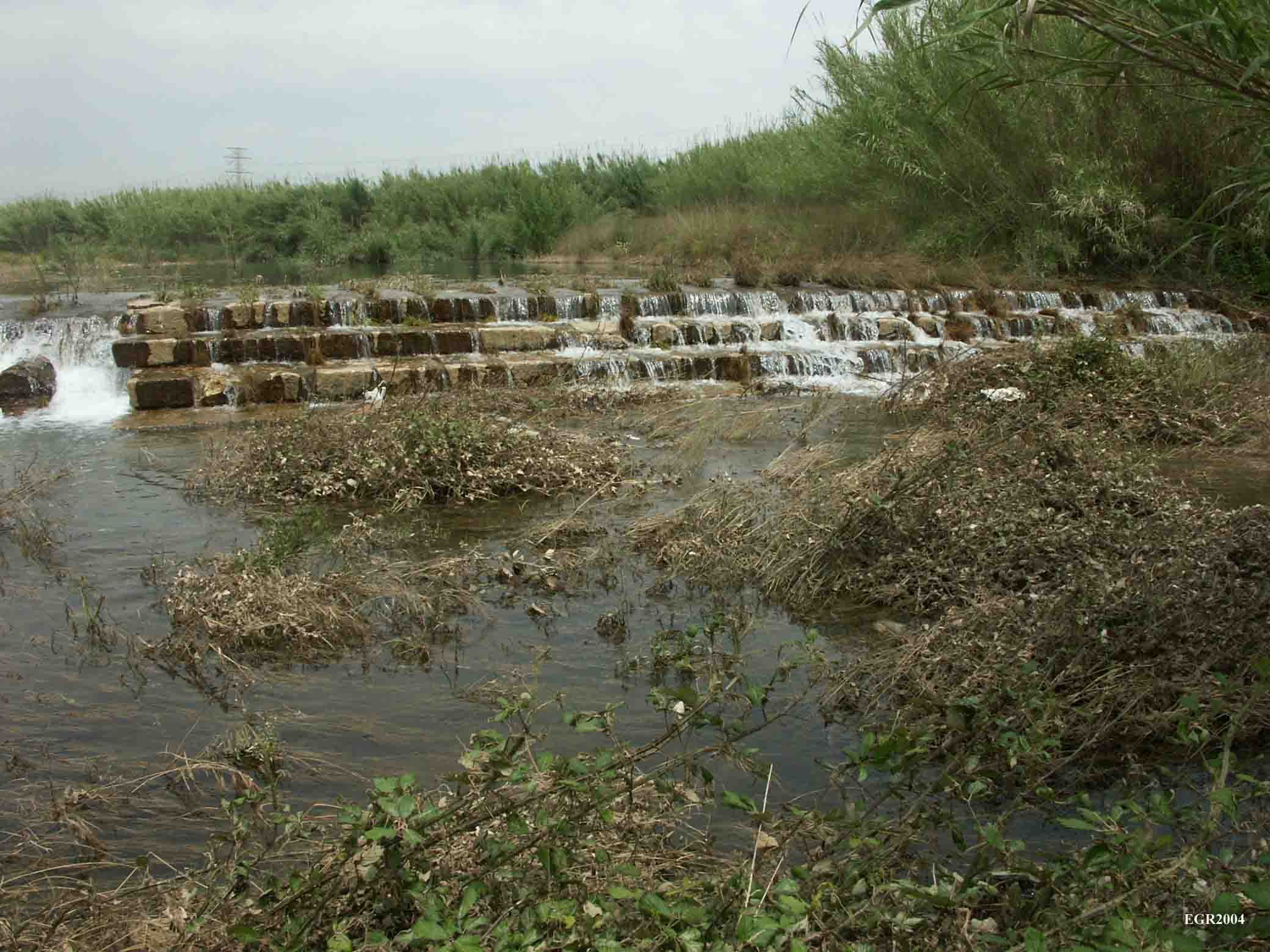
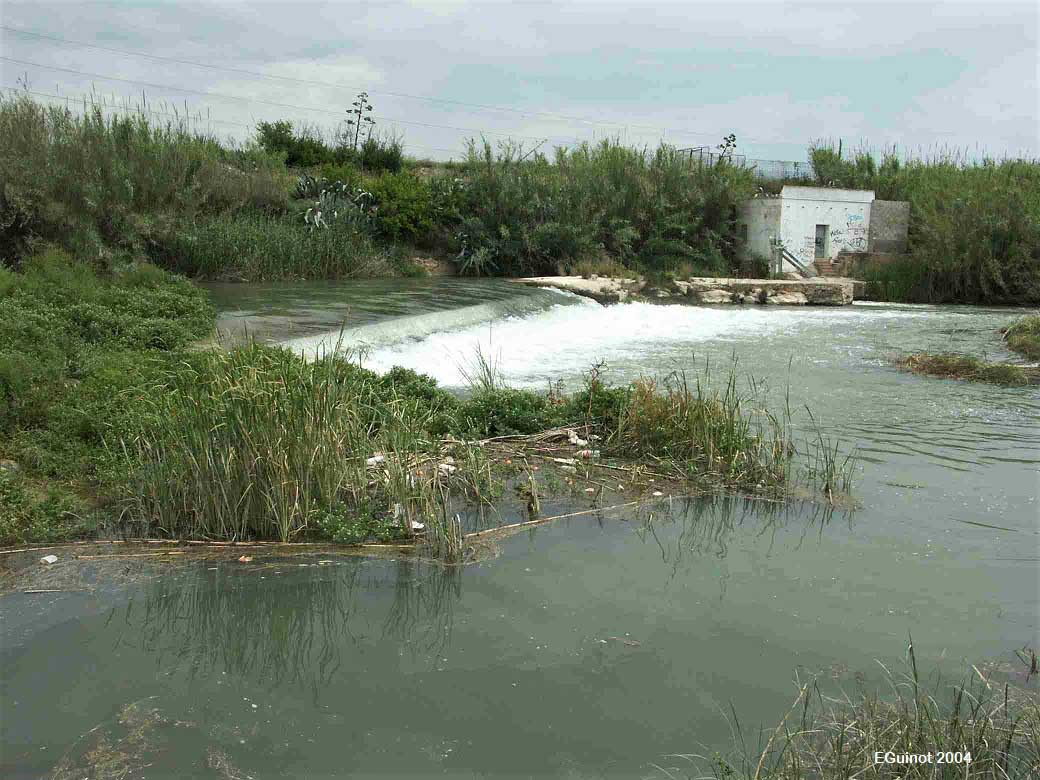
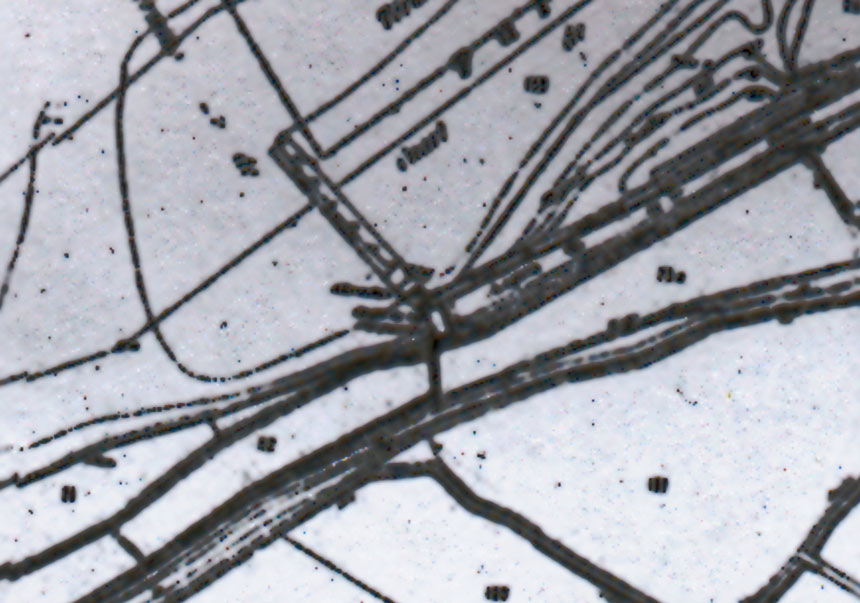
An “assut” is a dam or stop built in the middle of a river with the aim of stopping and diverting its water head, usually partially, to direct it towards the entrance of the canal or dry dock that begins at the same time as the river. Its name derives directly from the Arabic, as many words of the Valencian agricultural world. An “assut” is usually built at a point where the river is running with a certain diagonal direction to the current so as to facilitate the entry of the water through the mouth of the irrigation canal.
According to documents of medieval times, “assuts” were built quite simply and cheaply, with trunks of trees nailed to the riverbed to make a palisade. Between them, the space was filled with shafts, canes, stones, bristles and even weeds, so that the water could circulate in the best way possible. This simplicity did not require complex technical directions and the testimonies indicate how they were made by the “sequiers”, namely, the users of the irrigation canal. Logically, this simplicity was also its greatest weakness: a revival of the river with the crescents due to the strong rain would often destroy the dam, which forces people to build it again. They were simple and cheap, but unstable. As a result of this, from the end of the 16th Century onwards, the dams of the river Turia began to be made of stone and mortar, in a much more solid but also expensive way, and with the intervention of technicians outside the rural community. In fact, these “assuts” are the ones that have arrived to our days after reconstructions, with their typical and recognisable image of the steps with big, carved stones, the “escalates”.
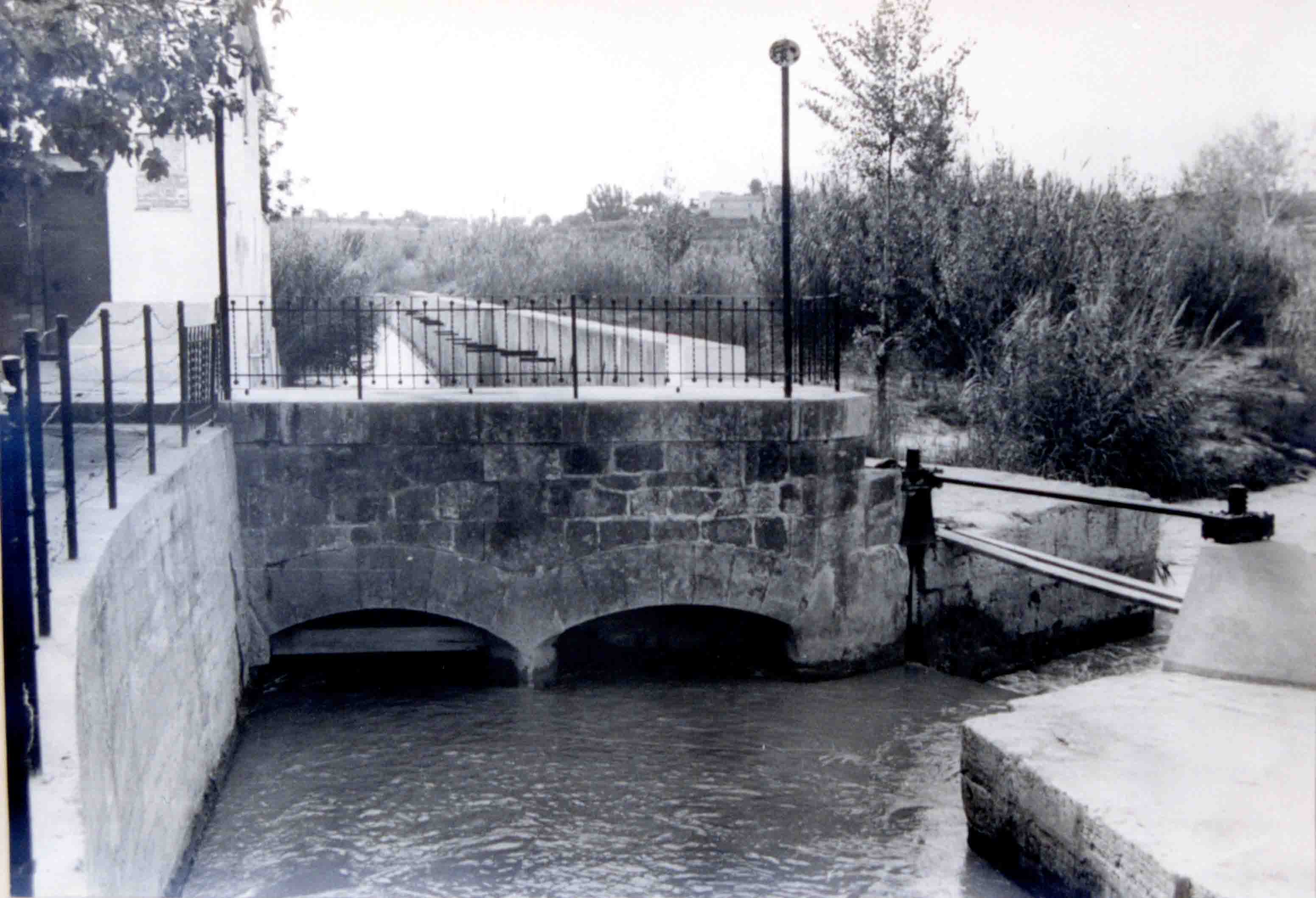
The entrance to the irrigation canal, on the other hand, has always been a construction site to give a solid front to the passage of the water. Its self-explanatory, traditional name is that of “gola”. In the last centuries, it has had floodgates to open and close the canal, especially as protection against the rise of the river and the entrance of land, dirt and grass. This is why these constructions have been done and re-done numerous times, because they were the first ones to be hit by rise of the river.
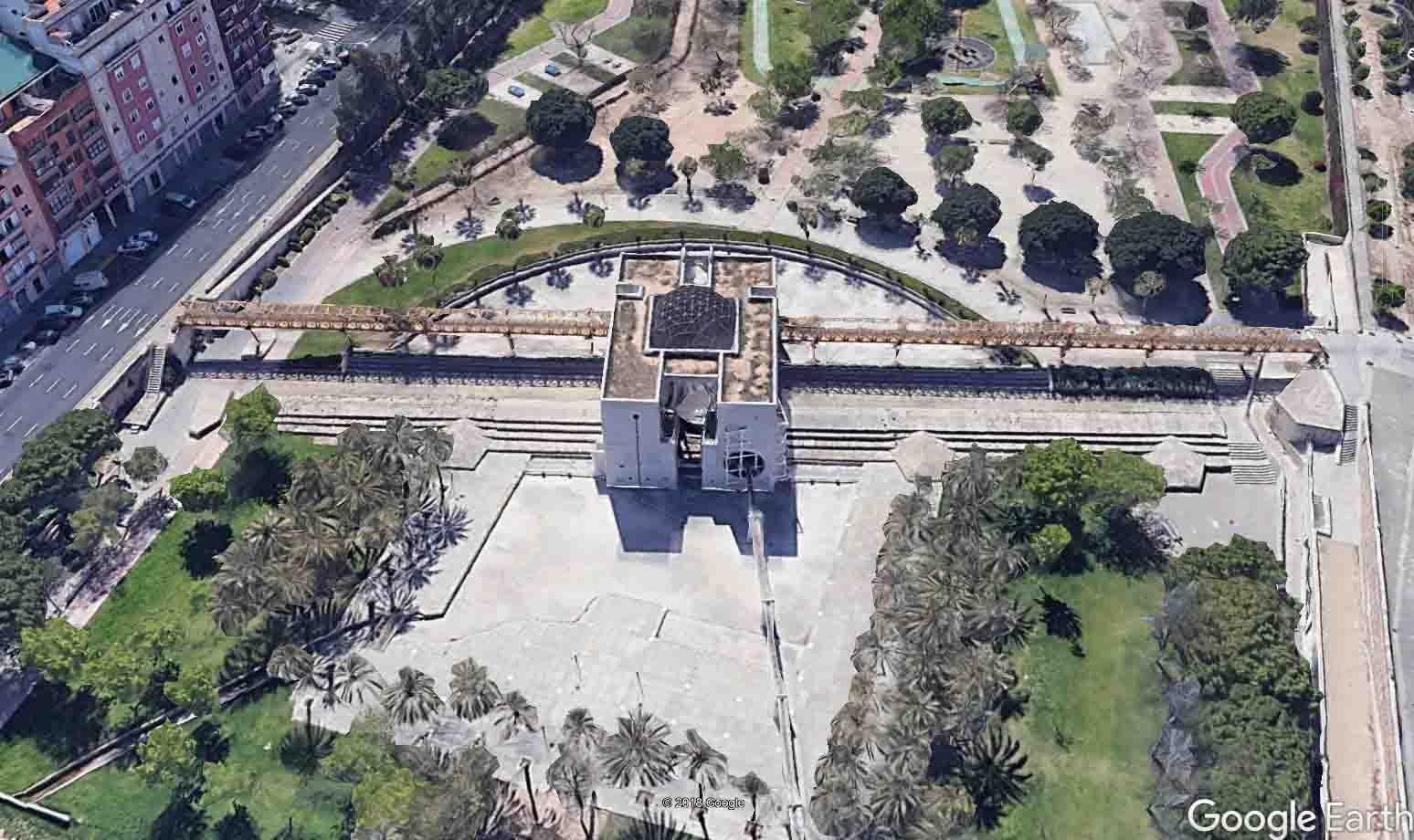
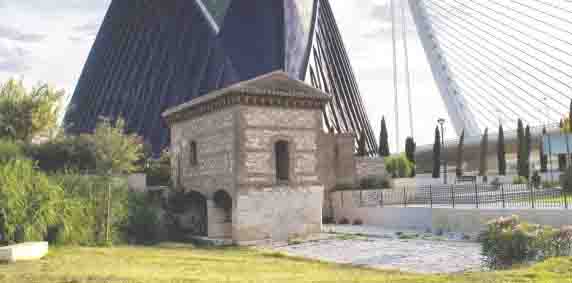
Together with these “goles”, all the “assuts” of the River Turia have a regulated behaviour at their ends, before entering the water in the dry land. They are known as “almenara”, again of Arab origin ("the tower"), and their function is to regulate the water that enters each of the droughts to distribute the riverbed so that it is water for all of them and, in times of drought, it can be rationed.
Due to its historical and patrimonial value, the set of “assuts” of the river Turia in the Horta de València have been declared Béns d'Interés Cultural (BIC) by the Valencian Government.