

L’Horta of Valencia is considered by many to be a basically flat territory, so it can be thought that it may require hydraulic engineering works of a certain magnitude to resolve the transport of water through the irrigation canals that create it.
But, in reality, it is not only inclined on a general slope from west to east, all the way to the sea, but also rippling in many parts so that there are both elevations and depressions, obviously only a few metres in general, but which are perpendicular to the course of many of the canals or sections of them. These depressions are called “paleo-barrancs” (paleo-gullies) and in many cases they were chosen to build roads, the so-called " deep roads ". However, there are a few cases that are true gullies, such as the En Dolça gully that goes down from Benimàmet to the Turia river, or the Salt de l’Aigua gully in Manises. And there are at least three of some importance, especially the Torrent, Paiporta or Catarroja ravines, in Horta-sur, and the Carraixet gully, and to a lesser extent the Calderona gully, in the Horta Nord.
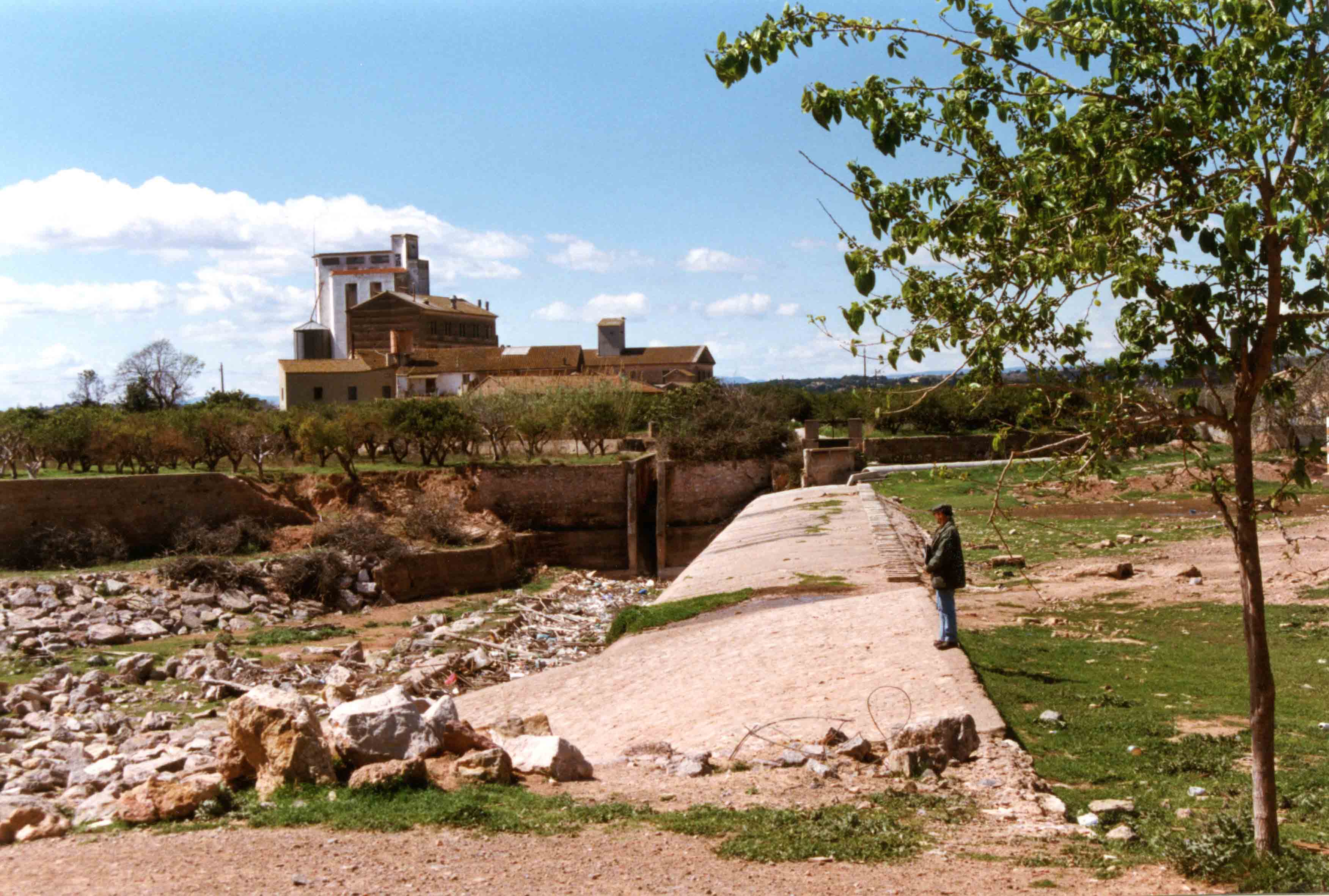
Many of them were crossed by l’Horta's irrigation canals over the centuries by means of a small levee of earth that crossed the gully or ravine perpendicularly and rushed so that the water would pass to the other side. But in the cases of greater depth, as in the case of the Carraixet and the Catarroja gully, the most lasting solution, but also much more expensive, was either to build an aqueduct up from the ground, or a siphon from below, the latter construction having historically received the name of “cano” in our land.
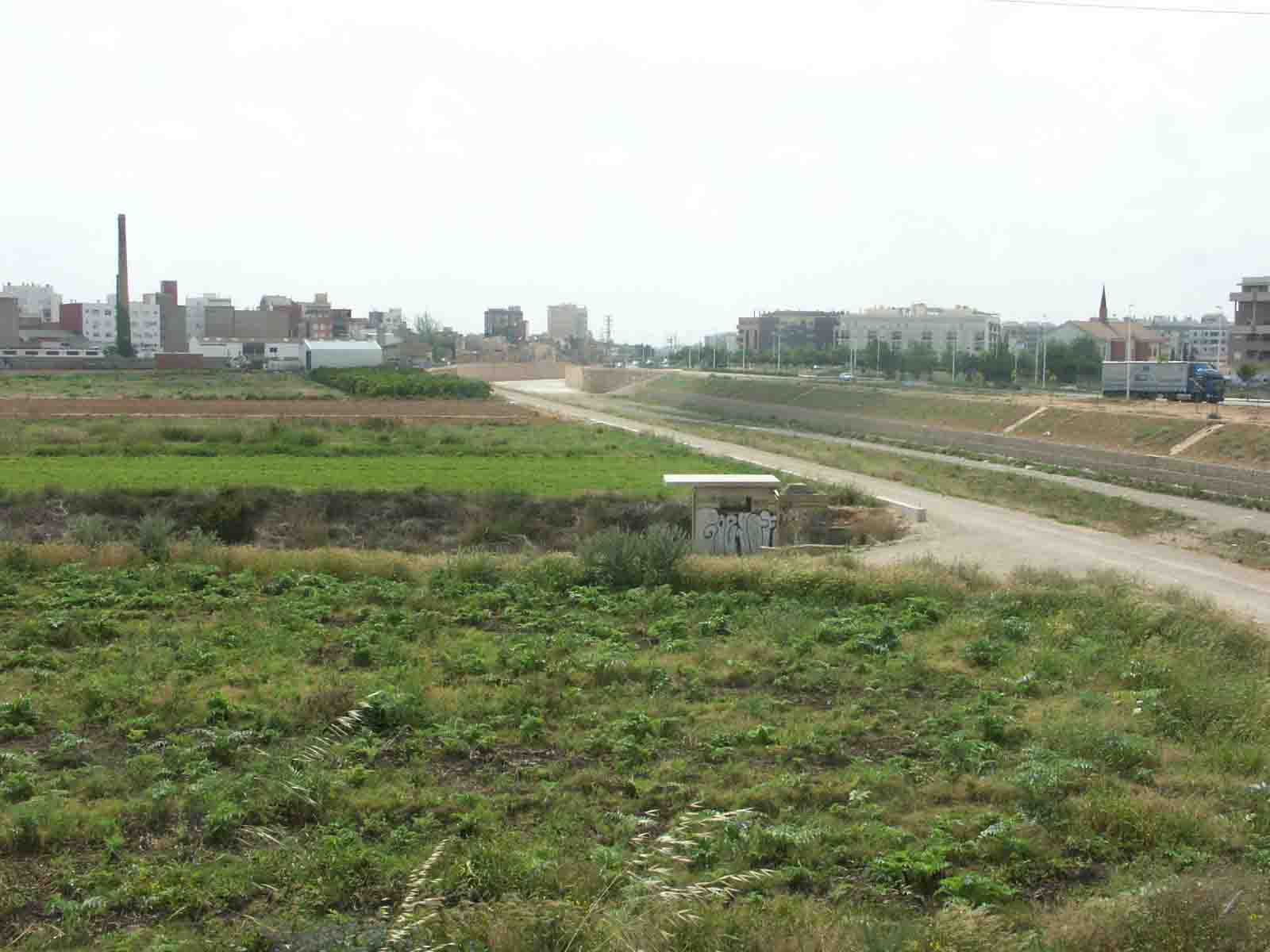
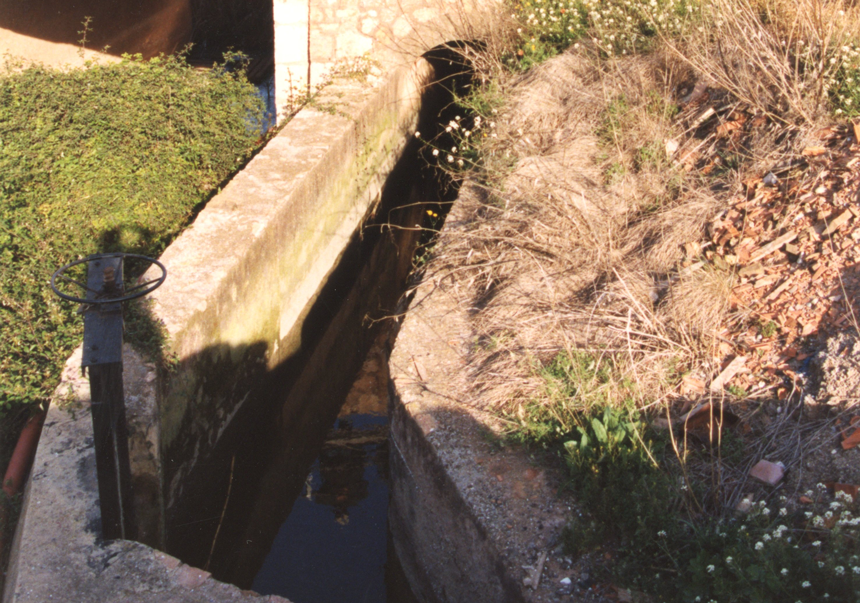
They are economically expensive works since they are made of stone and mortar, in addition to the hole for their construction. They are very durable over time precisely because they are located underground and are not affected by floods. But this last trick also affects the knowledge of their existence and the value of their heritage, since they are almost totally invisible, as is logical. Little further can be documented than the two huts on either side of the ravine which indicate where the canal enters the ground and where it emerges again.
In l’Horta of Valencia there are three irrigation canals that ended up deciding to build these “canos” or siphons: the Royal Canal of Montcada in the Carraixet gully; the Canal of Rascanya, also in the Carraixet gully, and the Canal of Favara in the Catarroja gully. The first one in the middle of the 17th century and the other two in the middle of the 18th century.






© 2026 UV. - Av. Blasco Ibáñez, 28. 46010 València. Spain. Phone UV: (+34) 963 86 42 44