
A research group from the Institute of Corpuscular Physics (IFIC, UV/CSIC) and the Oceanogràfic will study the high level of acidity in seas and oceans as an effect of climate change. The work is based in the usage of a new non-invasive tecnique that is financed by the agencia Estatal de Investigación, the Generalitat Valenciana and the Istituto Nazionale di Fisica Nucleare in Italy.
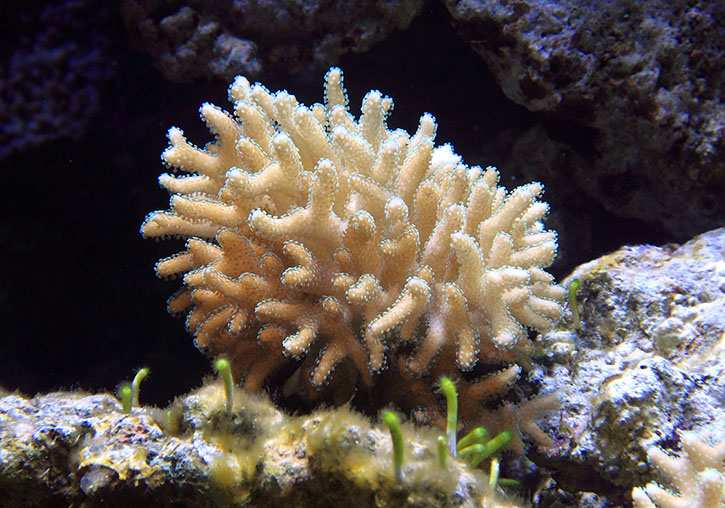
The project’s name is REMO (Radiotrazadores para el estudio de Ecosistemas Marinos y Oceánicos). Their aim is to analyse the climate change effects on marine fauna, which is affected by the high levels of acidity in oceans. This effect is a result of the increased CO2 emissions in the atmosphere. According to the team, executing this study on corals and molluscs is fundamental, since these organisms build their skeletons or shells with calcium carbonate, therefore, the increased acidity in the waters will harm their development.
The project will be carried out in two aquariums from the Oceanogràfic and a detector, developed with nuclear technology by the Institute of Corpuscular Physics, will be the main tool to analyse the calcium absorbed by the invertebrates. This tecnique utilises a water-dissolved radiotracer –Radioactive 45 Calcium– which measures the calcium quantity in a non-harmful way for the animals. This method will also allow to monitor the calcium intake in a same individual throughout its growth and development, which is a novel practice in Spain.
In addition, the Institute of Corpuscular Physics group also aims for the implementation of its usage in other scientific research realms with marine ecosystems, such as the nutrition, parasitology, microbiology and ecology fields.
This improvement will also allow to have a better understanding of how calcification works in organisms, including humans, contributing as well to improvements in biotechnology in the field of medical science.
It is a multidisciplinar initiative that is financed through national projects by the Agencia Estatal de Investigación; by the Valencian Government, through the ThinkInAzul initiative; and the Italian INFN. The Instituto de Física Cospuscular is leading the project and the Oceanogràfic of Valencia, the Instituto de Acuicultura Torre de la Sal (IATS-CSIC) and the Istituto Nazionale di Fisica Nucleare de Italia (INFN-LNL) will be participating as well. The REMO project will last three years.
The consequences of acidity in the oceans.
Acidity in the oceans is not only a danger to the marine environment, but also to food security and to economy. As a consequence of human activity, 60% or coral reefs around the world are in danger and it is estimated that, at this rate, more than half of them could disappear by 2030. 25% of marine biodiversity is found in coral reefs and the degradation of coral reefs affects biodaversity globally.
Just like some molluscs, such as mussels and conches, corals deposit calcium carbonate in their skeletons and shells. An increase in the acidity of the water would affect their development, especially in the initial phases, altering their growth and making them more fragile and vulnerable to their predators. This is a chain reation that would also affect biodiversity, the balance of the marine ecosystem and, consequently, the whole planet.