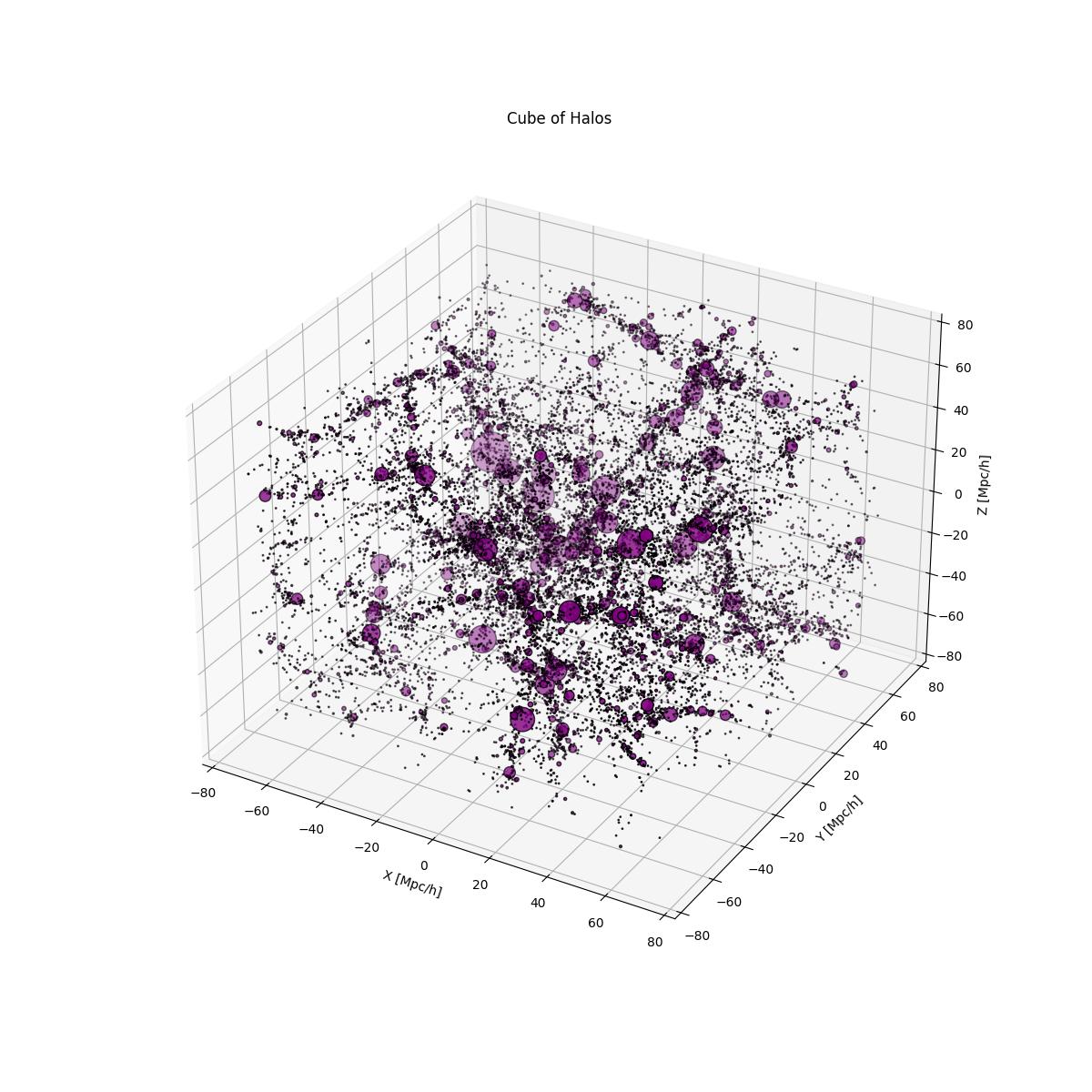
Halo Population Map
Large-scale spatial distribution tracing halo structure.
GdCC Multimedia
A selected visual representation of how gravity, plasma, and turbulence shape the universe at all scales.
From filaments stretching across hundreds of megaparsecs to the amplification of primordial magnetic fields in galaxy clusters, through the life cycle of generations of stars, each numerical step of the simulation captures physical phenomena that cannot be directly observed in real time but that we can now photograph here.
All image rights are reserved. If you are interested in using any material, please contact the GdCC group.
Interactive model
Interactive 3D visualization of a 40 Mpc comoving MASCLET simulation box at z=7. Density contours trace the emerging cosmic web, while magnetic field lines highlight the dominant MHD amplification mechanisms.
Blue lines: Compression along infalling structure. Red lines: Stretching in turbulent regions.
Featured Simulation
The hierarchical formation of a central galaxy as a result of the merger between smaller galaxies as time progresses.
Watch full simulation
Large-scale spatial distribution tracing halo structure.
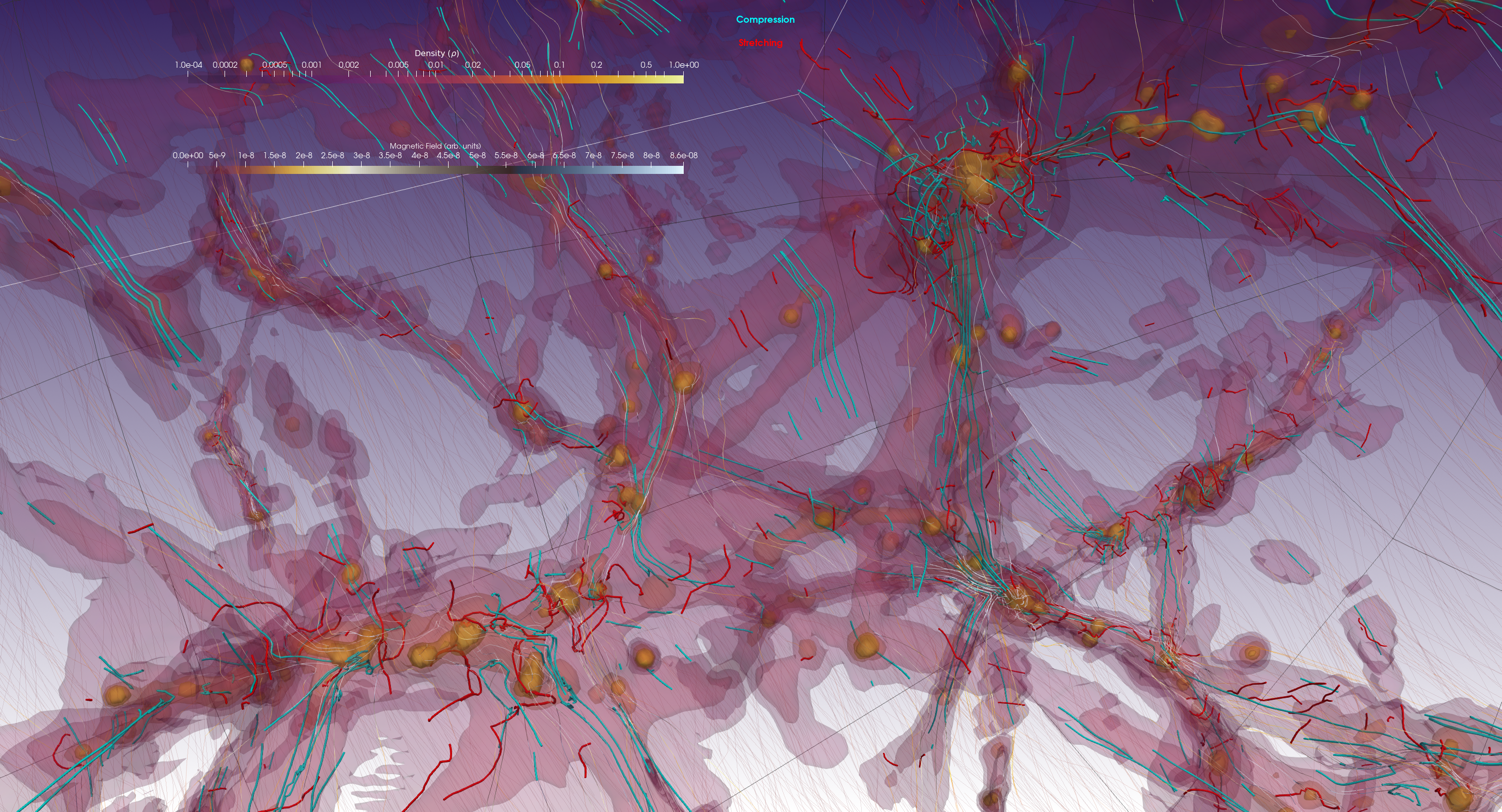
Field morphology highlighting how magnetic fields are induced along the different cosmic early structures.
Density map of a periodic box of a hydrodynamical + N body simulation of 147.5 Mpc comoving side length.
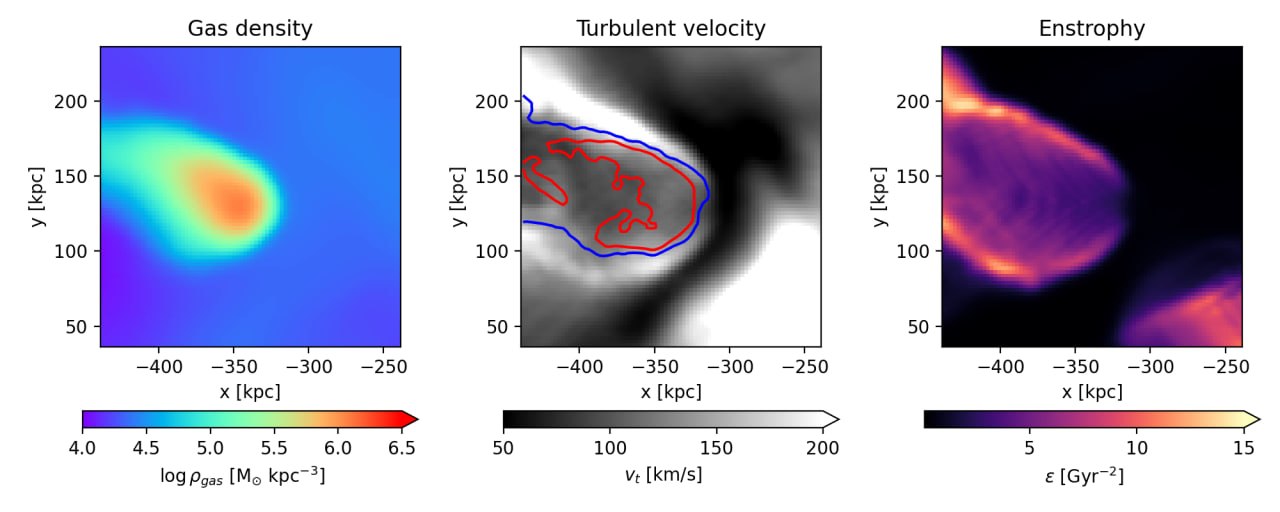
Development of turbulence in the tail of a jellyfish galaxy falling in a massive galaxy cluster at z = 0.5.
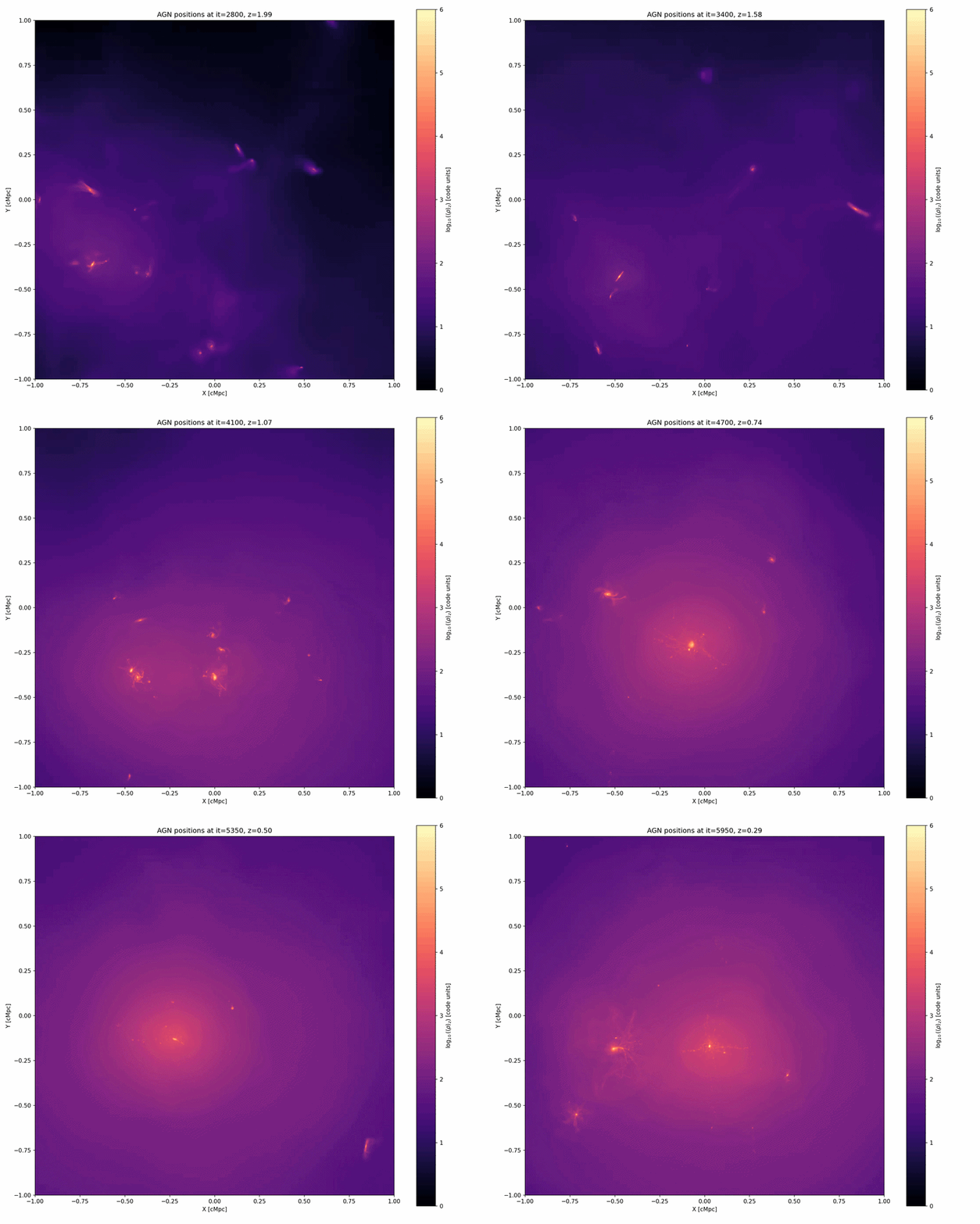
The hierarchical formation of a central galaxy as a result of the merger between smaller galaxies as time progresses.
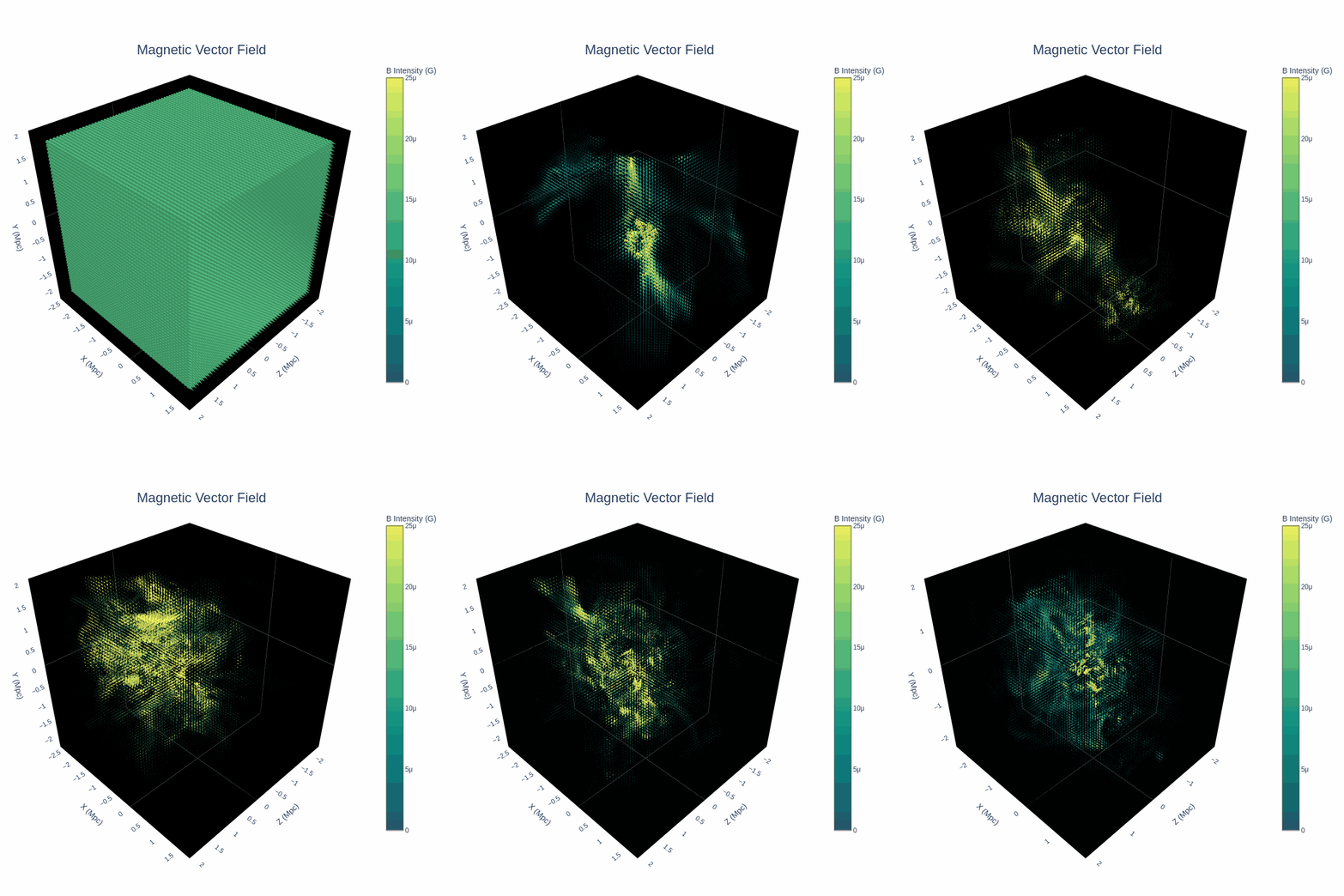
Time-resolved amplification and reorganization of the magnetic field component in a cluster.
Weak primordial seed generated for the beginning of the simulation.
Field morphology highlighting how magnetic fields are induced along the different cosmic early structures.

Scanner of the dynamic resolution strategy concentrating computation on physically active regions.
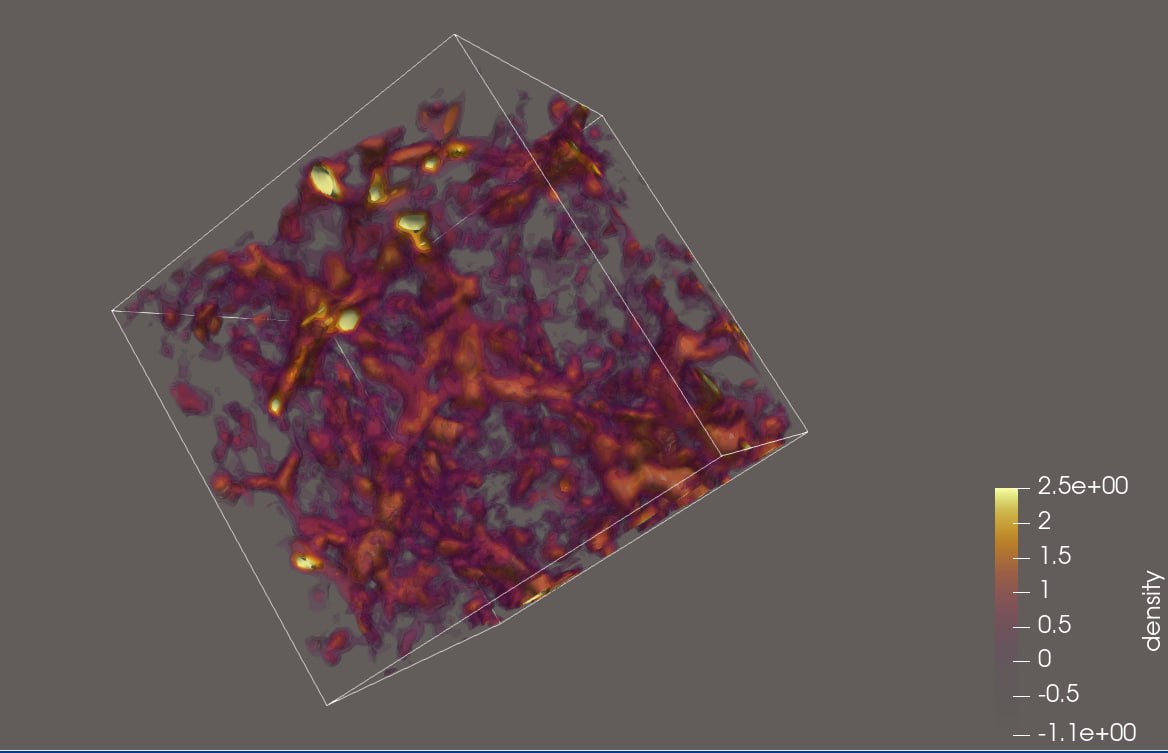
N-body simulation at z = 0 created entirely using the generative model "Conditional Wasserstein Generative Adversarial Network".
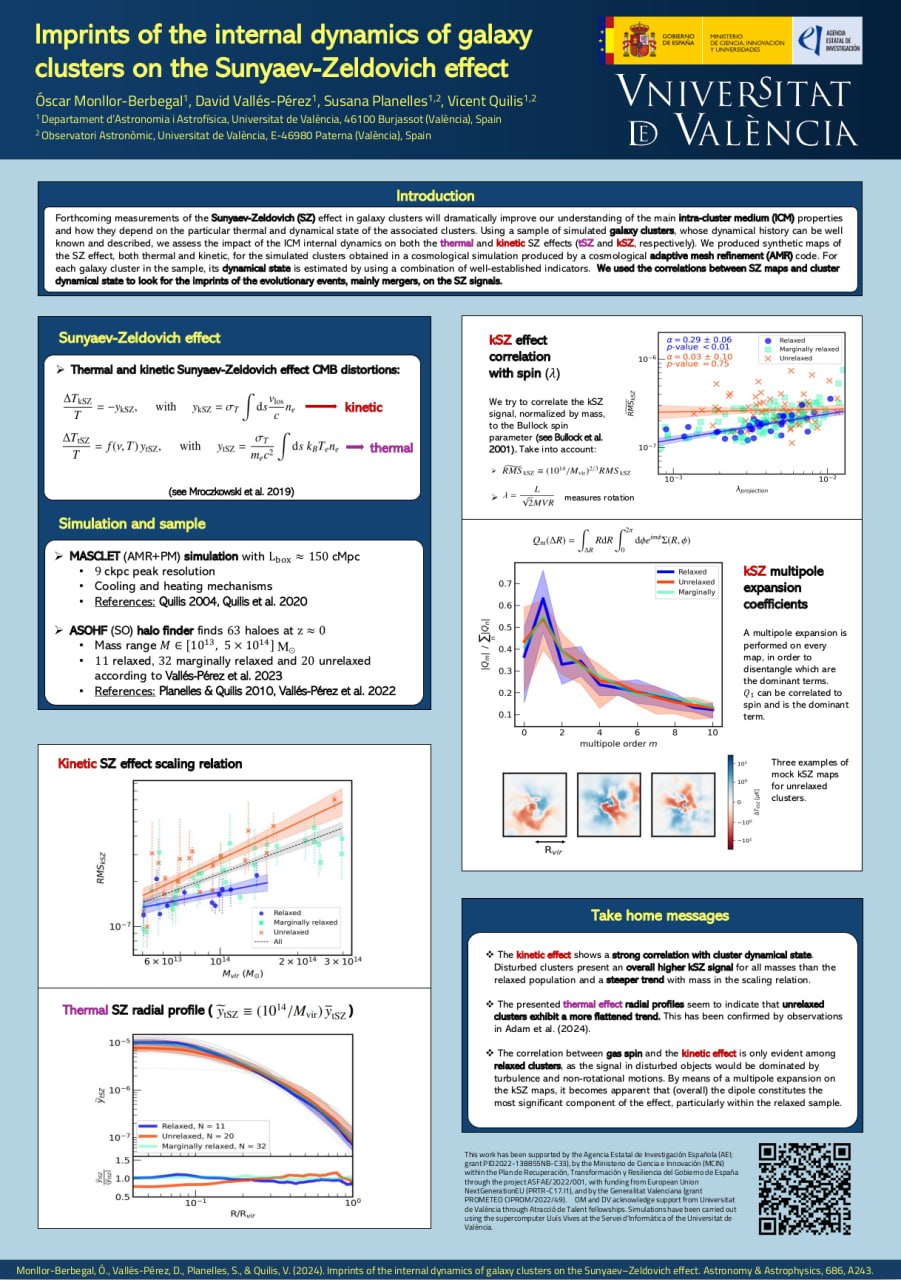
Conference poster
This poster was presented at the SEA Scientific Meeting in 2024.
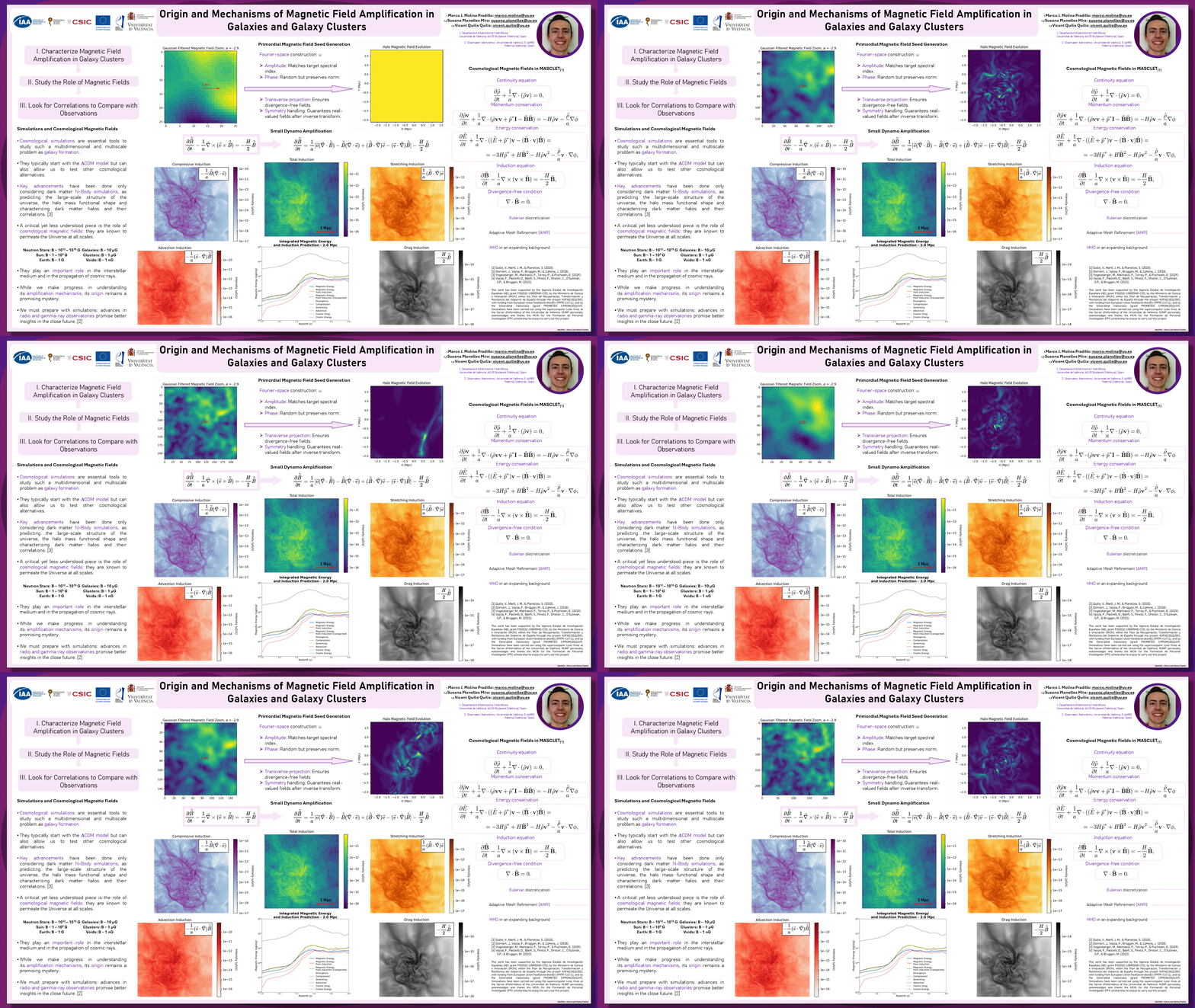
Conference poster
This poster was presented at the 2nd IAA-CSIC Severo Ochoa Advanced School on Galaxy Evolution in 2025.

Conference poster
This poster was presented at the 2nd IAA-CSIC Severo Ochoa Advanced School on Galaxy Evolution in 2025.
Each visual compresses billions of years of evolution into seconds. What appears as smooth color gradients encodes density, temperature, magnetic intensity, or velocity fields, computed by solving coupled gravitational and magneto-hydrodynamic equations on supercomputers. These simulations help us connect theory with observations, test physical models, and design future surveys.
Are you a researcher, communicator, or journalist interested in GdCC simulation assets? We can share high-resolution renders, contextual explanations, and collaboration pathways for outreach or scientific partnerships.