Contact - Group Members
In active members
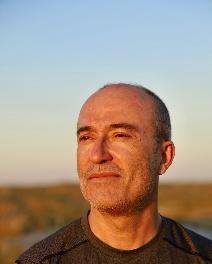
Full Professor of Astronomy and Astrophysics at the Universitat de València. His research interests lie in the field of Computational Cosmology specially focused in the development of advanced mathematical models and computational methods to solve complex physical problems. He has used numerical simulations to study several cosmological scenarios, ranging from large-scale structure of the Universe, galaxy clusters, galaxy formation and evolution, to gravitational waves in a cosmological context.
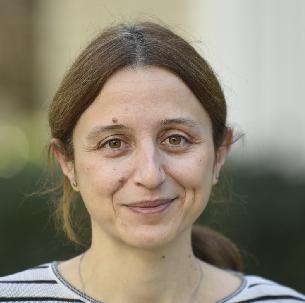
Associate professor at the Department of Astronomy and Astrophysics of the University of València and member of the Astronomical Observatory of the same university. Her research interests are framed within the field of Computational Cosmology and, in particular, in the development and analysis of large cosmological simulations with the aim of exploring the formation and evolution of the large scale structure of the Universe and the main thermodynamical properties of galaxies and galaxy clusters.
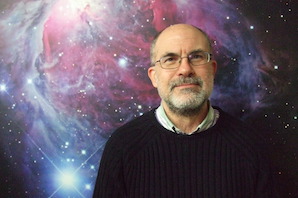
Full professor of Astronomy and Astrophysics at the University of Valencia. His research interests include the simulation of relativistic outflows in astrophysical scenarios, specifically extragalactic jets at sub-parsec, parsec and kiloparsec scales, and the development of computational methods for relativistic hydrodynamics and magnetohydrodynamics.
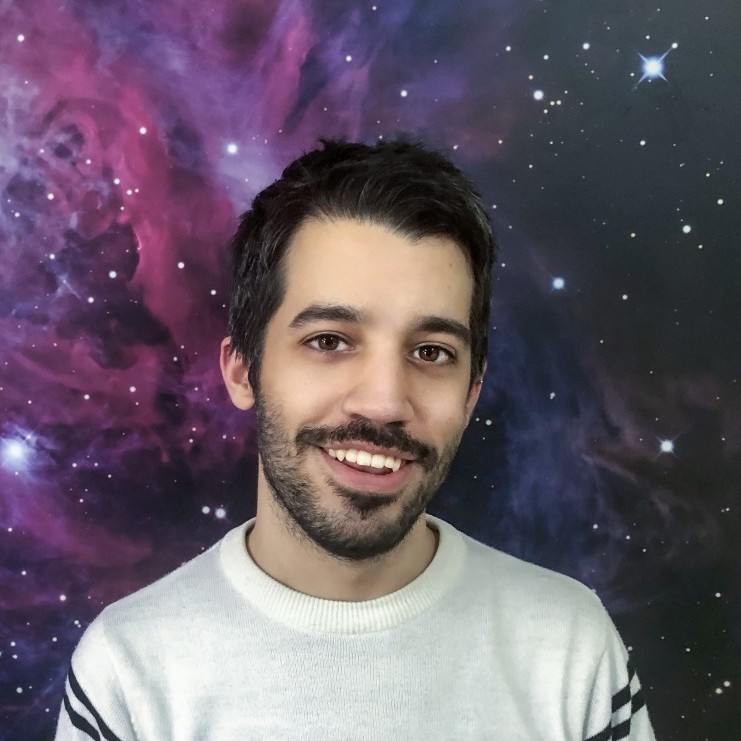
Postdoctoral Researcher at the DIFA-UniBo and IRA-INAF, currently working within the ERC-funded project BELOVED on the thermal and non-thermal structure of galaxy protoclusters from the lens of numerical simulations, with emphasis on their magnetism and radio observables. He obtained his PhD in September 2024 within our group, where he studied the assembly of galaxy clusters and the hydrodynamical processes of the intracluster medium, including shocks and turbulence. He has also contributed extensively to the development of public codes for the analysis of hydrodynamical and cosmological simulations. In a broader sense, his research interests also include cosmic voids, galaxy evolution, and relativistic jets.
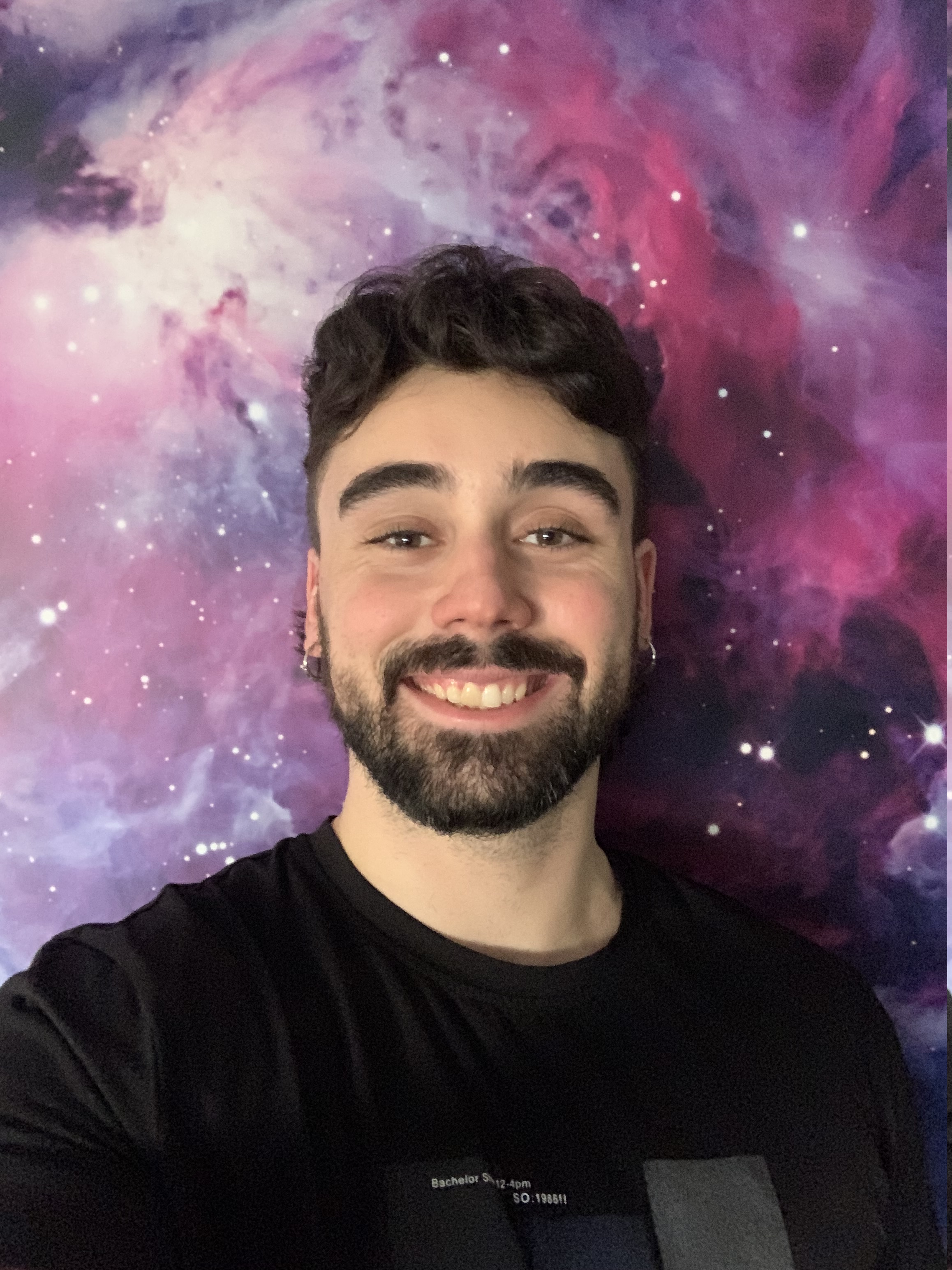
Pre-doctoral researcher in the Department of Astronomy and Astrophysics at the University of Valencia. He holds a four-year pre-doctoral fellowship from the Generalitat Valenciana (CIACIF/2023/466) and began his PhD in November 2024. His doctoral research focuses on the study of the large-scale structure of the Universe using state-of-the-art numerical cosmological simulations. In particular, his work began with the study of how hydrostatic mass bias varies during major mergers in galaxy clusters, and currently his research is focused on the identification and characterisation of the cosmic web, with special emphasis cosmic filaments, and on understanding galaxy evolution within these environments.
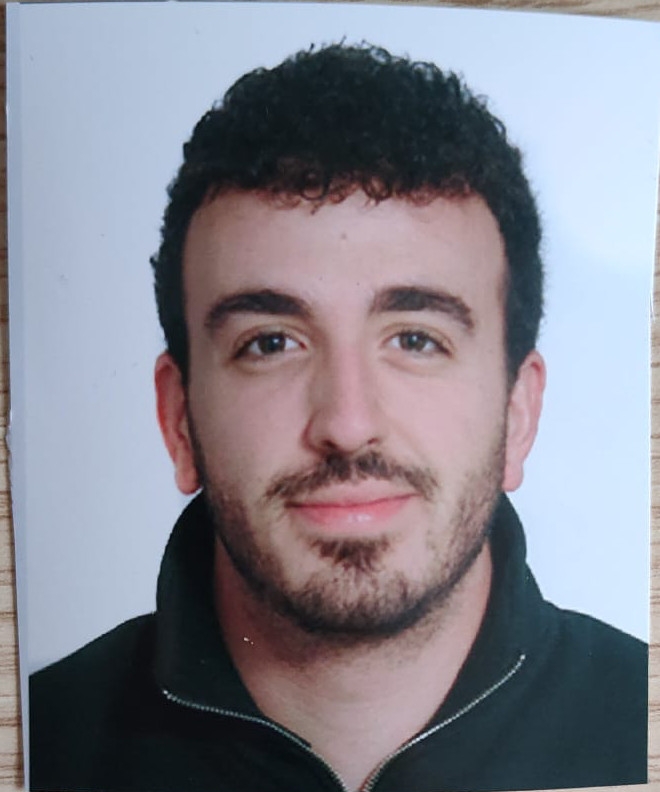
Pre-doctoral researcher in the Department of Astronomy and Astrophysics at the University of Valencia. Granted with the “Atracció de talent” fellowship (INV22-01-13-01) from the UV in July, 2023. His research began with the Sunyaev-Zel'dovich effect in clusters of galaxies and its relation to cluster dynamical state, and continued elaborating new void finder (AVISM) able to capture the complex shape of these structures in the cosmic web. He is also interested in developing and improving analysis tools for cosmological simulations and has participated in the developement and mantainance of the MASCLET code. Other interesting topics that he is working on involve galaxy formation and evolution and turbulence within galaxy clusters.
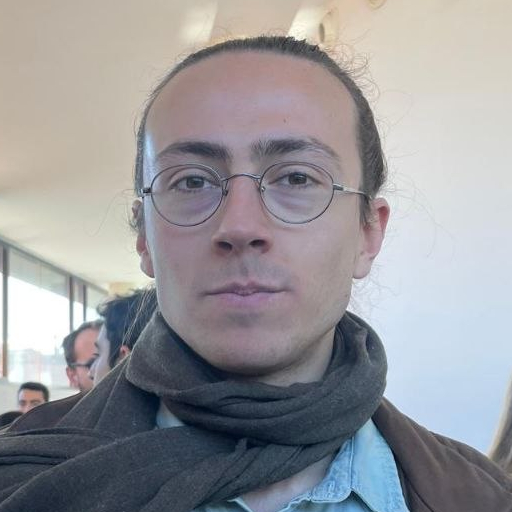
Pre-doctoral researcher in the Department of Astronomy and Astrophysics funded by the fellowship from the Spanish Ministry of Science, Innovation and Universities under the “Proyectos de Generación de Conocimiento” programme (PID2022-138855NB-C33). His doctoral research began in January 2024 and focuses on the study of cosmological magnetic fields and their role in the formation and evolution of large-scale structure, using state-of-the-art numerical cosmological simulations. In particular, his work investigates the origin, amplification, and impact of magnetic fields in different cosmic environments, as well as their interplay with galaxy formation processes.
Pre-doctoral researcher in the Department of Astronomy and Astrophysics at the University of Valencia, funded by the PROMETEO program (CIPROM/2022/49) since October 2023. Her doctoral research is focused on applying machine learning techniques in cosmology, aiming to develop generative models based on Generative Adversarial Networks (GANs). She is currently working on conditional Wasserstein GANs to generate realistic outputs comparable to N-body cosmological simulations. The goal is to produce results that reproduce key statistical properties of the Universe enabling faster and more efficient exploration of cosmological models while avoiding traditional numerical methods.
Former members

Former postdoctoral researcher in the Department of Astronomy and Astrophysics at the Universitat de València since September 2025 until August 2026. They completed their PhD in 2023 at the Instituto de Física Teórica (Universidad Autónoma de Madrid + CSIC) under the supervision of Miguel A. Sánchez Conde, after which they undertook a two-year postdoctoral fellowship at Durham University, working with Carlos Frenk, Adrian Jenkins, and Sownak Bose. Their field of study is dark matter indirect searches using computational cosmology, particularly through cosmological and numerical simulations to understand the smallest structures in the Milky Way and their potential gamma-ray signals.