Invited Speakers
Marlene Kretschmer

Bio: Marlene Kretschmer is a Junior Professor of Climate Causality at Leipzig University, Germany. She studied mathematics before completing a PhD in climate physics at the Potsdam Institute for Climate Impact Research and subsequently worked as a postdoctoral researcher in the Department of Meteorology at the University of Reading (UK). Her research focuses on the large-scale drivers of regional weather and climate, including extreme events, and on improving predictions from subseasonal to long-term climate timescales. Her work spans stratosphere–troposphere coupling, Northern Hemisphere midlatitude dynamics, tropical teleconnections, and Southern Hemisphere climate variability, using causal inference and machine-learning methods integrated with physical understanding.
Abstract: Understanding Regional Climate Variability through Causal Data Science and Machine Learning
Regional climate predictions and projections remain subject to substantial uncertainties, and progress depends critically on improving our causal understanding of the climate system. Important sources of predictability arise from large-scale modes of internal variability, such as the El Niño–Southern Oscillation (ENSO), the Madden–Julian Oscillation (MJO), and the stratospheric polar vortex (SPV), which influence regional weather and climate through teleconnections. However, their combined impacts are difficult to quantify due to nonlinear interactions, non-stationarities, and complex spatiotemporal dependencies.
Machine learning provides powerful tools to identify patterns in high-dimensional climate data, but purely data-driven approaches often struggle with interpretability and causal attribution. Causal data science offers a complementary framework that integrates machine learning with causal inference to move beyond correlation and identify mechanisms shaping regional climate variability and extreme events. In this talk, after a brief introduction to causal concepts, I will present examples illustrating how causal inference and machine learning can be combined to analyse teleconnections and improve the statistical explanation and prediction of regional climate variability and change.
Sebastian Engelke
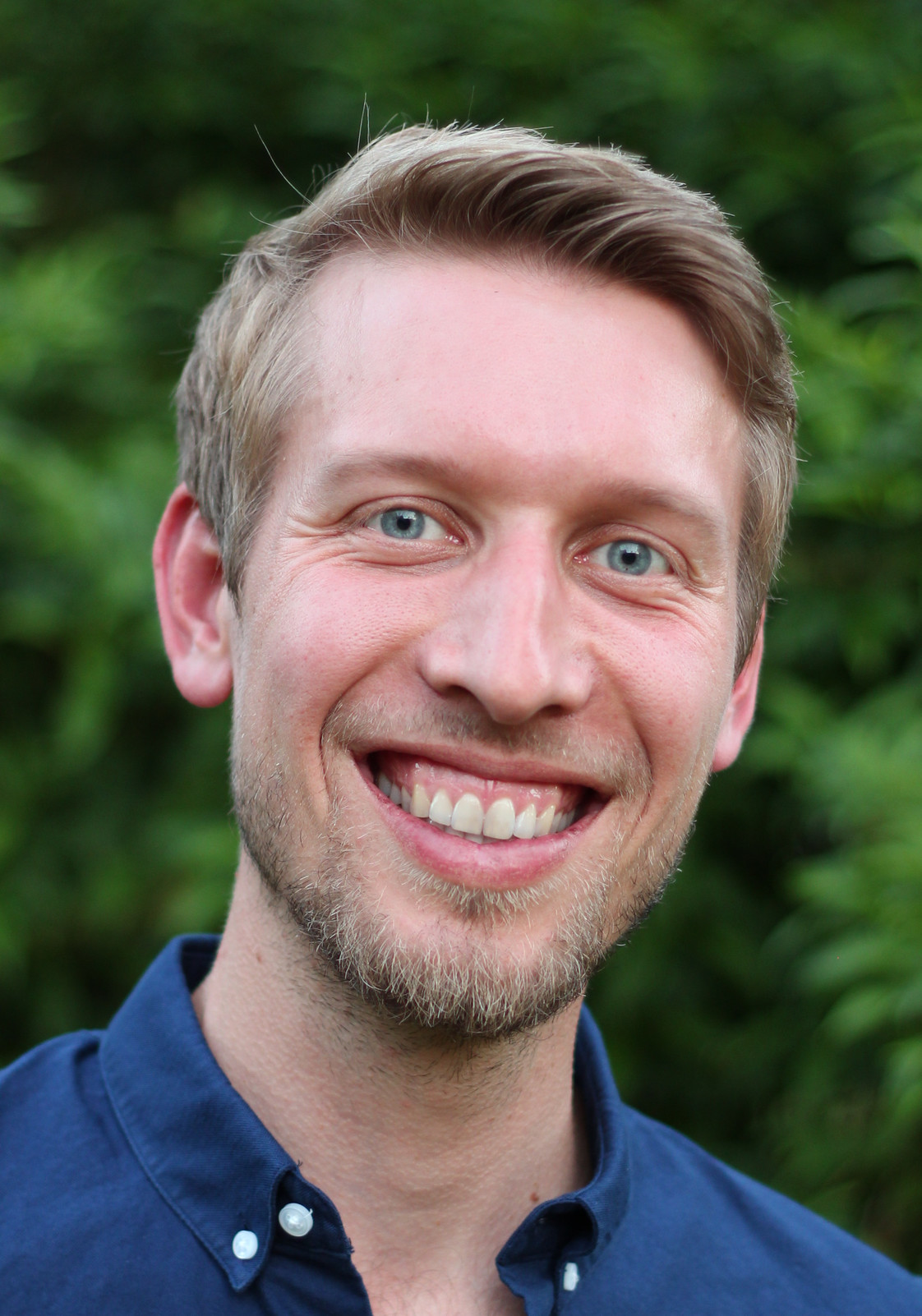
Bio: Sebastian is Full Professor at the Research Institute for Statistics and Information Science at the University of Geneva, where he is holding an Eccellenza grant. His research group works on: Extreme value theory and graphical models; extrapolation in machine learning; AI weather forecasting; and statistical climate science. Sebastian did his studies in Mathematics at University of Göttingen and UC Berkeley, and he obtained his PhD in 2013 at the University of Göttingen. He was then an Ambizione fellow at EPF Lausanne with Anthony Davison, and visiting professor at the Department of Statistical Sciences at the University of Toronto from 2018–2019.
Abstract: Extremal Graphical Models
Graphical models provide a powerful framework for understanding complex dependence structures, but extending them to extreme events requires new probabilistic tools. In this talk, we introduce the theory of extremal graphical models and highlight the central role played by Laplacian matrices. After reviewing the foundations of multivariate extreme value theory, we discuss a general notion of conditional independence for infinite measures that unifies several existing approaches and yields a coherent graphical framework for extremes. We then show how Laplacians characterize dependence structures in these models and facilitate statistical inference. The talk concludes with an overview of probabilistic properties, parameter estimation techniques, and graph learning methods for extremal graphical models.
David Rossell
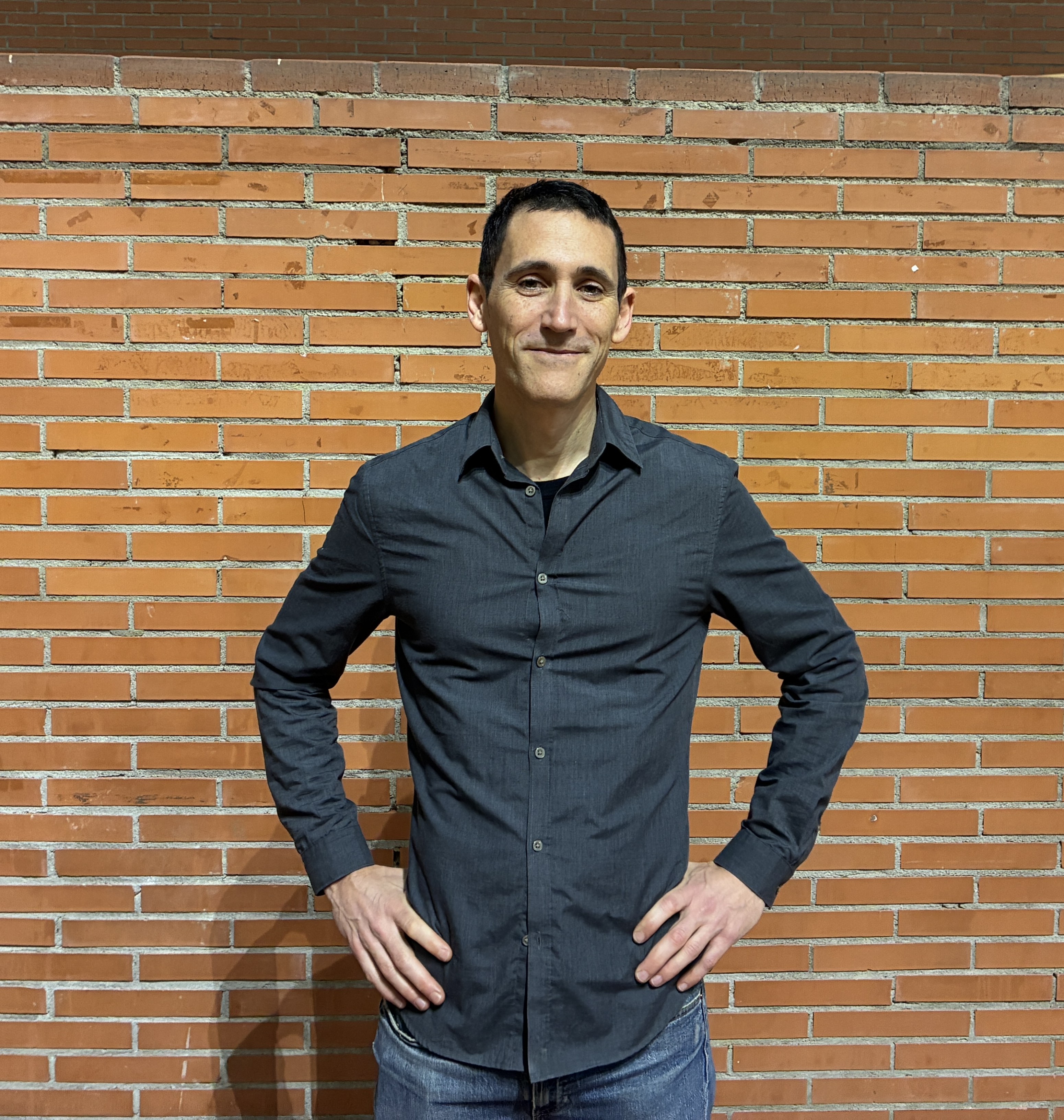
Bio: David did his PhD at Rice University (Houston, USA) under Prof. Peter Müller, and a post-doc at MD Anderson Cancer Center (Houston, USA) under Prof. Valen Johnson. He then created a Biostatistics & Bioinformatics Unit at the Institute for Research in Biomedicine in Barcelona (Spain), which he headed for 5 years, after which he moved to the University of Warwick (Coventry, UK). He subsequently moved to Pompeu Fabra University, where he is currently based and where he directs the master in Data Science Methodology at the Barcelona School of Economics. David has worked in theoretical, methodological and applied statistics, for the latter mainly in Biomedicine, Social Sciences and Chemistry. His work focuses on high-dimensional inference, particularly model selection, structural learning and data integration, with an emphasis on Bayesian statistics. More specifically he has worked on non-local priors for model selection, posterior concentration theory, canonical mean and covariance models such as regression, GLMs, GAMs, graphical and factor models. He is co-editor at Bayesian Analysis, where he also served at Associate Editor for 9 years, he is serving as an AE at JASA for 6 years, and he previously served as AE at Computational Statistics and Data Analysis.
Abstract: Bayesian computation for high-dimensional Gaussian graphical models with spike-and-slab priors
Bayesian methods are appealing to quantify uncertainty associated with structural learning, i.e., the plausibility of conditional independence statements given the data, and parameter estimates. However, computational bottlenecks have limited their application to graphical models when the number of variables is large, which prompted the use of pseudo-Bayesian approaches. We propose fully Bayesian algorithms for Gaussian graphical models that provably scale to high dimensions when the data-generating precision matrix is sparse, at a similar cost to the best pseudo-Bayesian methods. The main trick is inducing sparsity via spike-and-slab priors with exact zeroes, which speeds up computations relative to shrinkage priors. We propose a Metropolis-Hastings-within-Block-Gibbs algorithm that allows row-wise updates of the precision matrix, using local moves. Second, a global proposal that enables adding or removing multiple edges within a row, which can help explore multi-modal posteriors. We obtain mixing bounds for both samplers relative to an ideal Gibbs sampler that are dimension-free under suitable settings, and prove that ideal Gibbs is geometrically ergodic. Our examples show that the methods extend the applicability of exact Bayesian inference from roughly 100 to 1000 variables (equivalently, from 5,000 edges to 500,000 edges).
Pre-Conference Workshop Speakers
Urmi Ninad
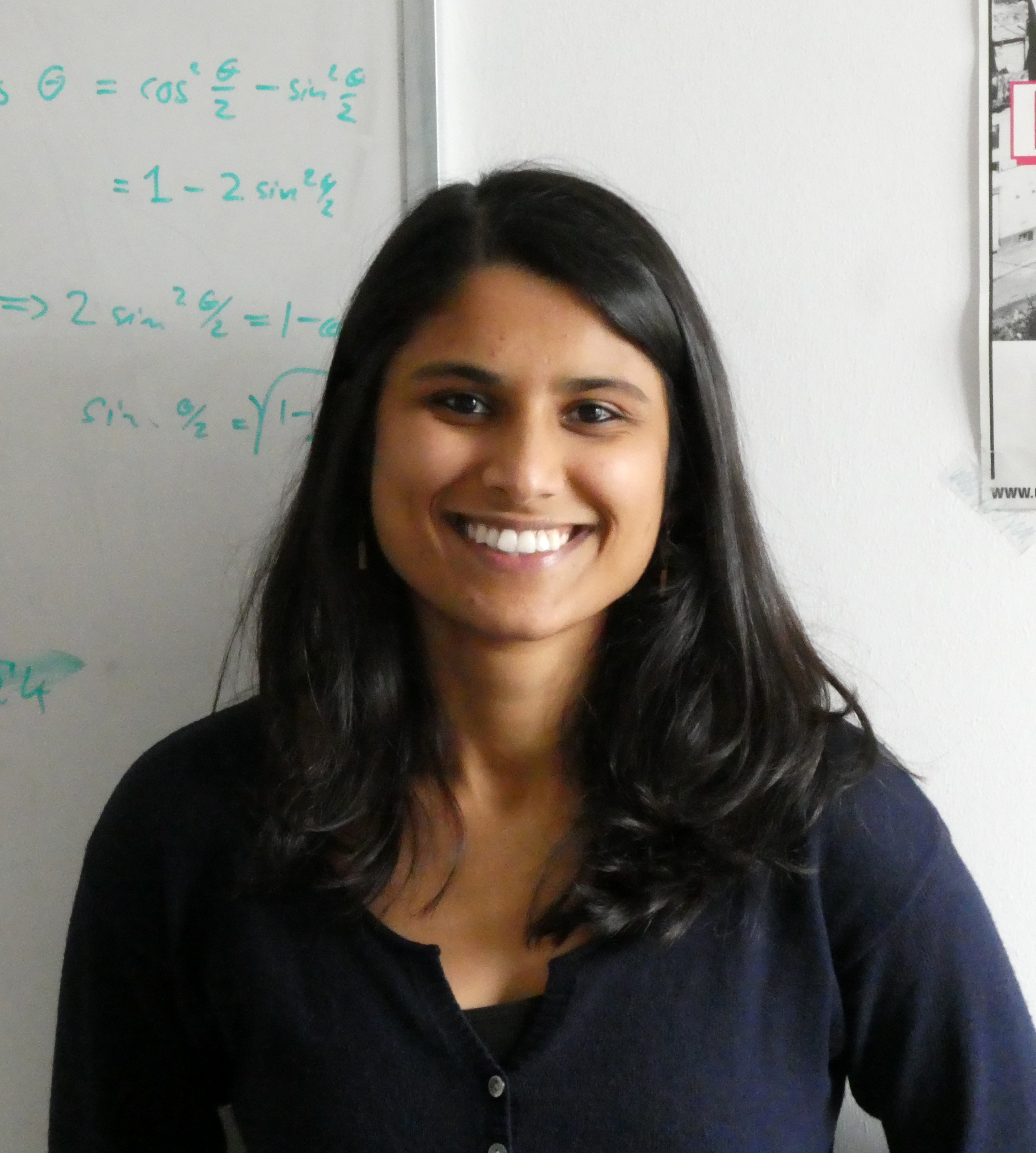
Bio: Urmi is a theoretical physicist by training and currently a postdoctoral researcher at the University of Potsdam, where she focuses on advancing methods in causal inference. She is especially interested in spatiotemporal complex systems, with a particular emphasis on understanding causality in high-dimensional, multi-domain and non-stationary environments.
Abstract: Causal Reasoning in the Earth System: Progress, Pitfalls, and Open Problems
Causal reasoning aims to formalise the conditions under which causal—rather than merely statistical—relationships can be inferred from observed data, yielding models that better reflect the true underlying process. Over the past decade, causal inference has gained substantial traction both as a methodological framework within statistics and machine learning, and as a practical tool applied to domains such as economics, genetics, and climate science. Complex systems like the Earth System pose a number of multi-layered challenges for this framework—including vector-valued variables, non-stationarity, and misspecified aggregations. While the field of causal inference has addressed some of these challenges, others remain active open problems. In this talk, I will discuss several of these challenges alongside recent work addressing them, and illustrate the framework with an application in Earth System Science.
Vassilis Sitokonstantinou

Bio: Vassilis Sitokonstantinou is an Assistant Professor in the Artificial Intelligence Group at Wageningen University & Research. His research focuses on advancing causal machine learning for Earth observation, with an emphasis on understanding complex agroecosystems for sustainable agriculture and food security. Prior to joining WUR, he was a postdoctoral researcher at the University of Valencia and led the AgriHUB team at the National Observatory of Athens. He holds a PhD from the National Technical University of Athens in machine learning for remote sensing.
Abstract: Applied causal machine learning for agriculture and food systems
Remote sensing and Earth observation have made predictive machine learning genuinely useful in agriculture and food systems, from crop monitoring to yield forecasting and early warning. The questions that matter for management and policy, though, are often causal and there the same wealth of data does not carry us as far. It can make a forecast more accurate while still leaving confounders unmeasured, treatments entangled, controls undocumented and the counterfactual unobserved. Over several years applying causal ML with Earth observation across real problems in digital-agriculture advice, soil-carbon sequestration, smallholder fertilizer management and food-system nutrition, we have accumulated practical lessons about working in the gap between what the data supports and what a causal claim requires. Rather than abandon identification where it is out of reach, we have found it more useful to scope our claims honestly to what the data can support, to build the conditions for estimation that observational data does not provide and to express effects in terms we can act on. I will reflect on these lessons and on how Earth observation might contribute more to causal work than it does today, before closing on the open problems this raises for causal and graphical modelling.