
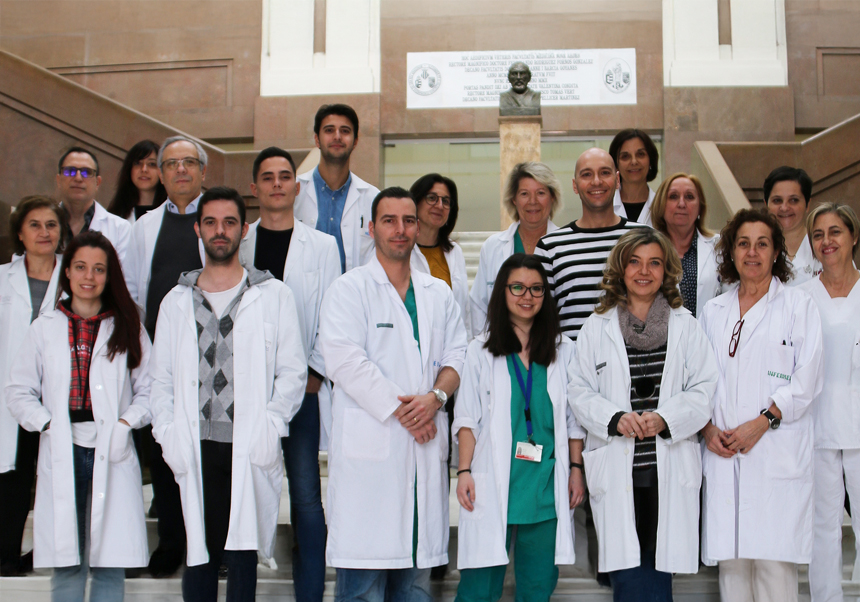
Research conducted by the University of Valencia and the INCLIVA Health Research Institute has identified biological differences between the sexes and their possible influence on the development of minimal hepatic encephalopathy (MHE) in patients with liver cirrhosis.
The prevalence and mechanisms of MHE in patients with liver cirrhosis have scarcely been studied from a sex perspective. This study assessed cognitive and motor impairment in male and female patients with liver cirrhosis and MHE, as well as the parameters involved in the pathophysiology of the disease, and found clear sex-related differences.
The main aim of this research was to gain a deeper understanding of the biological differences between the sexes and their potential influence on the development of MHE in patients with liver cirrhosis. By identifying cognitive variations or modifications in the immune system that may manifest differently in men and women, the study sought to develop a more accurate diagnostic method for detecting MHE.
“We have identified differences in inflammatory, biochemical and oxidative stress parameters between women and men with MHE, suggesting that the mechanisms leading to its onset differ by sex and highlighting the need for sex-specific treatment approaches. MHE negatively affects the quality of life and life expectancy of affected patients, representing a significant social, economic and healthcare burden. MHE can worsen and progress to overt hepatic encephalopathy, which underlines the importance of early diagnosis and personalised treatment”, explains the principal investigator of the study, Carmina Montoliu Félix, from the Neurological Impairment Research Group at INCLIVA–UV and professor in the Department of Pathology (Biology Unit) at the University of Valencia.
MHE: focus of the study and methodology
Minimal hepatic encephalopathy (MHE) is a neuropsychiatric complication that affects 30–40% of patients with liver cirrhosis. It is characterised by mild brain dysfunction that causes subtle changes in cognition, attention, working memory, psychomotor speed and fine motor function. These symptoms are not always evident during routine clinical examinations. Nevertheless, detecting and treating MHE is essential, as it can significantly affect the patients’ quality of life and, if left untreated, may progress to more severe forms of hepatic encephalopathy.
“We have developed a sex-specific predictive model and the MHE-PROS web application to assess the risk of developing MHE specifically for each sex. This diagnostic model based on biological sex uses data that are easily accessible in clinical practice (inflammatory and biochemical parameters and clinical history). This score is a useful tool to help prioritise patients at higher risk and will make it possible to improve the diagnosis and treatment of patients from a sex-based approach, as well as to prevent progression to more severe stages of the disease. The next phase is to study whether this model developed using a cohort of patients with other pathologies that cause neurological impairment and refined according to pathology can also be used to differentiate neurological impairment according to whether the patient is male or female”, adds Montoliu.
The study, whose results have been published in Liver International, involved the Neurological Impairment Research Group at INCLIVA and the University of Valencia, in collaboration with the Digestive Medicine departments of three hospitals in Valencia: the University Clinical Hospital, Arnau de Vilanova Hospital and La Fe Hospital.
This year, the INCLIVA–UV Research Group has been awarded a diploma for health research with a gender perspective for its national project “Mechanisms leading to mild cognitive and motor impairment in patients with liver disease: role of changes in the microbiota, the immune system and extracellular vesicles”. This project was funded by the Carlos III Health Institute (ISCIII) and co-financed by ERDF funds, as well as by the Valencian Innovation Agency and a grant for Groups of Excellence from the PROMETEO Programme of the Valencian Government (CIPROM2021/082).
Article reference: Gallego, J. J., Casanova-Ferrer, F., Fiorillo, A., et al… Montoliu, C. (2025). “Sex-Specific Differences and a Predictive Model Based on Clinical and Biochemical Parameters for Minimal Hepatic Encephalopathy”. Liver International 45(12), e70452. https://doi.org/10.1111/liv.70452