.jpg)
.jpg)
Carles Prado (Universitat Oberta de Catalunya).
Translation and transnationality: memories of China's reform and opening up
During China’s period of reform and opening up following the end of Maoism, the large-scale translation of Western works played a crucial role not only in the reconfiguration of literary and cultural fields, but also in the social, intellectual, and political life of the 1980s. This talk surveys the major translation projects published during that period, as well as the various actors and cultural dynamics involved in their production and circulation. It also examines the subsequent trajectories and lasting impact of some of these translations. By attending to more recent memories of the period, the talk reflects on the impulses underlying these transnational exchanges from the perspective of China’s new global position in the twenty-first century.
Bio
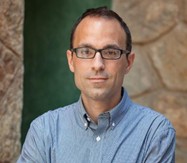 Carles Prado-Fonts is Professor in the department of Arts and Humanities at the Universitat Oberta de Catalunya. He works on comparative studies with a particular focus on Chinese and Sinophone literatures and cultures. He is the author of Regresar a China (Trotta, 2019, winner of the 2021 ICAS Book Prize) and Secondhand China: Spain, the East, and the Politics of Translation (Northwestern University Press, 2022). He has also translated into Catalan and Spanish language Chinese authors and intellectuals such as Lu Xun, Lin Huiyin, Mo Yan, Wang Hui, and Dai Jinhua.
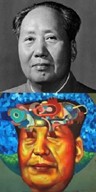 Nong Ru Cheng Lee (University of Valencia). From Political Icon to Transcultural Sign: Mao Zedong in Global Visual Culture. The transformation of Mao Zedong’s image from a political leader into a transcultural visual sign illustrates how meaning is produced and renegotiated across cultural contexts. Rather than operating as a fixed historical representation, this image circulates through mass media, contemporary art, and popular visual formats, where it is continually recontextualized. Initially disseminated as an emblem of collective identity, Mao’s portrait occupied a central position within the visual iconography of the People’s Republic of China. From the late twentieth century onward, artistic movements such as Political Pop and Cynical Realism, together with commercial and media reproductions, progressively detached this image from its original political referent and inserted it into new visual regimes shaped by globalization and consumer culture. From a semiotic perspective, Mao’s image today operates simultaneously on three levels: as an icon, defined by standardized and immediately recognizable visual features; as an index, pointing to historical experiences of revolution, ideology, and state formation; and as a symbol, functioning as an open and unstable sign capable of absorbing meanings related to globalization, commodification, and cultural memory. In this way, Mao’s image extends beyond national narratives to become an active site of transcultural negotiation and visual politics in contemporary global culture.
 Nong-Ru Cheng Lee is a lecturer and researcher in East Asian Studies at the University of Valencia, affiliated with the Department of Language Theory and Communication Sciences. He holds a degree in Fine Arts from the University of Granada (2002) and a PhD in Artistic Creation, Theory, and New Technologies from the University of Málaga (2011). In parallel with his university teaching, he serves as Head of the Chinese Department at the Official School of Languages of València-Saïdia, where he teaches Chinese as a second language.
His research interests focus on visual culture and the relationship between image, ideology, and mass culture in East Asia, while also engaging with cognitive linguistics, uniquely combining these disciplines. His interdisciplinary approach examines artistic and linguistic expression through the lens of visual thinking and cognitive processes, exploring how meaning is constructed across visual and verbal systems. This perspective is reflected in specialized publications that bridge art history, visual studies, and linguistic analysis.
Funded by:
In partnership with:
- Vicerectorat d’Internacionalització i Multilingüisme de la Universitat de València
- Departament de Teoria dels Llenguatges i Ciències de la Comunicació
- Institut Universitari de la Creativitat i Innovacions Educatives (IUCIE)
- Unitat d’Investigació Japón -Universitat de València (UIJ-UV)