University of Valencia logo Logo Climate Change, Territory and Environmental Risks in the Mediterranean Chair Logo del portal

1st Expert Conference on “Climate Change and Territory in the Iberian Mediterranean”


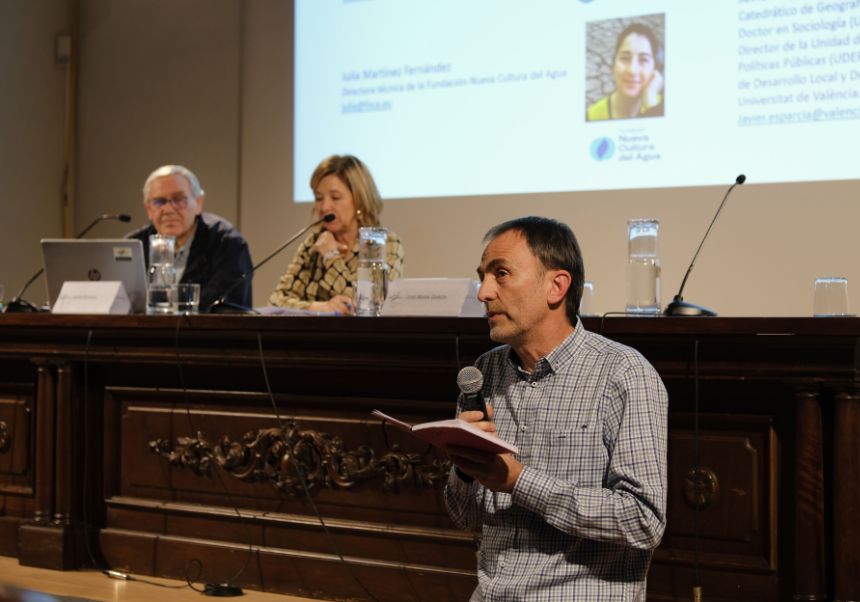
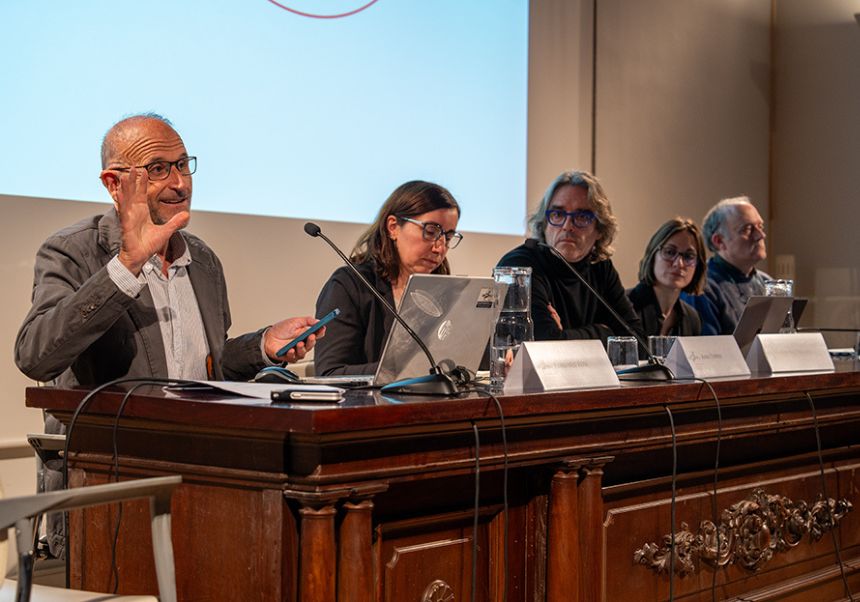
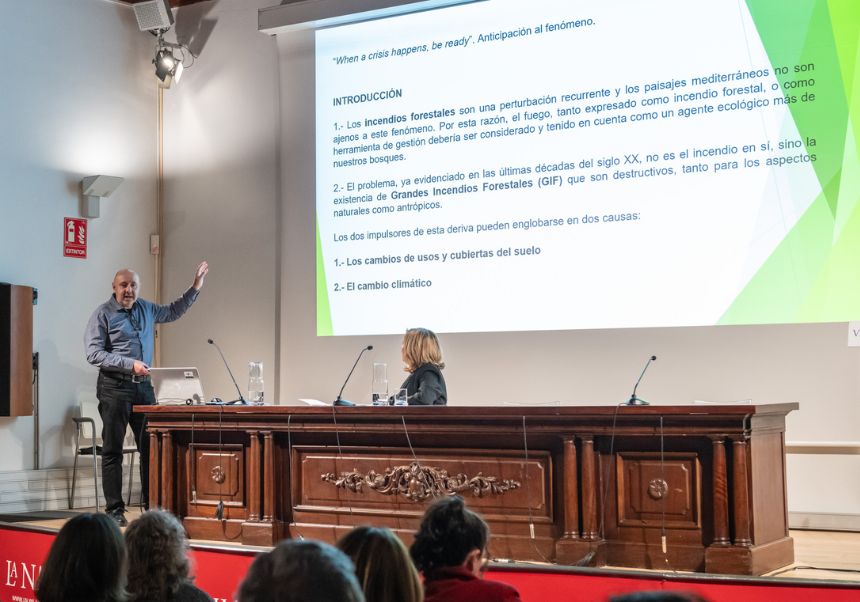
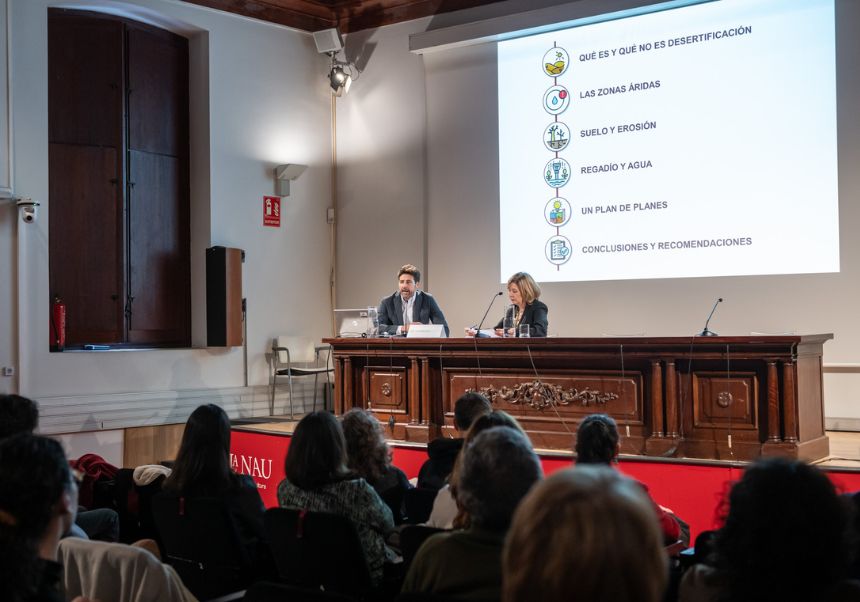
“Scientific evidences about climate change and territory in the Iberian Mediterranean. Effects, strategies and public policies. Main recommendations” gathers the conclusions of the 1st Expert Conference on “Climate Change and Territory in the Iberian Mediterranean” held January 2025 with the participation of over 70 researchers from 15 universities.

The document presents 82 recommendations divided in 13 different thematic areas, backed by decades of research, to provide some guidance for the creation of policies that reduce and adapt our territory to the climate events, specially to face extreme phenomena such as heatwaves, droughts, DANAs and floods.

Conclusions and recommendations

1 Current state of things (sea temperature, droughts, rains, fires, heatwaves and risks)

​​​​​​​This section analyses current scientific evidence: the Iberian Mediterranean has suffered a thermal increase (±1.5 °C in over four decades), greater frequency of heatwaves, droughts and fires. Stands out the urgent protection of the vulnerable population, as well as the need of a Climatologic Observatory of the Spanish Mediterranean to monitor and coordinate institutional answers.

2 The intensification of the hydrological cycle: excess water, by defect water

​​​​​​​We alert of climate duality: lengthy droughts and torrential rains (DANA like floods). Recommended to strengthen the real time sensors network, improve the hydraulic prediction models and better inform the population about the dangers linked to extreme rains and hydric shortage.

3 Desertification, loss of vitality of the territor

​​​​​​​The document warns about the rising deterioration of the soil and vegetation, consequence of droughts and bad territory management. It proposes to regenerate ecosystems, encourage sustainable practices (agroforestry, soil preservation) and to apply management tools with a territory and ecosystem approach.

4 Fires and evolution of forest areas

The warming up of the environment and droughts intensify forest fires. Recommended the implementation of active management strategies for the mountain, ecological post-fire restoration and integrated plans combining prevention and early alert as well as recovery adapted to the new climate plans.

5 Tourism

​​​​​​​The tourist sector, specially at the coast, is extremely vulnerable to heatwaves, the rise of the sea level and floods. We encourage to design adaptation plans in destinations (infrastructures, water management), to incorporate sustainable tourism into the 2030 Agenda and to promote active communication with between tourists and the local community.

6 Agriculture, rural areas, irrigation and ecosystems

Farming areas, irrigation and rural ecosystems require specific strategies: hydric savings, adapted variants and production diversification. The modernisation of irrigation structures, efficient water usage and financial and technical support to farmers policies are considered.

7 Cities, health, well-being and social vulnerability

This section addresses urban exposure to heatwaves and the need of protecting the elderly and people at social risk. Climate shelters, thermal isolation, urban green areas and health protocols adapted to protect public health are recommended.

8 Extreme events and complete management of the risk

​​​​​​​Stands out the greater destructive power of events such as DANAs. Requested the improvement of risk cartography, emergency protocols and educational drills. A preventive approach, non-reactionary, coordinated between administrations in order to protect the population is proposed.

9 The uses of the territory. Regional, urban and metropolitan planning

​​​​​​Highlighting the importance of planning in the territory, considering climate change: not allowing the development of risk areas, integrating hydric and thermal resistance in urbanism, and encouraging metropolitan coordination.

10 Management of water resources

​​​​​​​An integrated water approach, combining drought management and flood prevention, optimising the use of irrigation and tourism, and guaranteeing an equitable access based on green infrastructures and nature based solutions is required.

11 Infrastructures, transport and mobility

It asks to redesign critical infrastructures (transportation, drainage, energy) to resist extreme event: duplicate systems, resistant metropolitan transport, protection in areas prone to flooding and urban planning adapted to the new climate conditions.


12 Communication, education, participation and socio-territory resilience

Promoting climate literacy and citizen participation: including contents in formal and informal education, developing transmedia media campaigns, stablishing collaborative platforms and strengthening citizen joint responsibility.


13 Governance and public policies

​​​​​​​The report calls for a coordinated governance between administrations (national, autonomic and local), based on institutional loyalty. It defends the creation of a Mediterranean monitoring centre and continuous lines of funding, planning and application of anti-climate policies with strategic vision.

Conclusions de la I Conferència d'Experts sobre canvi climàtic i territori al Mediterrani ibèric

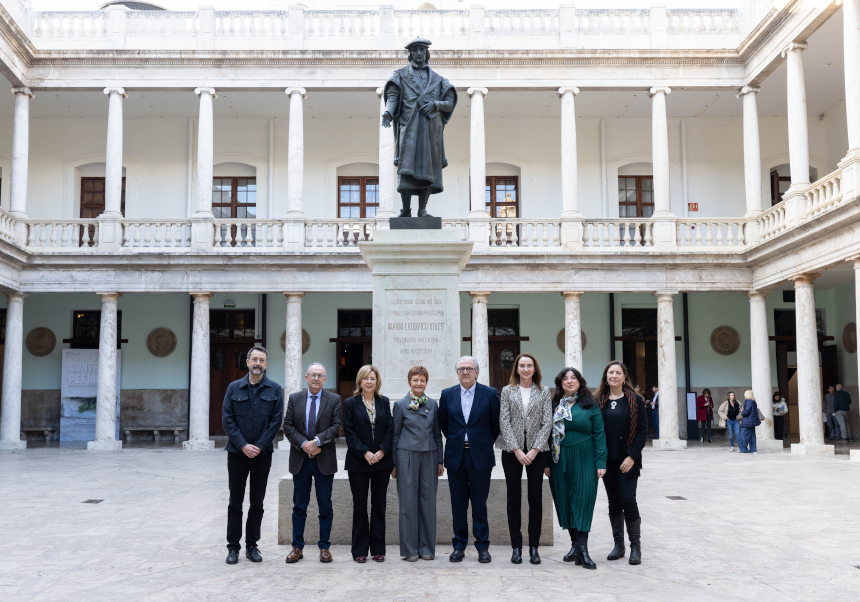
La UV va presentar el 5 de febrer de 2025 les conclusions de la I Conferència d'Experts sobre canvi climàtic i territori al Mediterrani ibèric’ (5 de febrer).


Conclusions in the press

Joan Romero: “Es va creant un focus de desafecció molt intens que transcendeix la zona afectada”

Entrevista al catedràtic emèrit de geografia humana de la Universitat de València sobre les conseqüències polítiques i socials de la gestió de la gota freda.

  • VilaWeb
  •  09/02/25

Los expertos piden innovar en la gestión de las emergencias "para salvar vidas"

El cónclave científico posdana de la UV urge a Gobierno y Consell a "mejorar la capacidad de respuesta y anticipar la reacción" ante catástrofes. Entre las 82 recomendaciones a las administraciones públicas está la elaboración de planes de adaptación y mitigación del cambio climático

  • Levante
  •  07/02/25

Expertos en cambio climático proponen crear un Observatorio de Riesgos del Mediterráneo.

Expertos en cambio climático han propuesto crear un Observatorio del Cambio Climático y los Riesgos Meteorológicos del Mediterráneo Español, con sede en la Comunidad Valenciana.

  • La Vanguardia
  •  06/02/25

Los expertos en clima y territorio reclaman revisar todos los planes urbanísticos para adaptarlos a futuras catástrofes

“El territorio no debe entenderse como una mercancía”, destacan las conclusiones de la primera conferencia científica sobre cambio climático en el Mediterráneo Ibérico, organizada por la Universitat de València.

  • eldiario
  •  06/02/25

La UV presenta les conclusions de la I Conferència d’Experts sobre canvi climàtic i territori en el Mediterrani ibèric

La Universitat de València ha presentat aquest matí a l’edifici del Rectorat les conclusions de la I Conferència d’Experts sobre canvi climàtic i territori en el Mediterrani Ibèric, celebrada al Centre Cultural La Nau els dies 30 i 31 de gener.

  • El Periòdic
  •  05/02/25

La Universitat de València recoge las conclusiones de la conferencia de los expertos en cambio climático: “Tenemos que aportar ideas para las políticas públicas”

El catedrático emértio Joan Romero, coordinador de la conferencia sobre ciencia y territorio, señala “dos riesgos existenciales” para el ser humano: “los derivados de la IA y el cambio climático”

  • eldiario
  •  05/02/25

Expertos en cambio climático ponen su conocimeinto al servicio de las políticas públicas.

València, 5 feb (EFE).- La Universitat de València (UV) ha presentado este miércoles las conclusiones de la I Conferencia de Expertos sobre cambio climático y territorio en el Mediterráneo Ibérico, con recomendaciones de científicos e investigadores que ponen su conocimiento al servicio de las políticas públicas.

  • La Vanguardia
  •  05/02/25

Joan Romero: "Necesitamos que el riesgo existencial del cambio climático permee en la sociedad para llegar al ámbito político"

La rectora de la UV, Mavi Mestre, recibe 82 recomendaciones de la I Conferencia de Expertos sobre cambio climático y territorio en el Mediterráneo ibérico. El documento urge a que no se reconstruyan las zonas inundables más afectadas por la dana y recomienda educar a la población ante el riesgo de inundaciones.

  • Levante
  •  05/02/25

La UV presenta les conclusions de la I Conferència d’Experts sobre canvi climàtic i territori en el Mediterrani ibèric

La Universitat de València ha presentat dimecres 5 de febrer a l’edifici del Rectorat les conclusions de la I Conferència d’Experts sobre canvi climàtic i territori en el Mediterrani Ibèric.

  • Others
  •  05/02/25