Research staff of the Universitat de València, through images from the satellites Sentinel-2 and Landsat-8, have shown that maintaining a good water quality and proper hydrological management is essential for recovering historic aquatic vegetation meadows of the Albufera.
Both studies highlight the sensitivity of the aquatic vegetation in the Albufera to variations in water quality, especially in transparency, and that hydrological management, including the quantity and quality of the water that enters the lagoon, plays a fundamental role in the recovery of the submerged macrophytes", points out Juan Soria, researcher from the Instituto Cavanilles, who insists on the need to implement continuous monitoring programmes based on remote sensing for evaluating the effectivity of ecological recovery measures.
Moreover, the professor from the Department of Microbiology and Ecology of the Faculty of Biological Sciences of the Universitat de València points out that, in particular, the Normalised Difference Vegetation Index (NDVI), indicator that measures quantity, quality and vegetation development using sensors installed in a space platform, an efficient methodology for monitoring of aquatic vegetation in this type of ecosystems.
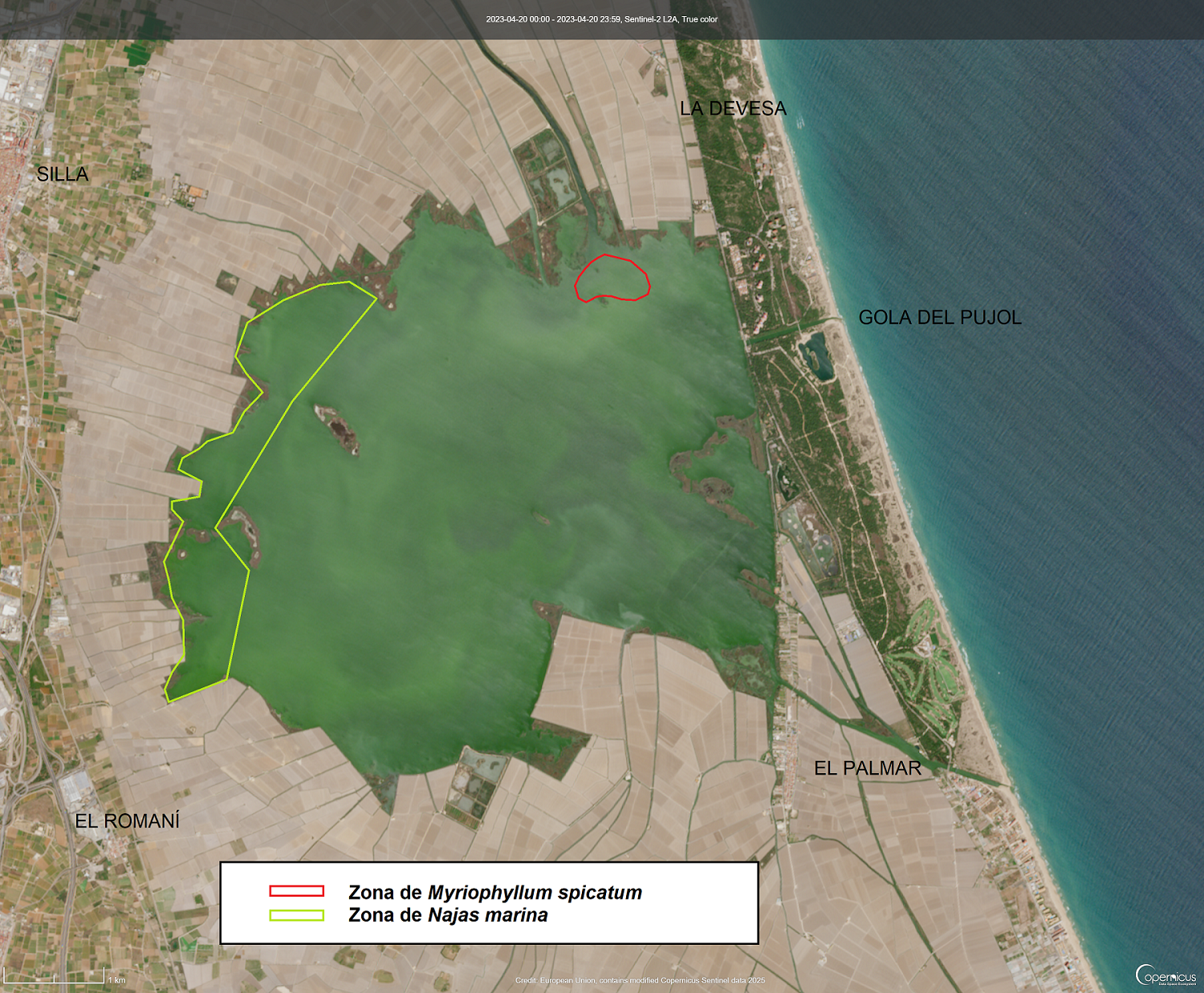
In particular, the first study, published on the Journal of Marine Science and Engineering (JMSE), focus on the extraordinary and temporary apparition of Myriophyllum spicatum in the spring-summer of 2018. The research proved that this event coincided with the significant increase of water transparency in comparison to the years before. However, vegetation disappeared completely on August 2018, with high summer temperatures as most important environmental factor. We know this data thanks to the use of NDVI.
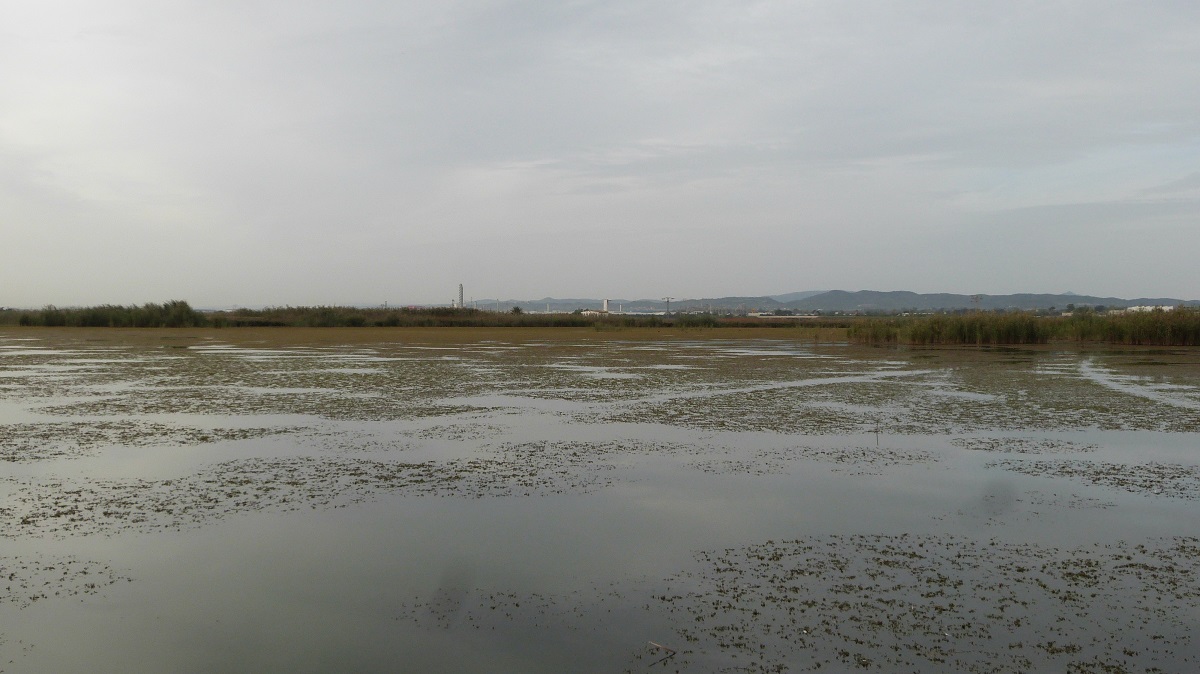
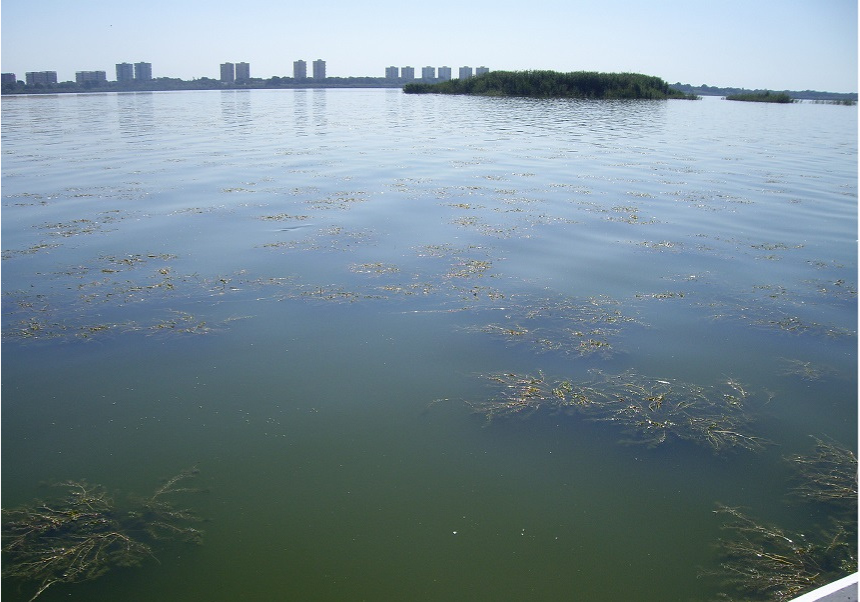
The second study, published on the journal Water, documents the massive resurgence of Najas marina in the West of the Albufera during 2022-2023. It consists of one species that lives preferably in stagnant waters or even brackish, very sensitive to environmental changes. The results suggest that this happened due to a combination of factors such as the reduction in the discharges and the raise on the water supply from the Júcar river, fact facilitated by an agreement with the Hydrographic Confederation of the Júcar.
As with the case of M. spicatum, NDVI proved to be a valuable tool for monitoring appearance, growth and disappearance of N. marina. The statistical analysis showed a significant negative correlation between the area covered by N. marinaand the concentration of total suspend solids (TSS), and a positive correlation with water transparency, measured using the Secchi Disk (ZSD), which suggests that greater water clarity and lower concentrations of suspended solids favour the expansion and density of N. marina.
Reference to the papers:
-
Soria, J.M.; Molner, J.V.; Pérez-González, R.; Alvado, B.; Vera-Herrera, L.; Romo, S. Monitoring the Extraordinary Ephemeral Emergence of Myriophyllum spicatum L. in the Coastal Lagoon Albufera of Valencia (Spain) and Assessing the Impact of Environmental Variables Using a Remote Sensing Approach. J. Mar. Sci. Eng. 2024, 12, 260. https://doi.org/10.3390/jmse12020260
-
Soria, J.M.; Campillo-Tamarit, N.; Molner, J.V.; Soria-Perpinyà, X. Sentinel-2 Images Discover How Extraordinary Water Inputs Allow the Ephemeral Resurgence of Najas marina in a Shallow Hypertrophic Lagoon (Albufera of Valencia, Spain). Water 2025, 17, 1302. https://doi.org/10.3390/w17091302
Captions annexed:
-
Najas marina in l’Albufera, October 2022.
-
Distribution of Myriophyllum spicatum and Najas marina over an image from Sentinel-2, 20 April 2023.