Clinical vibrational spectroscopy
Infrared and Raman measurements for diagnosis, disease screening, cellular analysis and chemically interpretable biomedical information.
Associate Professor and Ramón y Cajal Researcher
Leader of the SPEC-ML group
Department of Analytical Chemistry, University of Valencia
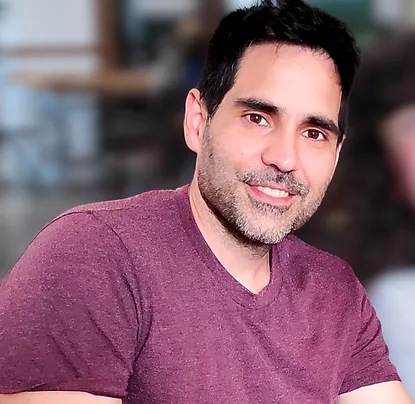
I am an analytical chemist working at the intersection of vibrational spectroscopy, chemometrics and machine learning. My research focuses on transforming infrared and Raman measurements into chemically interpretable information, with particular emphasis on clinical diagnosis, cellular analysis and point-of-care applications.
After conducting research in France, Germany, Australia and Ireland, I established and now lead the SPEC-ML group at the University of Valencia. Our work combines experimental spectroscopy, computational modelling and in-silico data generation to develop analytical methods that are accurate, explainable and suitable for real-world use.
Infrared and Raman measurements for diagnosis, disease screening, cellular analysis and chemically interpretable biomedical information.
Models that are robust, transferable and understandable when working with complex spectra and real-world samples.
Computational modelling and simulated datasets to support method development, benchmarking and improved clinical spectroscopy.
Compact and cost-effective approaches that connect simple sample processing, spectroscopy and machine learning for clinical use.
Infrared photothermal microscopy with submicrometric resolution and simultaneous Raman–fluorescence detection.
Project and funding details →
Assessment of dietary exposure to emerging natural toxins and estimation of the associated health risks.
Project and funding details →
Integrating sample processing, infrared spectroscopy and machine learning to develop rapid analytical devices for biochemical information in clinical biofluids.
Project and funding details →Development of an analytical platform for e-Health in pharmacies: vibrational spectroscopy of urine and ML for medical applications.
Project and funding details →Applying infrared spectroscopy to urine and protein analysis for accessible chronic kidney disease screening and control.
Project and funding details →
Earlier work spans spectroscopy, biomedical analysis, chemometrics and clinical collaborators across Spain, France, Germany, Australia and Ireland.
A focused selection of representative contributions. The complete publication list is available on the group publications page.
Shows how in-silico spectral modelling can strengthen vibrational-spectroscopy-based diagnosis.
Navarro-Esteve et al. Analytical Chemistry (2026). DOICombines mid-infrared and near-infrared spectroscopy to distinguish Gram-positive and Gram-negative bacteria.
Chakkumpulakkal Puthan Veettil et al. Analytical Chemistry (2024). DOIDevelops an accessible ATR-based device concept for bringing infrared measurements closer to point-of-care analysis.
Featured contribution in the research CV; full citation in the downloadable CV.Explores spectroscopic signatures of urinary proteins for non-invasive kidney-disease screening.
Featured contribution in the research CV; full citation in the downloadable CV.Applies vibrational spectroscopy and chemometrics to clinically relevant malaria analysis.
Featured contribution in the research CV; full citation in the downloadable CV.Uses nanoscale infrared imaging to connect chemical composition with cellular and biomedical structure.
Featured contribution in the research CV; full citation in the downloadable CV.Combines complementary vibrational-spectroscopy measurements to improve analytical interpretation.
Featured contribution in the research CV; full citation in the downloadable CV.Uses chemometric modelling to extract biologically relevant information from spectroscopic measurements.
Featured contribution in the research CV; full citation in the downloadable CV.Provides simulated datasets for benchmarking machine-learning algorithms in clinical spectroscopy.
Béjar-Grimalt et al. Chemometrics and Intelligent Laboratory Systems (2025). DOIIntroduces a graphical interface for identifying illicit drugs using infrared spectroscopy.
Béjar-Grimalt et al. Microchemical Journal (2024). DOIAn open-source point-of-care device and 3D-printing concept connected to the group’s work in accessible infrared analysis.
Public datasets, spectral simulations, interactive applications, experimental protocols and code are part of the group’s open-science programme. Public URLs will be added once verified.
My teaching connects analytical chemistry with practical laboratory work, chemometrics, machine learning and scientific problem-solving. I have taught undergraduate and postgraduate students at the University of Valencia, Monash University and Technological University Dublin.
I am particularly interested in introducing computational thinking into chemistry education and making machine-learning methods accessible through interactive, open-source tools.
Supervision connects rigorous analytical research with the development of independent researchers and practical scientific skills.
I enjoy explaining how spectroscopy allows us to detect chemical information that cannot be seen directly. My public-engagement activities use familiar examples, live demonstrations and humour to introduce spectroscopy, analytical chemistry and machine learning to non-specialist audiences.
Winner of the first scientific monologue competition with “The essential is invisible to the eye—but not to an infrared spectrometer”.
Public engagement at La Fe Health Research Institute in 2022 and at the University of Valencia in 2025.
Annual participation in public-facing science and university outreach activities.
Leading a research programme that connects experimental spectroscopy, computational modelling and clinical collaboration.
Editorial work, peer and grant review, awards, patents, technology transfer and industry collaboration are documented in the full CV.
For research collaborations, doctoral supervision and student opportunities, contact David Pérez-Guaita through the SPECML-UV group.
david.perez-guaita@uv.es
ORCID: 0000-0002-2640-2927
Department of Analytical Chemistry, University of Valencia