.svg)



The UV will investigate the biological functions of human endogenous retroviruses thanks to an ERC Starting Grant
- Marketing and Communication Service - Scientific Culture and Innovation Unit
- September 3rd, 2026
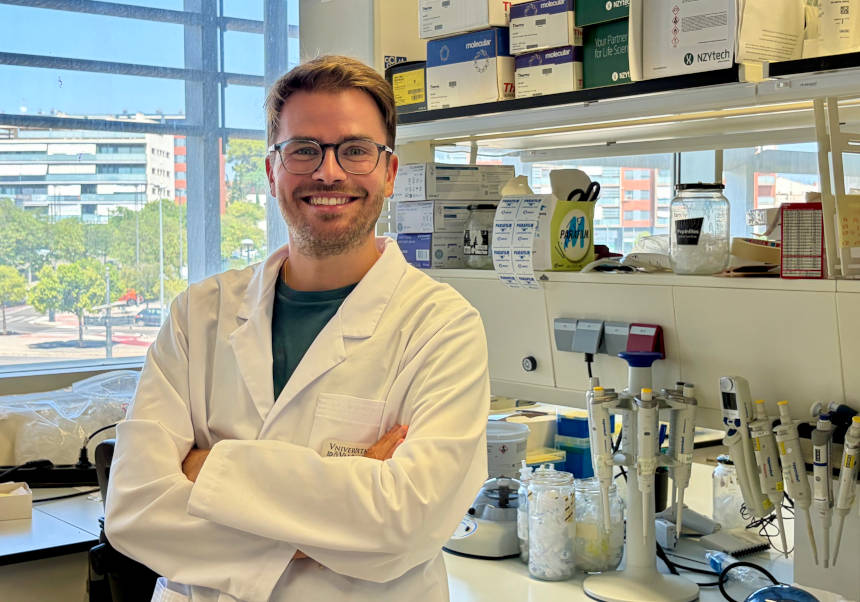
Jérémy Dufloo.
Virologist Jérémy Dufloo, a Ramón y Cajal researcher at the Institute for Integrative Systems Biology (I2SysBio), a joint centre of the University of Valencia (UV) and the Spanish National Research Council (CSIC), has been awarded a Starting Grant from the European Research Council (ERC), a €1.5 million grant for researchers at the beginning of their scientific careers. Over the next five years, Dufloo will lead the Fun-HERE project, which will study one of the least understood parts of the human genome: human endogenous retroviruses (HERVs).
The project aims to uncover the functions of around one hundred envelope proteins encoded by these HERVs – remnants of ancient viruses that infected humans millions of years ago and have since become integrated into our DNA. Specifically, it will seek to determine “whether these proteins have been repurposed by the body to perform important biological functions”, the researcher explains, as is the case in the formation of the placenta; whether they possess antiviral activity – which could reveal new natural defence mechanisms and, in the long term, contribute to the development of new antiviral treatments; whether they may be linked to the development of diseases such as cancer or autoimmune, infectious and neurological disorders; and whether antibodies targeting them might have therapeutic potential.
Thanks to this €1.5 million Starting Grant, Jérémy Dufloo will establish a team of five researchers and, over the next five years, carry out the project Unravelling the Functions of Human Endogenous Retrovirus Envelopes.
About Jérémy Dufloo
His research focuses on the interactions between viruses and human cells, particularly the study of viral envelope proteins. He completed his PhD in Infectious Diseases in 2021 at Université Paris Cité and the Institut Pasteur, where he studied antibody responses against HIV-1 and SARS-CoV-2. He subsequently joined the University of Valencia, where he carried out his postdoctoral research with EMBO and Marie Skłodowska-Curie fellowships. During this period, he studied how viruses from different families enter human cells, identified new viral receptors and analysed the evolution of viruses under different selective pressures. He has also published more than 30 scientific papers, including articles in Nature Microbiology and Nature Communications.
Categories: Recerca, innovació i transferència , Investigació a la UV , Producció científica , Difusió i comunicació científica , Cultura Científica , Institut de Biologia Integrativa de Sistemes (I2SYSBIO)