
.jpg)
Religion and Philosophy of Koreans
South Korea is characterized by the coexistence of various cults and religions, such as shamanism, Buddhism, Confucianism, and Christianity. Since the beginning of their history, Koreans have been spiritual practitioners and this played a fundamental role in influencing their daily lives. However, despite the importance of religion, 56.9% of the population does not have a religious affiliation. According to the survey (2023), 19.7% declare themselves Protestant, 7.9% are Catholic and 15.5% are Buddhist. A small percentage (less than 1%) declare themselves members of other religions, including Won Buddhism, Confucianism, Islam, Orthodox Christianity and other variants.
The oldest religion in Korea is shamanism originated from Mongolia and Siberia brought by primitive immigrants to the Korean Peninsula, which has been transmitted from prehistoric times to the present day. Buddhism came to the Korean Peninsula during the Three Kingdoms period equivalent to Chinese Qin dynasty in the 4th century and developed and flourished during the reign of Silla (57-935) and Goryeo (918-1392). Confucianism has been models for government organization, reinforcing ethical principles, and became the state religion during the Chosun dynasty (1392-1910). Although Christianity was brough in the 18th century through China it began to gain popularity in Korea as it played an important role in the resistance to the Japanese occupation of Korea in the first half of the 20th century. There is no doubt that Korean religion and thought each played an important role in its long history.
Bio
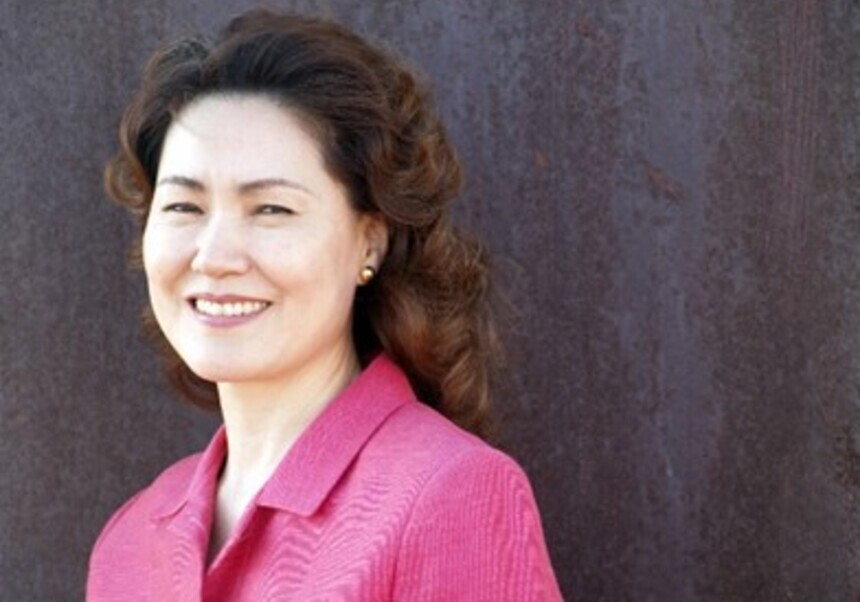
Eunsook Yang received a PhD with the thesis “Unification of Korea and its Impact on Security in Northeast Asia” (UCM 2006). He has been trained in teaching Korean language and culture from the Korea University and Kyonghee University. Her research lines are: specific competencies for the cultural, historical, political and economic relations of Korea with a multidisciplinary approach. Regarding her research activities, she has published a book that is a reference text for culture and history classes, and many articles in qualified indexed specialized magazines, and in collective books were published both national and internationally. As a researcher, between 2001 and 2007 she collaborated with the UNISCI (Research Unit on Security and International Cooperation) and the CEIC (Spanish Center for Korean Research) and between 2007 and 2010 she was a member of the Panel Experts of the Spanish Foreign Policy Observatory. In addition, with the Elcano Institute she participated in the project “How to improve the image of Spain in Korea” between 2013 and 2016. Between 2015 and 2020, she collaborated at the CEAO (Center for East Asian Studies of the UAM). She has been Principal Investigator of several projects from 2012 to 2020: KSPS (Korean Studies Promotion Service) Seed Program project, first at the UCM and then from 2015 to 2018 at the UAM; the project to Strengthen Korean Studies at the ICEI (Complutense Institute of International Studies) of the UCM from 2013 to 2019. She has participated innumerous conferences and seminars, both as an organizer and as a speaker, on various topics related to the language, literature, history, politics and culture of Korea.



