Last Tuesday, 15 September, the Faculty of Pharmacy hosted the first workshop organised as part of the VSAFE project, which aims to raise awareness of the issue of drug-facilitated assault and contribute to its prevention in the Valencian Community. The workshop, organised in collaboration with the Equality Unit of the University of Valencia, was attended by more than 20 students, some of whom came from foreign universities belonging to the European FORTHEM Alliance.
The event marked the launch of a series of awareness-raising and outreach workshops on the risks associated with drug-facilitated assault in the Valencian Community. These workshops, organised as part of the VSAFE project, primarily aim to help young people understand the risk factors, the prevention tools available, and the importance of building safety and support networks, particularly in nightlife settings.
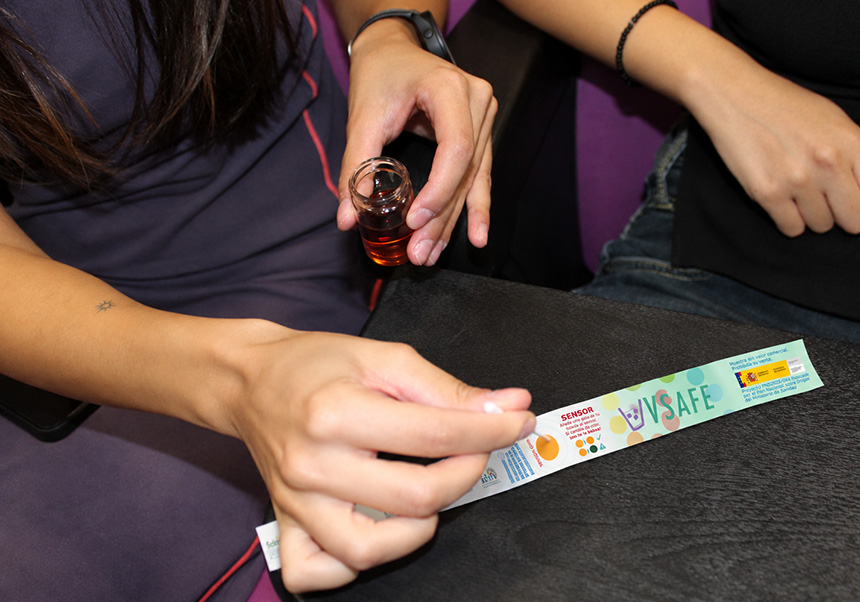
In addition, at the end of the workshop, each participant received two GHB detection sentinel bracelets to use at any time to check whether their drink is safe.
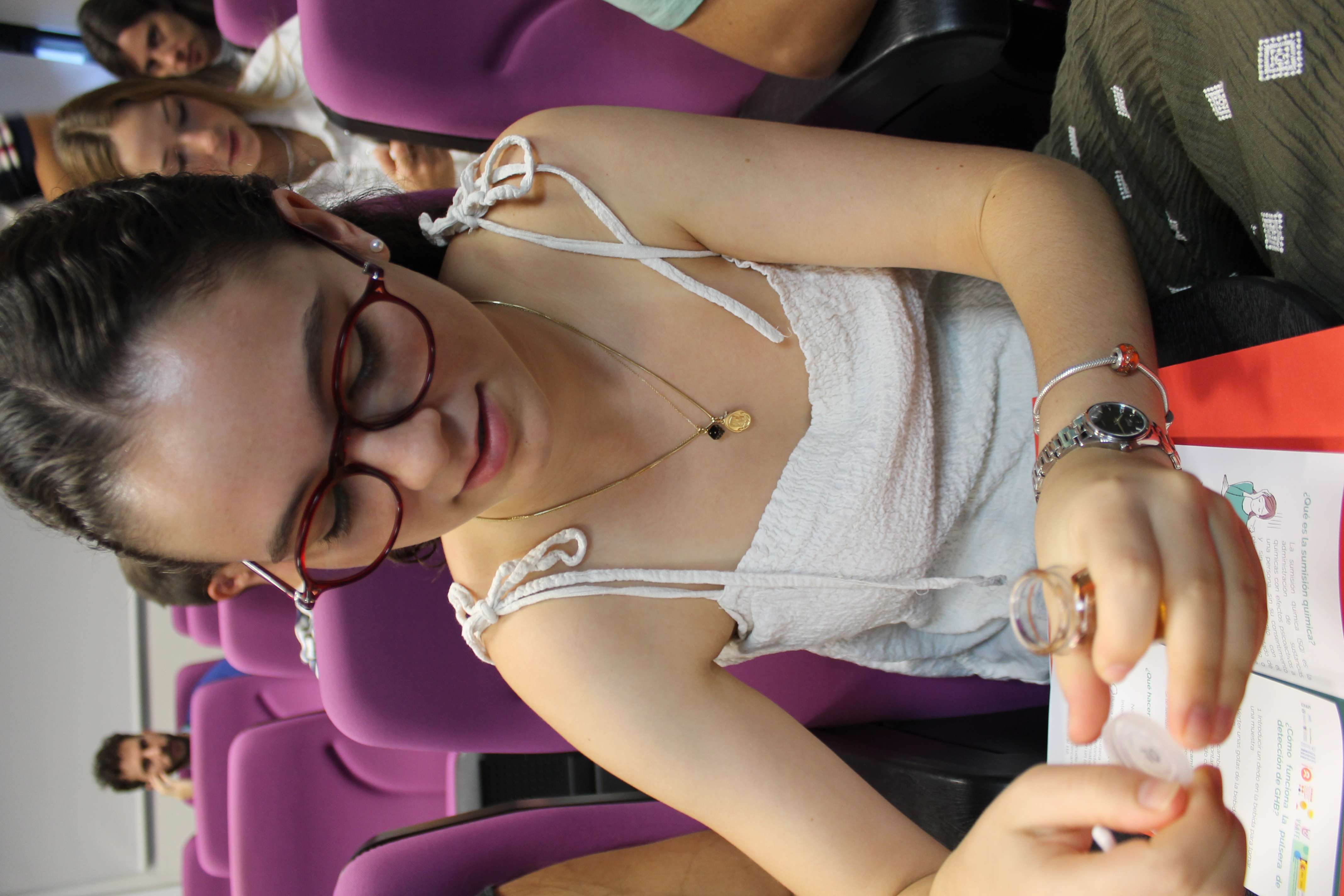
Following a brief introduction to the social impact of drug-facilitated assault, participants learned about the development process of the GHB chemosensors, one of the substances most commonly used to commit drug-facilitated assaults, from the laboratory stage through to the development of the sentinel bracelets. These bracelets can detect the presence of small amounts of GHB and, thanks to the use of colorimetric sensors, a change in colour allows users to determine whether or not their drink has been adulterated with GHB.
Over the coming months, VSAFE will organise further workshops aimed particularly at young people. If you would like to take part in one of these workshops and receive two GHB detection bracelets, you can register using this link and we will inform you of the dates of the upcoming workshops.
VSAFE project
The main objective of the VSAFE project is to develop tools to prevent the involuntary consumption of GHB, one of the illegal substances most commonly used to commit drug-facilitated assaults. To this end, the MODeLiC research group has developed colorimetric GHB chemosensors that allow anyone to quickly and easily check whether their drink has been contaminated with GHB.
In situations where the consumption of this substance could not be prevented, MODeLiC has also developed rapid GHB detection chemosensors for saliva and urine, intended for law enforcement officers and healthcare professionals, respectively. These sensors can be used quickly, enabling safety protocols to be activated in order to provide victims with the appropriate care and protection.
Red Flags Campaign
This workshop was also organised in collaboration with the Equality Unit of the University of Valencia as part of the Red Flags campaign, which will be carried out over the coming months. The initiative also involves the European university alliance FORTHEM. Six students from other European universities took part in this first workshop, giving them the opportunity to learn about the issue of drug-facilitated assault. The workshop also provided an opportunity to explore how the risk of experiencing drug-facilitated assault is perceived in other European countries.