Next 24 and 25 November a new seminar of the project Sound Cities will be held at the Faculty of Language Studies, Translation and Communication. Urban Phonospheres of the Mediterranean (1500-1900) (CIAICO 2023/55).
DATES AND LOCATION
- Monday 24 (from 4p.m. to 7 p.m.) and Tuesday (from 10 a.m. to 13:30 p.m.)
- Boardroom, Faculty of Philology, Translation and Communication (Av. de Blasco Ibáñez, 32 València)
REGISTER AND MORE INFORMATION:
📧 andrea.bombi@uv.es | ferran.escriva-llorca@uv.es
Seminar: ‘Cities in celebration for the Dauphin. Comparative method to test the sources’
The activity will have the participation of:
- Lecturer: Thierry Favier (University of Poitiers)
- Respondent: Lluís Bertran Xirau (ICCMU)
The study of urban celebrations of the Modern Era has been deeply renewed by the epistemological frameworks of urban history, the sound studies and the performance studies. However, this renewal has also given rise to critical issues which merit a detailed review. In his speech, Thierry Favier will approach two main problems:
- Reconstruction of urban soundscape: The difficulty of moving from the physical reality of sounds to an understanding of listening experiences and the daily relationship between residents and the city's acoustic environment.
- The place of music inside the continuous sound of urban space: How to avoid reducing music to its social and political function or diluting it between noise and popular expressions in the streets.
From the study of more than 250 french cities that prove the celebrations for the birth of Dauphin, son of King Louis XIV (1729),Favier will present the documentary typologies used, the specific problems they pose and the methodological challenges of large-scale comparative method. His reflection includes ideas such as the spectacle-events (G. Spielmann) and the experience (J. Dewey, E. Goffman, B. Lepetit), crucial to analyse the sensory and performative dimension of the urban celebrations.
The epistemological frameworks of the urban history, the sound studies and the performance studies have contributed to renew the study of celebrations in the modern era. However, all the works which have been inspired by them have drawn some criticism. Two critics seem essential. The first critic refers to soundscape and questions the capacity of musicologists not only to reconstruct urban soundscape, but also to move from the physical reality of sounds to that of positional listening. This means to take into account the relation between citizens and their cities' soundscapes and the way in which sound influences in their relation with time and space. The second critic refers to the place of music within the continuous sound that generates urban spaces, when this is reduces to social and political matters, or it is neglected in favour of popular forms of musical expression and street noise. My intervention will provide an epistemological reflection that I’m doing to endure some difficulties in the context of the preparation of an study of the celebrations for the birth of Dauphin, son of King Louis XV, in 1729. It will be based on a comparative study of more than 250 French cities that preserve written testimonies of the celebrations for this occasion. I will show the different sources with which I work and I will discuss the specific problems that they pose. In general terms, I will address the methodological and epistemological difficulties of the comparative method, in particular the difficulty of temporal and spatial scales and the interest of basing spectacle-events (Guy Spielmann) and experience (John Dewey, Erving Goffman, Bernard Lepetit). [translation; original pdf]
About the speaker: Thierry Favier
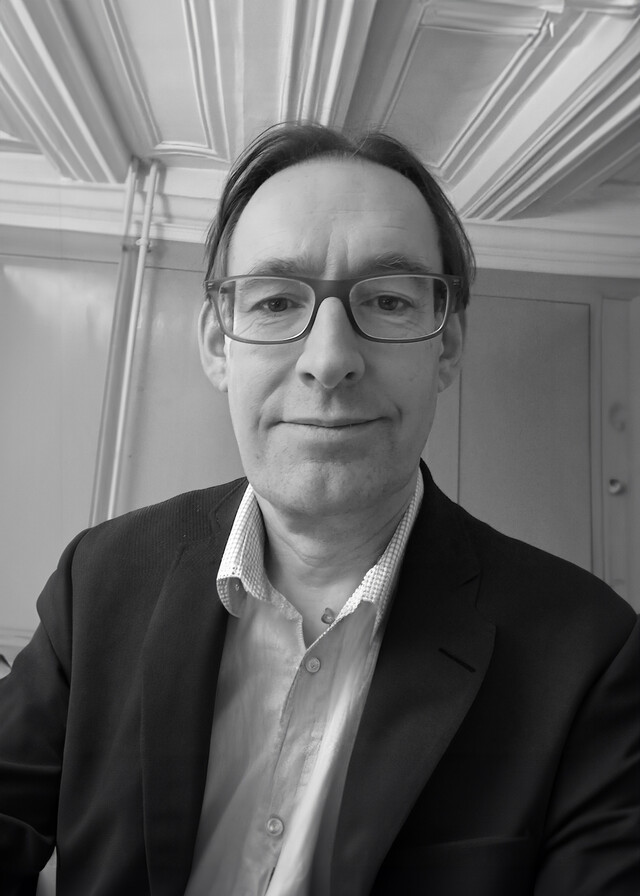 Thierry Favier is a profressor of the Université de Poitiers, member of the Institut Universitaire de France and he is part of the Centre de Recherches Interdisciplinaires en Histoire, Histoire de l’Art et Musicologie (CRIHAM, EA 4270). He is specialised in French religious music of the 17th and 18th centuries, has worked on issues such as the relationship between Christian Enlightenment and music, concerts and cultural transference or music collections. He is currently preparing a monograph on the celebrations of the birth of King Louis XV son in 1729.
About FonUrMed
This project, Sound cities. Urban Phonospheres of the Mediterranrean (1500-1900) (FonUrMed), continues the research started by the Emerging Group ‘Sound cities. Music, Sound and Noise (1609-1813)’ [CIGE/2021/165] has reached important results in its area: the study from the urban musicology perspective, analysed how urban music and culture in València evolved between the morisco expulsion in 1609 and the absolutism restoration in 1813 with Fernando VII of Spain in Valencia.
Research project: Sound cities. Urban Phonospheres of the Mediterranean (1500-1900) (FonUrMed)