

Shortly after sunset, we can see Jupiter rising in the east. And to the southwest we see the pair of planets Venus and Mercury. On the night of 8 to 9 November, the asteroid 2005 YU55 will pass Earth at a distance of 340,000 km only.
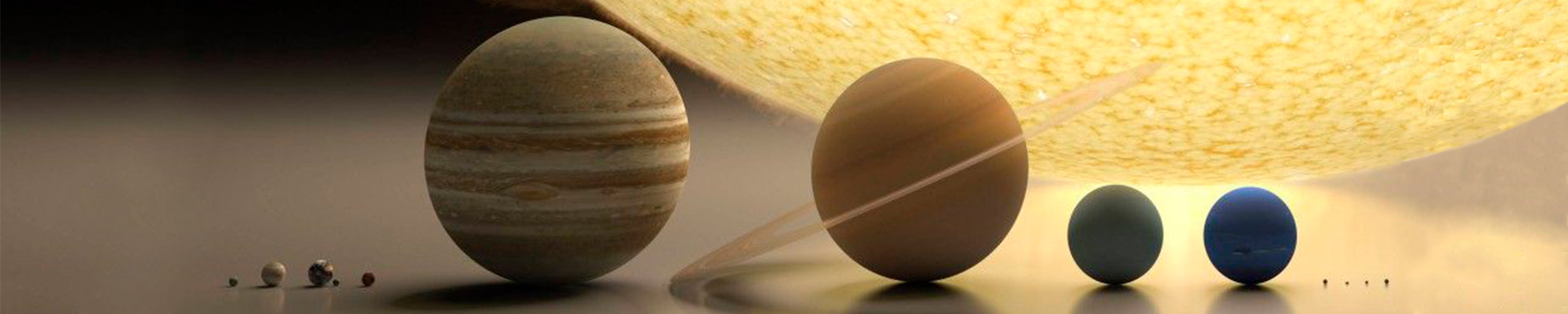
Shortly after sunset, we see Jupiter rising in the east. Right now, Jupiter is the brightest star in the sky except for the Moon. Observe its cloud bands and the constant motion of its satellites. These pass in front of the Jovian disk and cast their shadows, which are clearly visible as circular black spots.
To the southwest you can see the pair of planets Venus and Mercury.Shortly after sunset, beginning at 6 pm, you can observe them together at horizon level but only for half an hour or 45 minutes. As the days go by they will be seen increasingly high until on day 15 Mercury will approach the Sun again and Venus will move away, making it easier to be seen. Throughout the whole month Venus will not rise much above 10° and, therefore, it will be necessary to observe it from locations free of mountains to the southwest.
On day 26 a thin waxing moon will place itself between the two planets. Good opportunity to take a picture of the triplet in the reddish twilight. The next day the Moon will be higher and form a line with Venus and Mercury.
Mars will be visible at dawn to the south in the constellation Leo. Its quick movement has taken it from the Beehive Cluster in Cancer, where it was in early October, to Regulus, at the foot of the Lion. From 10 to 14 October Mars will be very close to this star forming a cosmic duet in the sky. Good time for another picture ... On November 19 the Moon will form a nice triangle with Mars and Venus.
Saturn will rise about two hours before the Sun to the southeast. It is currently located near the star α Vir, Spica, which a very thin waning Moon will join on 22 November.
November is also the month of the Leonids. In 1999 there was a real storm with more than 500 meteors per hour. Unfortunately the night of 17 to 18 the Moon will be located on Cancer, along with Leo, and thus hinder the observation of meteors.
It is worth noting that the asteroid 2005 YU55, of about 400
meters in diameter, is expected to pass Earth at a distance of only 340000 km. This distance is smaller than the Earth-Moon separation. On the night of 8 to 9 November at 00:28 local time, we will see it as a very faint object of 12th magnitude only, not visible at first sight but accessible to modest telescopes. Even so, passing so close, it will travel the sky at a speed of 15° per hour, which is roughly the size of a palm with the arm outstretched. Astronomers assure that its orbit will not intersect with the Earth in the coming centuries, and therefore there is no risk of collision with our planet.
Today, November 2, the moon is at a crescent stage. On the 10 it will be full, while on the 18 we will see it at its last quarter and on the 25 it will be a new moon again.