
Conferències al DAA. Xarrada a càrrec del profesor Franco Vazza, Dipartimento di Fisica e Astronomia, Università di Bologna, Itàlia. Lloc: Seminari del Departament d'Astronomia i Astrofísica, 4a planta de l'Edifici d'Investigació, a Burjassot. Dia: dijous 9 de novembre de 2017. Hora: 12:00.
RESUM:
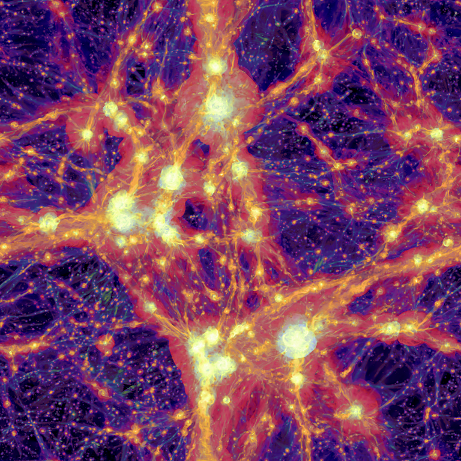
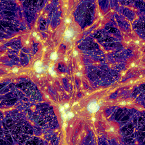
On large scales cosmic matter is distributed in a web consistent of clusters, filaments, walls and voids. While the dark-matter skeleton of the cosmic web is closely traced by galaxies and galaxy clusters, the large-scale gaseous distribution is more hardly detected. The warm-hot intergalactic component (T~10^5-10^7K) where nearly half of the "missing" cosmic baryons should be located, has yet to be firmly detected. The situation may change within the next decade, thanks to the new generation of telescopes that will soon survey the radio sky: LOFAR, MWA, Meerkat, ASKAP and the Square Kilometer Array. By detecting the radio signal from shocked cosmic web, these observations may also discover the origin of extragalactic magnetic fields. I will show how different realistic simulations of the origin of observed magnetic fields in galaxy clusters diverge in filaments and voids, and how the combination of radio observations and other high energy proxies of cosmic magnetism (including the distribution of Ultra High Energy Cosmic Rays) may help solving this fascinating and long-standing puzzle.
Images: