.jpg)
The Chair of Physical Exercise and Childhood Cancer participates in the 10th Meeting of Alcoy and achieves the award for the best communication in Physical Activity.
The 10th Meeting of Researchers on Cancer City of Alcoy, under the slogan ‘Science in movement’, has become, one more year, the meeting point for researchers, health professionals, and social entities. During scientific sessions on 23 and 24 April, new synergies have been created to keep forward towards a more global, inclusive, and human approach of cancer.
The Chair of Physical Exercise and Childhood Cancer took part in the programme as a part of the round table on ‘Cancer prevention and care’, and through oral communications by young researchers:
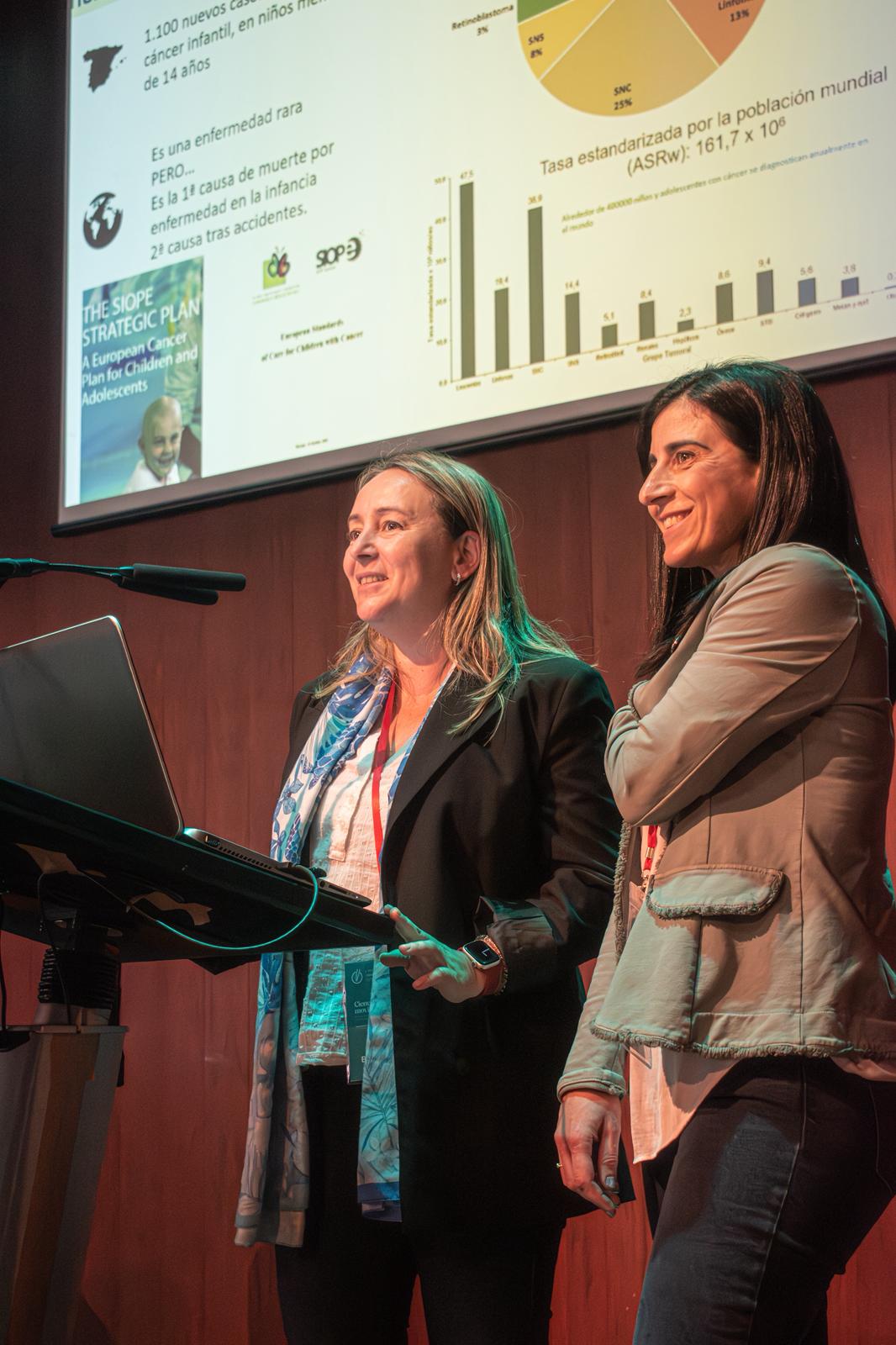
- Speakers of the round table: Julia Balaguer Gil and Inmaculada Aparicio Aparicio (principal ci-investigators of the Chair), presenting ‘Ejercicio físico y cancer infantil’ (‘Physical exercise and childhood cancer’).
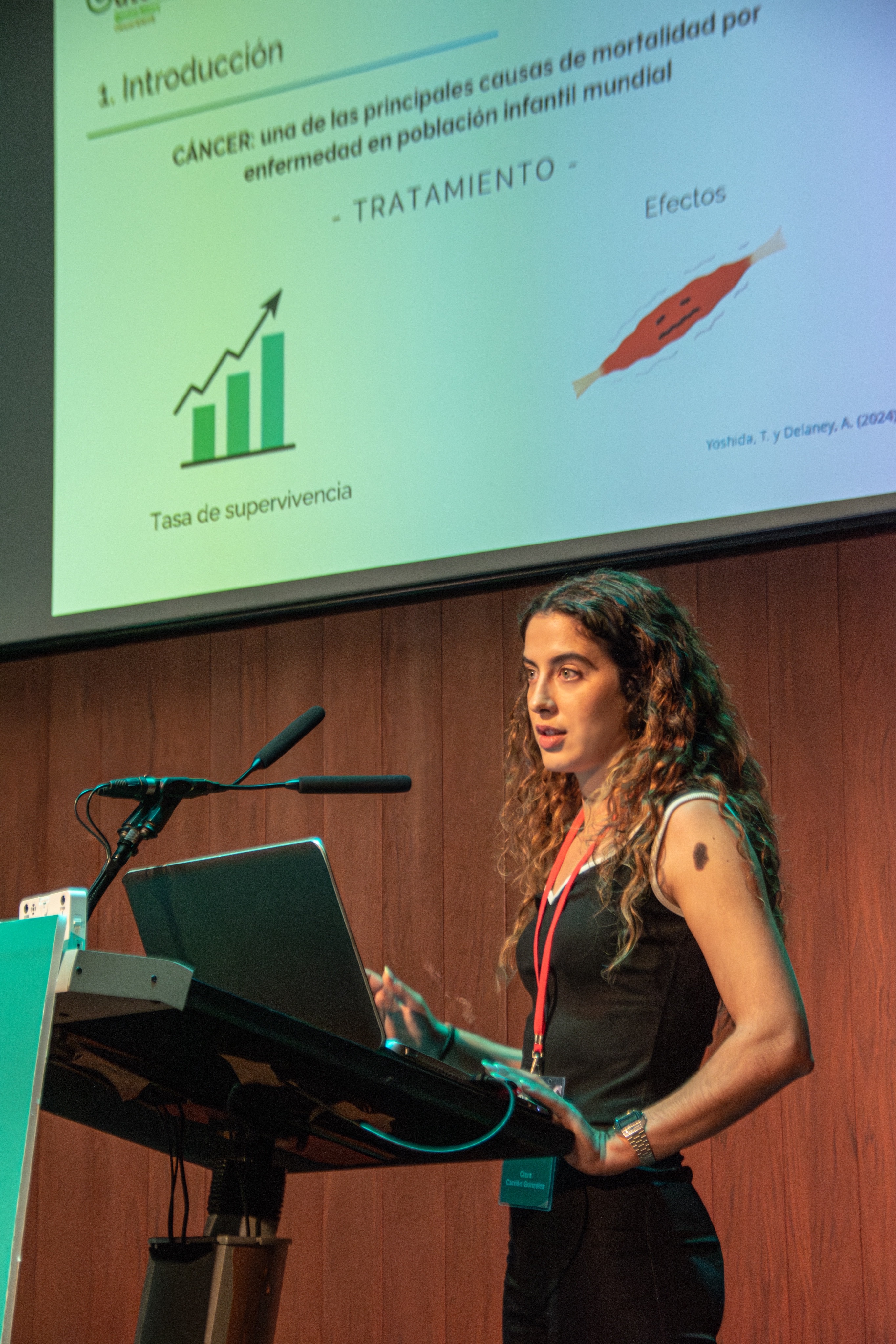
- First oral communication: presented by Clara Carrión González (trainer and researcher of the Chair), entitled ‘Influencia de la adherencia a un programa de ejercicio físico durante el tratamiento oncològico infantil en la fuerza de prensión manual’ (‘Influence of joining a physical exercise programme during a childhood cancer treatment in hand grip strength’), and whose authors are part of the project: Clara Carrión González, Julia Balaguer Guill, José Luis Sánchez Jiménez, Carlos Sendra Pérez, José Ignacio Priego Quesada, María Teresa Tormo Alcañiz, and Inmaculada Aparicio Aparicio.
- Second oral communication: also presented by the young researcher Clara, and featuring the same contributing authors, entitled ‘Factores asociados a la adherencia en un programa de ejercicio físico durante el tratamiento oncològico infantil’ (‘Associated aspects of joining a physical exercise programme during childhood cancer treatment’).
Our progress enabled us to present that joining a 3-sessions per week training for 12 weeks may be associated to greater increases on hand grip strength, whereas ≈1 session per week may be associated to a strength stabilisation trend during the active treatment of childhood cancer. On the other hand, joining the exercise programme during the treatment implies being mainly subjected to clinical factors. Moreover, outpatient environments and flexibility in the different modalities of the programme (face-to-face, online, or self-managed with provided materials) may make it easier to participate in optimising the accomplishment of the sessions in this population.
We want to share that we received the award for the best communication in the field of Physical Activity, focusing on the role of physical exercise as contributory to childhood cancer treatment. Thanks to the organisation, the contributing entities, and to all the people that make it possible to keep forward in cancer research, building bridges between the laboratory and the clinical practice.
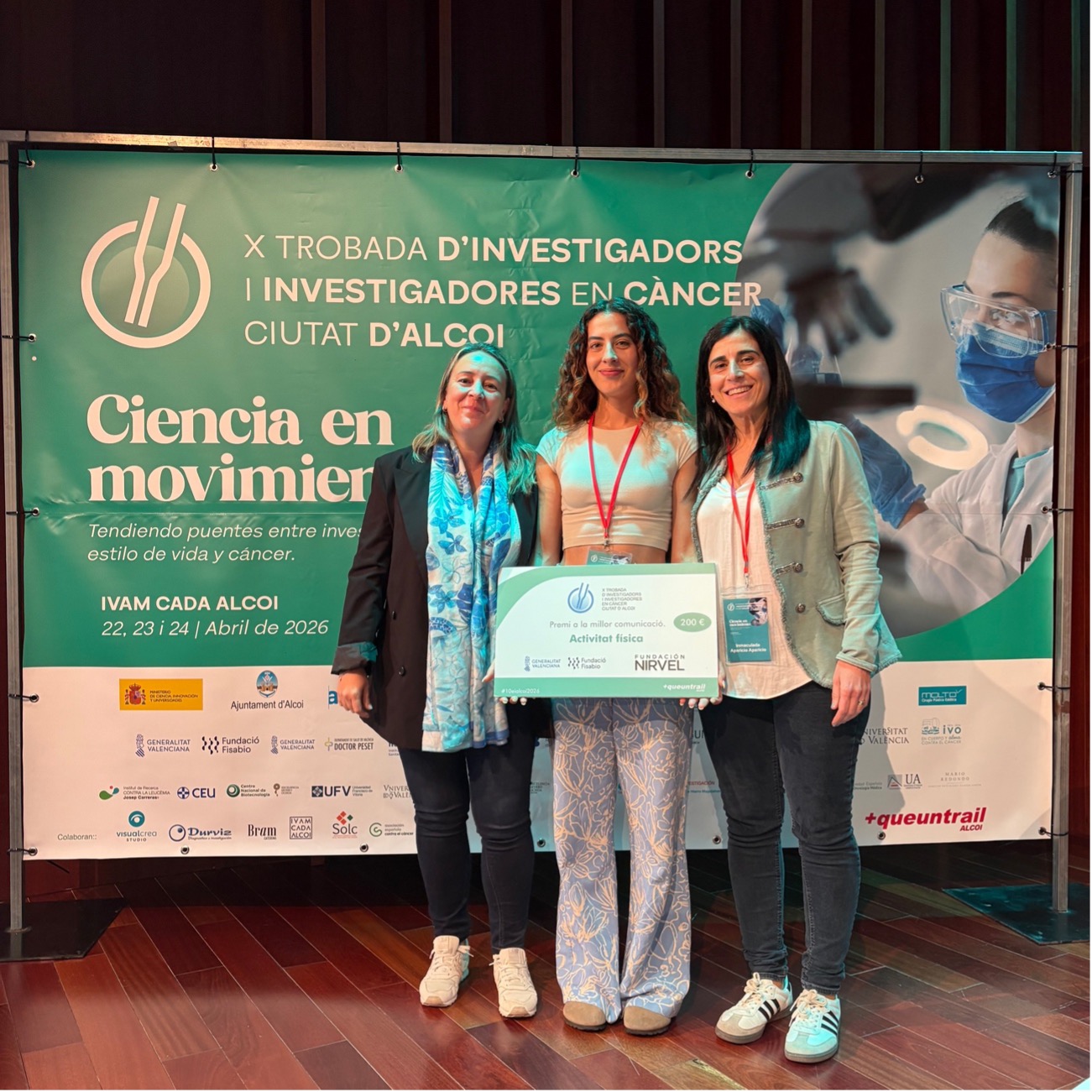
Award to the best oral communication by young researcher on Physical Activity.
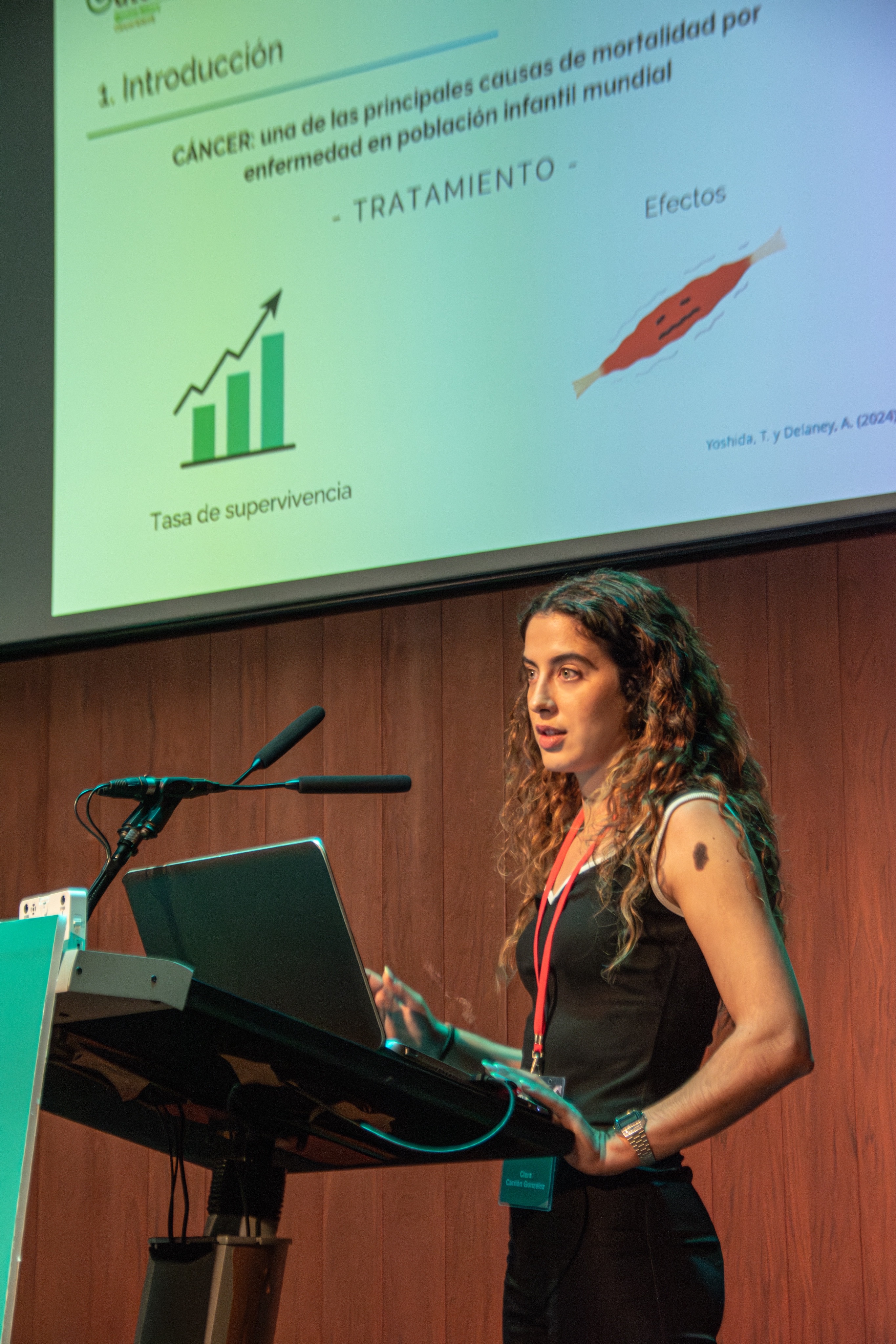
Clara Carrión presenting the awarded oral communication.
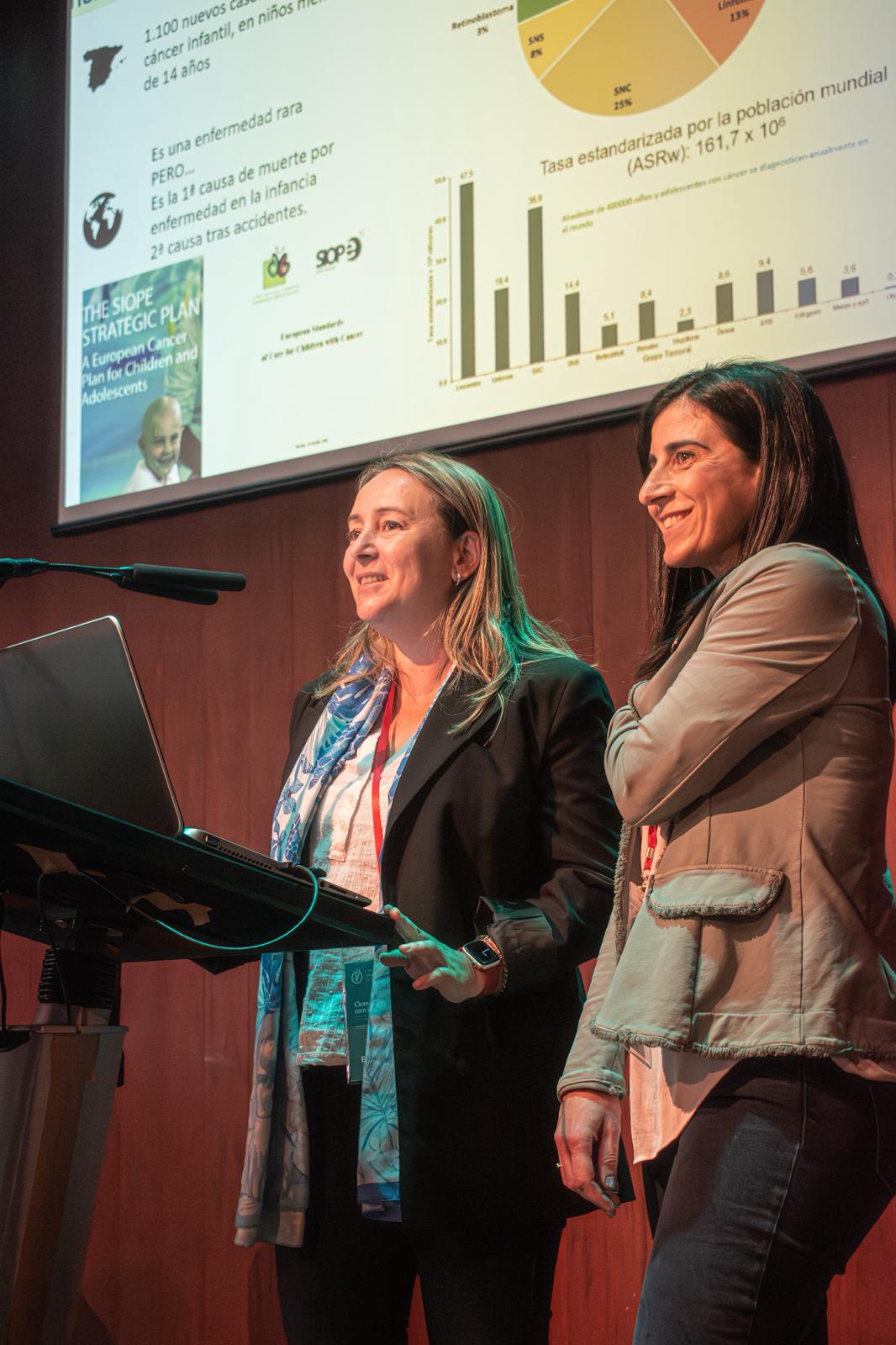
Principal co-investigators of the Chair Julia Balaguer (left) and Inmaculada Aparicio (right)