.svg)



A study questions the pedagogical capacities of images in the history text books
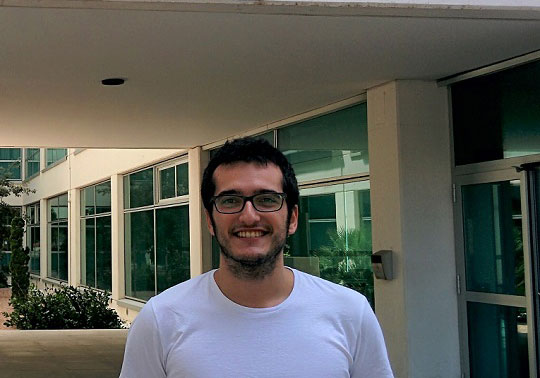
The research, which is conducted by Juan Carlos Bel Martínez of the Faculty of Teacher Training of the Universitat de València, highlights that most text books images play a decorative role. The work, which analyses text books of two different educative laws, underlines that there is no evolution when it comes to the use of images. Moreover, the researcher affirms that the publishing houses do not promote the visual literacy and the historical capacities of the students through photographs and pictures.
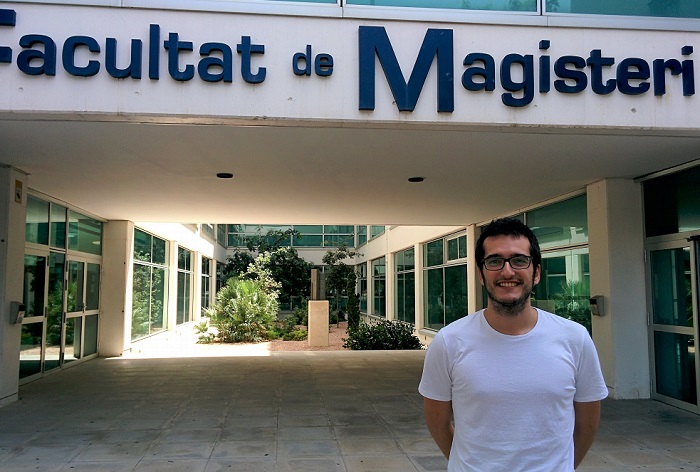
The study has been published in the prestigious Revista de Educación that is attached to the Ministry of Education, Culture and Sport. It goes into detail about the pedagogical potential of the figurative images and it analyses if textbooks take advantage of their educational capacities. ‘An appropriate use of images is essential to develop the creative aspect of the construction of solid historical knowledges’, says the author. Nevertheless, according to Bel Martínez ‘the publishing houses widely fail in taking advantage of these abilities in students and continue pushing images in the background and giving them a decorative purpose’.
The research confirms this under-use of images as historical sources. Furthermore, most of them are not related to an activity that promotes the students’ skills but rather are used as an illustrative element.
Juan Carlos Bel Martínez has analysed 27 manuals that correspond to fifth and sixth years of Primary Education and that have been published under two different laws: ‘LOGSE’, in implementation between 1991 and 2006, and ‘LOMCE’, in force since 2013. This is an ‘extraordinarily wide sample’. The author has classified the images according to four criteria: presence and type of images, level of cognitive complexity and link to the manual text.
The difficulty of the activities with images has not undergone a great evolution in the two studied periods. ‘The tasks of low cognitive complexity are the most numerous in most of the sample, that’s why the poor and superficial approaches to historical sources prevail’, warns Bel Martínez. However, the researcher recognises a slight increase in the high complexity activities during the application period of LOMCE.
Among the most used resources, the author emphasizes the infantilized pictures and warns of the risks of their use in abundance: ‘the pictures are reinterpretations created from the cultural vision of the society in which they are generated’. Therefore, and to avoid misinterpretations of the historical events, he advises to design current images but based on scientific evidences taken from the past.
‘Attaching so much importance to the superficial description of the sources means to promote in the student a consideration towards these as sterile objects that cannot make significant contributions to the construction of historical knowledge’, warns the author, who also warns that this dynamics limits the possibilities for learning and debate about historical events.
Bel Martínez attributes this phenomenon to the importance of the disciplinary code of history that ‘gives preference to the learning of factual contents than to the development of critical proceedings’. Moreover, it uses the text as the main source of information and data and this is a close element which cannot be open to interpretations. According to Bel, this code ‘continues being decisive in the educational proposals of the main publishing houses’.
The research has been developed as a part of the project ‘Competencias sociales para una ciudadanía democrática: análisis, desarrollo y evaluación’. It is included in the R&D National Plan of the Ministry of Economy and Competitiveness and it has been funded with FEDER funds.
Trajectory
Juan Carlos Bel Martínez is pre-doctoral researcher of the Faculty of Teacher Training of the Universitat de València. He is member of SOCIAL(S), Research and innovation group on Geography and History Teaching that is attached to the Department of Experimental and Social Sciences Teaching. This group studies the pedagogical dynamics related to the treatment and teaching of social sciences at classrooms.
Article:
Juan Carlos Bel Martínez (2017): «Imagen y libros de texto de Historia en Educación Primaria: estudio comparativo a partir de un análisis cualitativo», Revista de Educación, 2017, nº 377, pp. 82-112. DOI 10.4438/1988-592X-RE-2017-377-354
Link: https://sede.educacion.gob.es/publiventa/descarga.action?f_codigo_agc=18495
Categories: Historia , Ciències de l'Educació , Recerca, innovació i transferència
Other News