
.jpg)
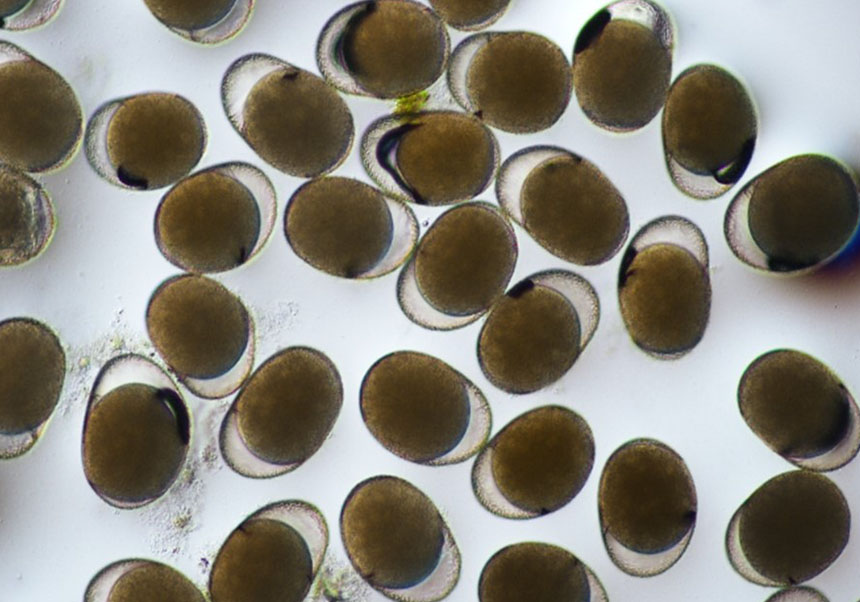
A study conducted by the Cavanilles Institute of Biodiversity and Evolutionary Biology at the University of Valencia has identified the types of adaptive responses that can evolve in rotifers (microscopic aquatic invertebrates) depending on environmental variability, in order to promote survival. The research is part of a national project funded by the Spanish Ministry of Science, Innovation and Universities.
The study is based on the premise that organisms inhabiting environments subject to seasonal variation require strategies that synchronise their life cycles with favourable periods, thereby maximising the survival of their offspring. Within this theoretical framework, two main strategies can be distinguished.
When environmental changes are predictable, organisms can respond through phenotypic plasticity, adjusting the development of their offspring in advance. Conversely, when the environment is unpredictable, risk-mitigation strategies (bet hedging) may be favoured, increasing the likelihood that at least some offspring will survive. As environments are rarely entirely predictable or unpredictable, a combination of both strategies is to be expected. “The most novel aspect of this research is that it is the first time that both types of responses are studied jointly in this type of organism”, highlights Eduardo García-Roger.
The aim of the study is to analyse the combined expression of phenotypic plasticity and risk-minimisation strategies in the hatching of eggs of Brachionus plicatilis, a rotifer that inhabits temporary ponds. To this end, populations from environments with different levels of predictability were compared, and it was assessed whether salinity could act as a signal of environmental predictability, indicating the onset of favourable conditions for hatching.
The organisms studied are frequently used “as model systems in ecological and evolutionary studies”, notes Eduardo García-Roger. They play a key role in maintaining trophic chains, as they are central to energy production for higher consumers such as small fish.
The project concludes that populations from more predictable environments exhibit greater phenotypic plasticity, adjusting hatching in response to salinity. In general, higher hatching rates are observed at lower salinity levels. In contrast, populations from unpredictable environments show a lower proportion of hatching eggs and greater variation in hatching times. The findings demonstrate that plasticity and risk-reduction strategies can coexist, jointly contributing to survival in fluctuating environments.
The study was carried out by Carlota Solano-Udina, María José Carmona and Eduardo M. García-Roger, from the Evolutionary Ecology Unit of the Cavanilles Institute, with funding from grant PID20201141536B-100 awarded by MCIN/AEI/10.13039/501100011033 and ERDF A way of making Europe, and grant PRE2021-097037 awarded by MCIN/AEI/10.13039/501100011033 and ESF Investing in your future.
Article reference: Solano, C., Carmona, M. J., García, E. (2026). "Adaptive responses to environmental variability in rotifers: Integrating plasticity and bet hedging in dormancy exit". Ecological Society of America. https://doi.org/10.1002/ecy.70346



