.jpg)

An international team jointly led by the University of Valencia (UV), the Institute of Grapevine and Wine Sciences (ICVV-CSIC), and the Institute of History (IH-CSIC) is reconstructing the origins of Iberian viticulture using DNA from archaeological seeds. The study, published in the journal Current Biology, concludes that the first cultivated grapevines on the peninsula arrived from the Eastern Mediterranean approximately 3,000 years ago, and that their lineage persists in modern-day vineyards.
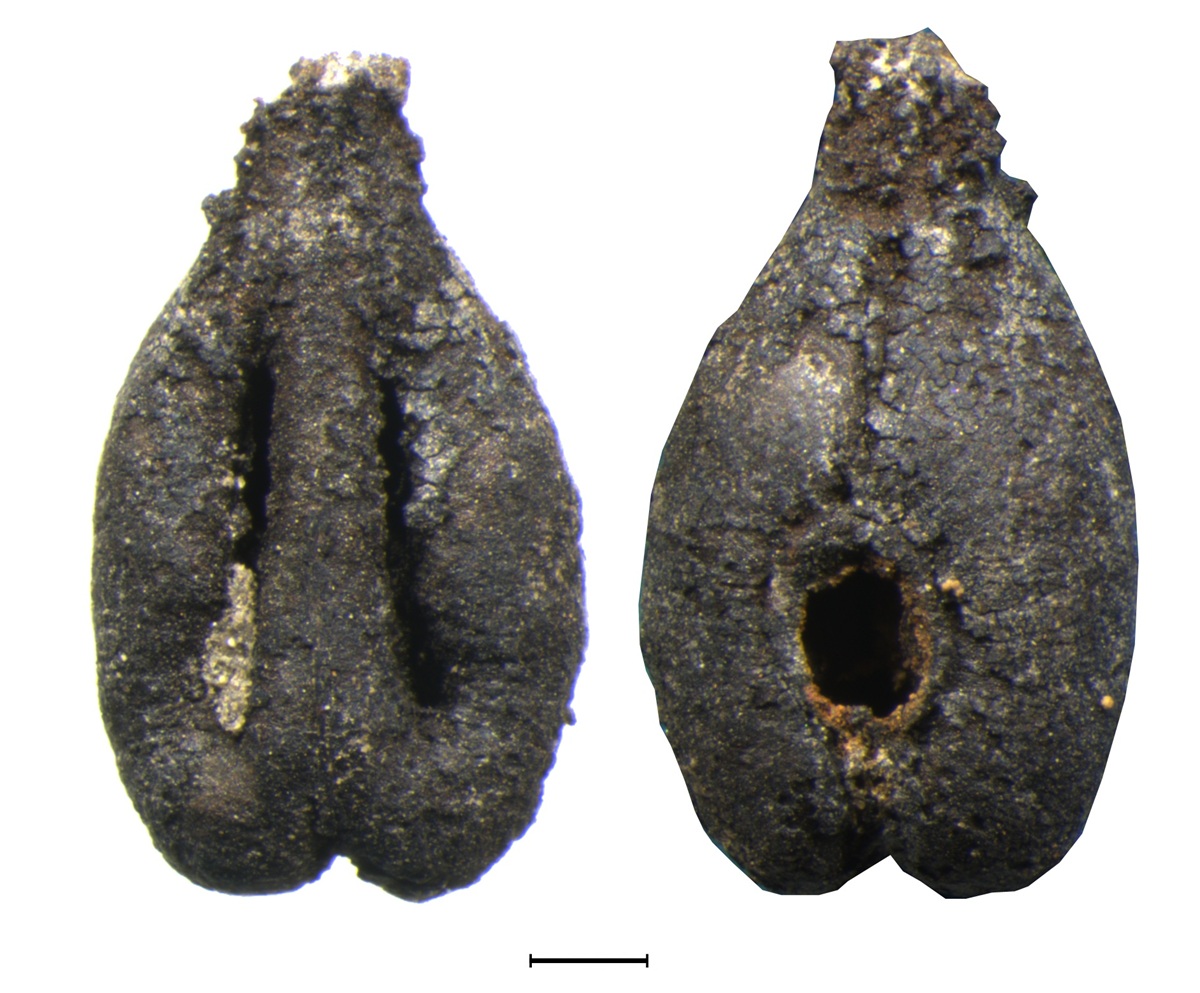
The project, coordinated by Carolina Royo (ICVV) in collaboration with Guillem Pérez-Jordà (UV) and Leonor Peña Chocarro (IH), involved analyzing 28 grapevine seeds (Vitis vinifera L.) from archaeological sites in the Iberian Peninsula and Sardinia. The findings reveal that these initial cultivated varieties introduced to Iberia were genetically related to domesticated vines brought by Eastern settlers who established themselves in the southern and eastern parts of the peninsula.
The analysis of ancient DNA –that is, biological remains from the past, in this case seeds– has made it possible to establish how these strains of eastern origin began to be cultivated and how they quickly interbred with local wild varieties, giving rise to new varieties.
“The results show that these first grapevines crossed at an early stage with local wild populations, contributing to the formation of the genetic lineages that would give rise to many of the traditional varieties of the Iberian Peninsula, already identifiable in seeds dating from the fourth century BC”, explains Pérez Jordà, researcher in the Department of Prehistory, Archaeology and Ancient History (UV).
One of the study's most surprising conclusions is the persistence of certain strains over the centuries. Genetic analysis has made it possible to identify family relationships between seeds from different periods and even links with varieties still preserved today. The researchers found evidence linking medieval seeds to modern varieties such Valencian raisin and demonstrated that the founder variety heben has remained in cultivation for at least the past 1,100 years.
The findings confirm that the spread of viticulture towards the western Mediterranean was driven primarily by the Phoenician settlers who established themselves in various parts of the western Mediterranean, bringing with them grape varieties originating in the east.
This practice was quickly adopted by local populations. As a result, vineyards and wine production expanded significantly across southern and eastern Iberia, eventually taking on a commercial character from the late eighth century BC onwards.
Over recent years, the three institutions (UV, ICVV and IH) have worked to develop new scientific capabilities in archaeogenomics and ancient DNA analysis. This area of research makes it possible to incorporate palaeogenetic information as an essential element in reconstructing the history of a product that from this point onwards became a fundamental part of our agricultural and cultural heritage.
These tools open up new opportunities for linking research into viticulture, historical heritage, biodiversity and the conservation of traditional varieties. The study also involved researchers from the University of Manchester, the University of London, the University of Montpellier, the University of Lleida and the University of Tübingen.
Images: