.jpg)
Two research teams from the University of Valencia and the Jaume I University of Castellón have developed a material and its synthesis method based on multivariate modulation metal–organic frameworks (MOFs) that can be used as a catalyst, particularly for the conversion of CO₂ into formate (for example, sodium formate is used in food preservation or in airport de-icing operations).
The new material offers several technical advantages, including enhanced activity compared with conventional metal–organic frameworks, high selectivity in the conversion of CO₂ into products of industrial interest, the possibility of modulating structural and functional properties, reduced energy costs and the potential to adapt it to different metals, modulators and catalytic applications.
The material, validated on an experimental scale in a laboratory environment and protected by a Spanish patent application, is seeking collaboration with companies for developing and adapting the technology to specific applications through tailored agreements and subsequent licensing agreements. The technology is aligned with decarbonisation and circular economy strategies, and the synthesis method shows potential for scaling up to industrial applications.
The invention is of particular interest to sectors such as the chemical and petrochemical industries; CO₂ capture, utilisation and valorisation technologies; catalysis and advanced catalytic processes; sustainable chemical processes and energy; production of value-added chemicals from renewable raw materials; and advanced materials and functional nanomaterials.
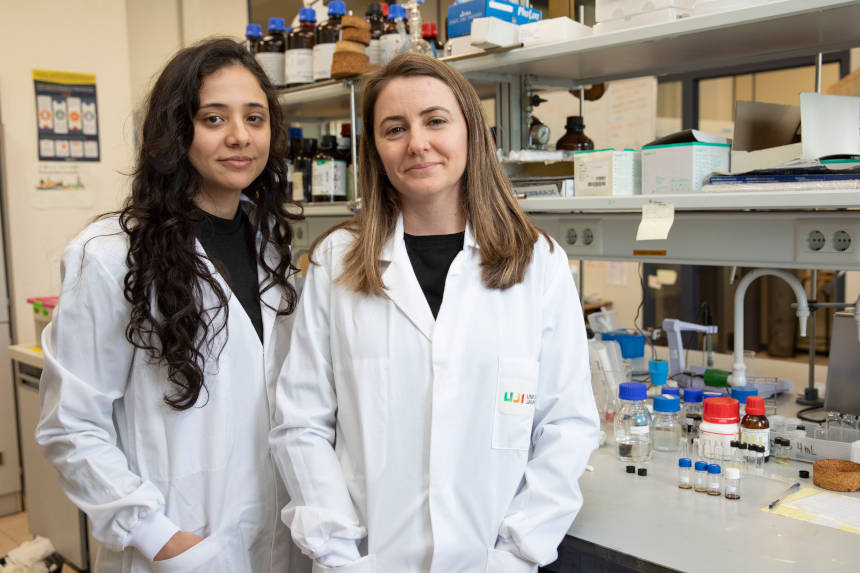
The research team includes the Defect Engineering of Responsive Advanced Materials (DREAM) Group, led by Isabel Abánades Lázaro and based at the Institute of Molecular Science (ICMol) of the University of Valencia, together with ICMol-UV researcher Carmen Rosales Martínez.
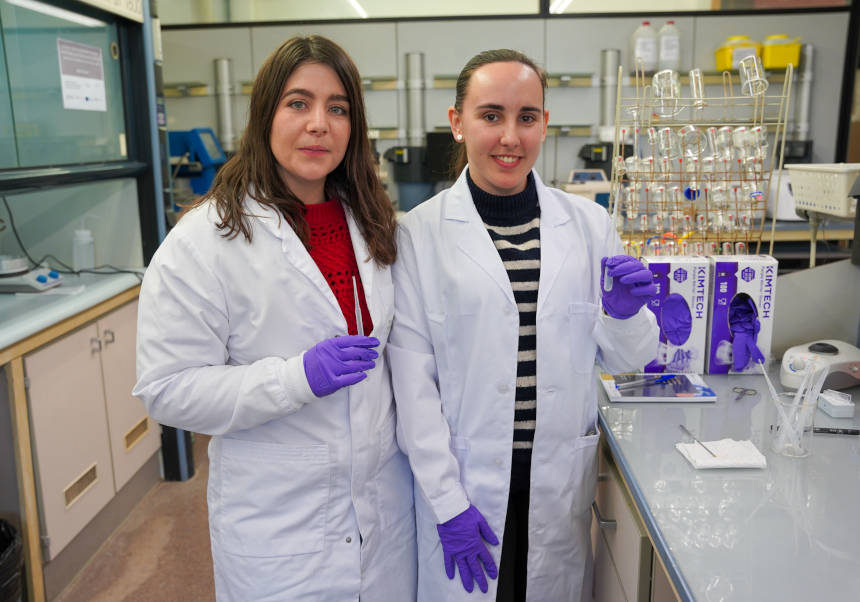
Leading the research at both universities is Marcileia Zanatta, from the Materials for Advanced Sustainable Production (MASP) Group at the Institute of Advanced Materials (INAM) and the Molecular Materials Group of the Department of Physical Chemistry at the Jaume I University of Castellón, with the participation of Vitória Gonçalves Santos Souza Pina.
The research leading to this new material was funded by the La Caixa Foundation through the Junior Leader postdoctoral grant awarded to Marcileia Zanatta (LCF/BQ/PR24/12050016) and by the Spanish Ministry of Science, Innovation and Universities (MICIU) through the Knowledge Generation Project (PID2023-148580NA-I00) led by Isabel Abánades.
Images: