.jpg)
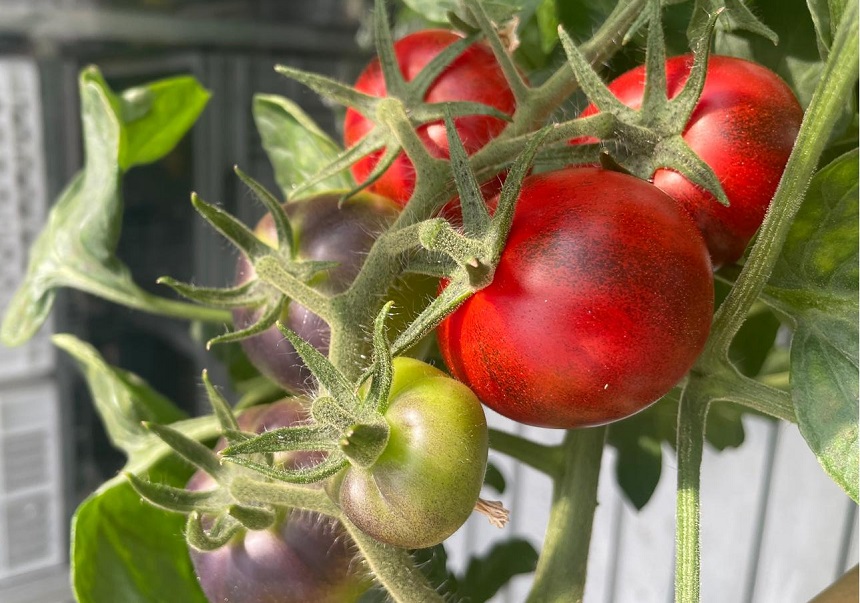
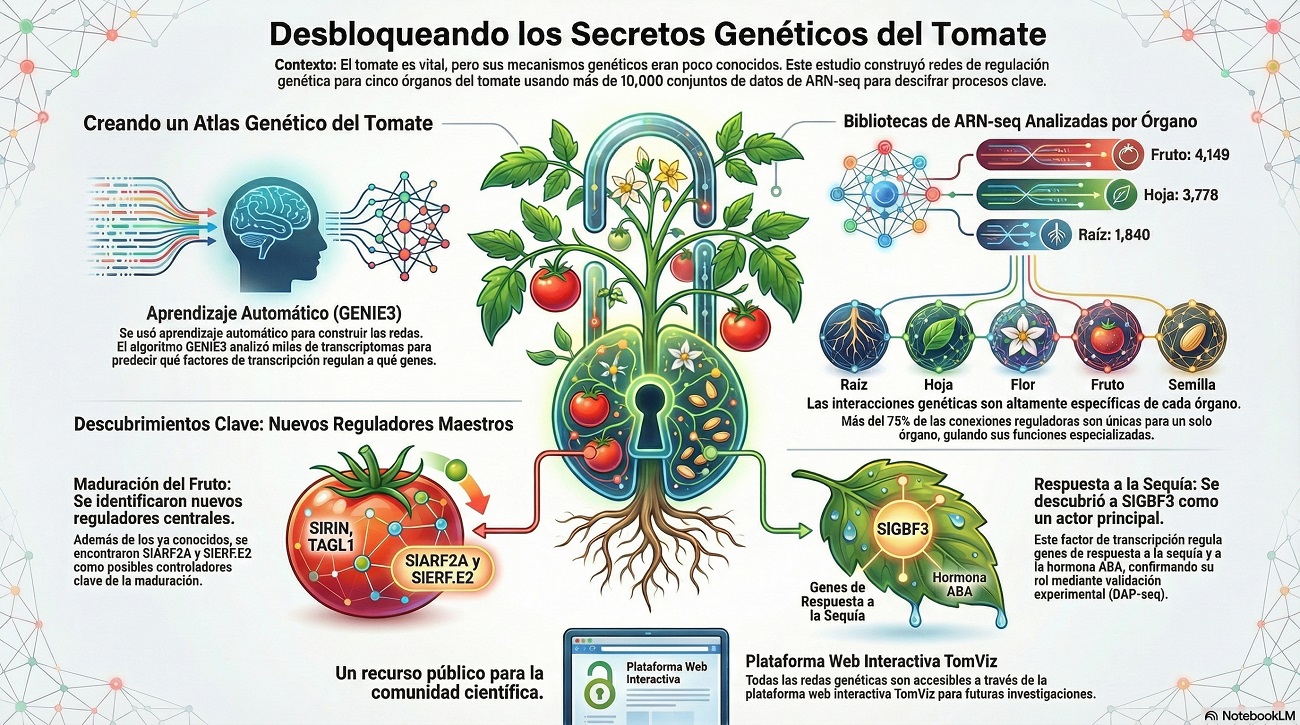
A study by the Institute of Integrative Systems Biology (I2SysBio), a joint centre of the University of Valencia and the Spanish National Research Council (CSIC), together with the Millennium Nucleus Phytolearning (Chile), has deciphered how tomato (Solanum lycopersicum) genes communicate with one another to coordinate essential processes such as fruit ripening and drought response.
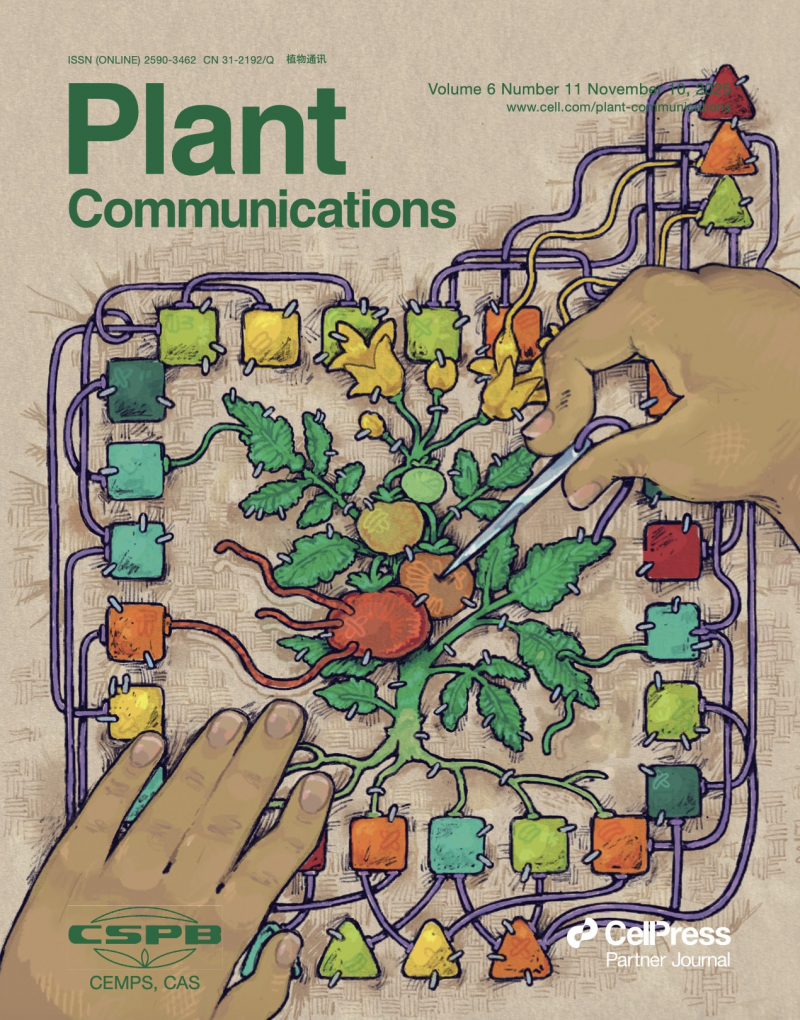
This finding, published in the journal Plant Communications, opens new avenues for developing more resilient and sustainable crops in the context of climate change. The study has also been featured as the cover image of the November 2025 issue.
Led by Tomás Matus, researcher at I2SysBio, together with Elena Vidal and José Miguel Álvarez, both directors of the Millennium Nucleus Phytolearning, the study reveals that tomato plant function depends on complex interaction networks, in which each organ – roots, leaves, flowers and fruits – organises its own regulatory strategy.
To achieve this, the research team analysed more than 10,000 gene expression datasets from different organs and environmental conditions and reconstructed how genes communicate with each other. “What we finally managed to do was understand who gives the orders, who responds and how that conversation changes between a root, a leaf or a fruit”, explains Vidal.
This work has also made it possible to generate a true “functional map” of tomato metabolism, identifying the most influential nodes in the network: genes that act as coordinators of the response to water stress (drought) and fruit development. “With this information, we can design smarter genetic improvement strategies based on complete networks rather than isolated hypotheses”, notes Matus, co-author of the article and leader of the TomsBio Lab at I2SysBio (https://tomsbiolab.com/).
A network-based view in the face of climate change and drought
For decades, research aimed at crop improvement has focused on identifying the “miracle gene”. This study marks a paradigm shift: modifying a single gene can have cascading effects across the entire network, making system-level strategies essential.
“Adopting a ‘network’ perspective allows us to understand that in plants there are no genes acting in isolation, but rather complex communication systems in which each gene influences many others”, explains Matus. In contexts such as climate change and drought, this approach is crucial, as it helps reveal how plants reorganise their internal networks to adapt to stress.
“As crops increasingly face extreme conditions, understanding these networks can help us anticipate and select varieties with more efficient resilience strategies, instead of focusing on a single ‘miracle gene’. It is a more realistic and modern way of understanding plant biology in the face of climate change”, Matus adds.
TomViz: an open web-based platform
TomViz (https://plantaeviz.tomsbiolab.com/tomviz) is an interactive platform developed as part of the project that allows users to explore tomato gene regulatory networks in a simple and visual way. Integrated within the PlantaeViz environment, this tool provides the scientific community with open access to data and functionalities to query genes, identify their connections and generate customised subnetworks. It also includes options for enrichment analysis, visualisation of gene positions within the genome and downloading results in multiple formats.
Article reference:
Fernández J.D., Navarro-Payá D., Santiago A., Cerda A., Canan J., Contreras-Riquelme S., Moyano T.C., Landaeta-Sepúlveda D., Melet L., Canales J., Johnson N.R., Álvarez J.M., Matus J.T., y Vidal E.A (2025). Organ-level gene-regulatory networks inferred from transcriptomic data reveal context-specific regulation and highlight novel regulators of ripening and ABA-mediated responses in tomato. Plant Communitacions, 2025 DOI: 10.1016/j.xplc.2025.101499
Images: