.jpg)
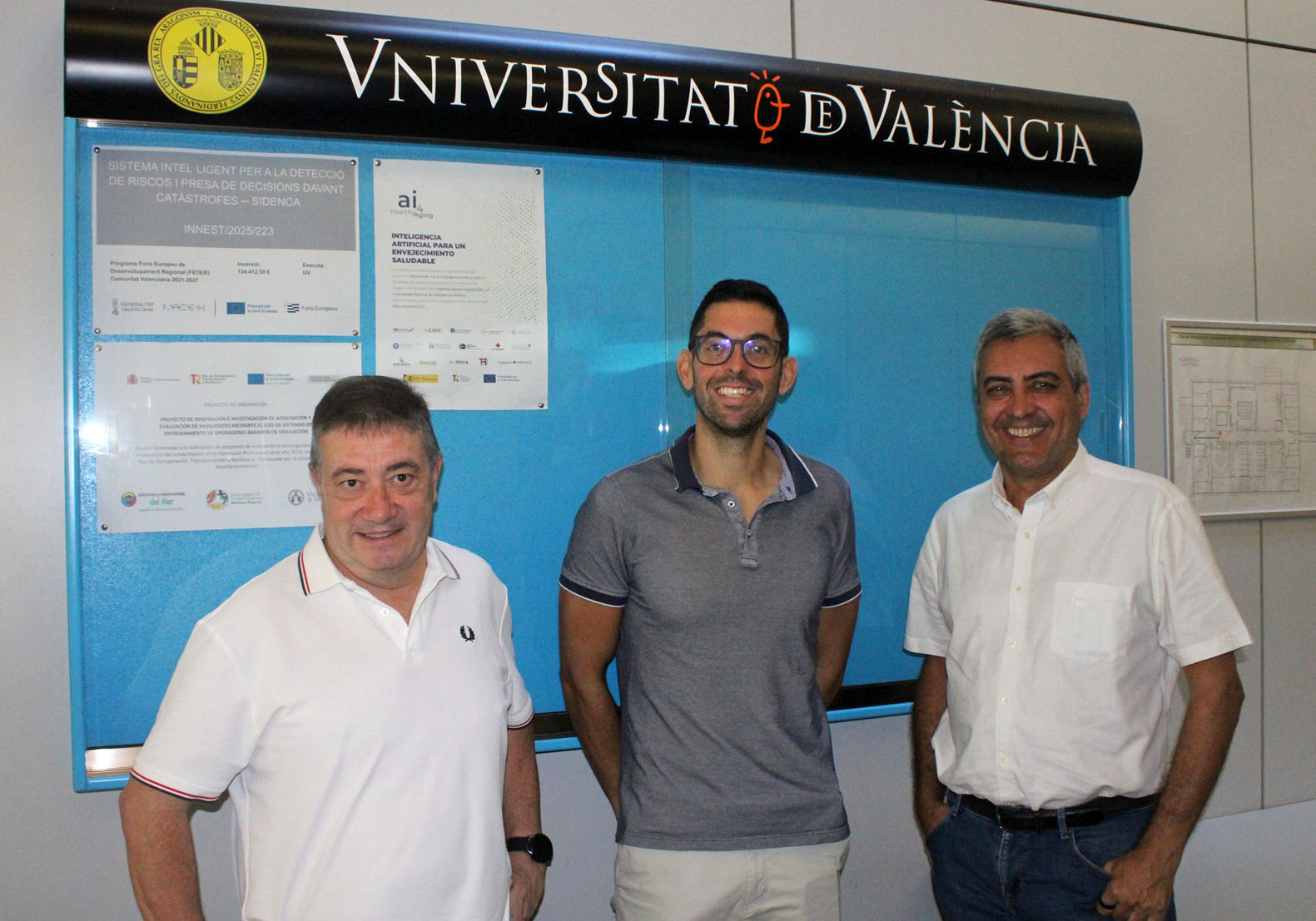
David García Rodríguez, José Javier Samper Zapater and Juan José Martínez Durá, researchers at the Integrated Laboratory for Intelligent Systems and Traffic Information Technologies (LISITT) of the University of Valencia (UV), are leading the scientific selection of articles on remote sensing for a special issue of Remote Sensing, one of the most widely read and influential journals in the sector.
The special issue, “Artificial Intelligence and Big Earth Observation Data for Sustainable Development Goals”, has appointed these researchers, also affiliated with the UV’s Institute of Robotics and Information and Communication Technologies (IRTIC), as guest editors. They will define the theme and scope of the special issue, identify and invite researchers from around the world to submit their work, assess manuscripts and oversee the peer-review process, working within the journal’s structure and remaining at the forefront of scientific research in this field.
The use of artificial intelligence (AI), machine learning, geospatial analytics and interoperable data frameworks for exploiting Big Earth Observation data in support of the Sustainable Development Goals (SDGs) are among the topics related to advances in remote sensing that the special issue aims to bring together. The call for papers is open until 31 March 2027, and articles must be submitted through the journal’s website. It is common practice for scientific journals to appoint guest editors for special issues from among recognised members of the scientific community.
Contributions may address methodological developments, operational applications, validation strategies, approaches based on findable, accessible, interoperable and reusable (FAIR) data, semantic interoperability, multi-source data fusion, cloud-based processing and decision-support tools.
The editors are particularly interested in studies demonstrating how remote sensing and geospatial technologies can contribute to environmental monitoring, climate resilience, agriculture, water resources, biodiversity, urban sustainability and other challenges related to the SDGs.
Remote Sensing (ISSN 2072-4292) publishes research articles, reviews, technical notes and communications covering different aspects of remote-sensing science, from sensor design and validation and calibration to applications in the geosciences, environmental sciences, ecology and civil engineering.