.jpg)

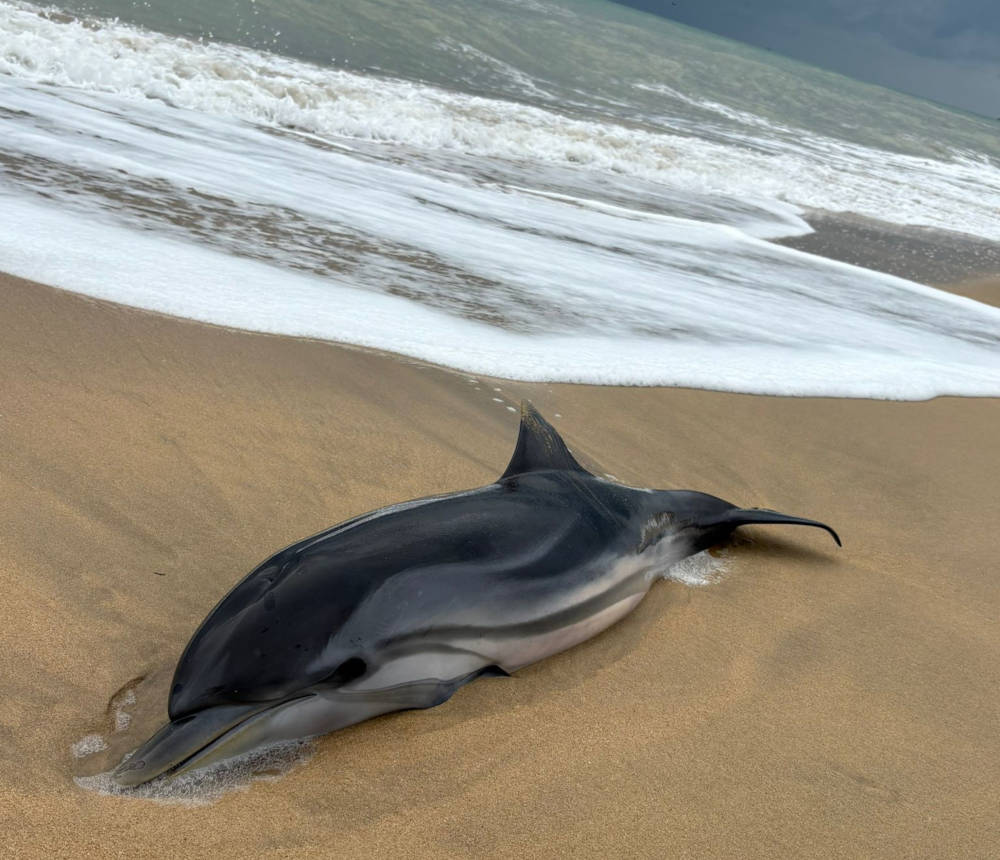
A study led by the University of Valencia, in collaboration with scientists from Princeton University, shows that epibionts — small organisms that live on the skin of dolphins — can help detect changes in their populations following the two major morbillivirus epidemics recorded in the Mediterranean since 1990.
In the final decade of the 20th century, the first mass mortality event of Mediterranean striped dolphins (Stenella coeruleoalba) caused by dolphin morbillivirus (DMV) was detected. To date, two such outbreaks have been recorded, resulting in the deaths of numerous individuals in different areas of the Mediterranean. However, “their long-term impact on the abundance of the species remained difficult to assess, and the main reason was the lack of reliable population estimates covering wide geographical areas and long periods of time”, highlights Sofía Ten, a postdoctoral researcher at the Marine Zoology Unit of the Cavanilles Institute of Biodiversity and Evolutionary Biology (ICBIBE) at the University of Valencia (UV) and lead author of the article published in the Journal of Animal Ecology.
To overcome this limitation, a research team from the University of Valencia, in collaboration with scientists from Princeton University, explored an alternative approach: using epibionts — organisms that live attached to the body surface of other animals — as indirect indicators of changes in host populations.
The results obtained in the study suggest that declines in striped dolphin populations associated with morbillivirus outbreaks likely triggered a cascade of effects on more specialised epibionts, particularly Xenobalanus globicipitis and Syncyamus aequus. “As these organisms depend more closely on striped dolphins, they reflect changes in the abundance of their host more clearly”, notes Ten.
It follows that the long-term monitoring of specific epibionts could become a useful tool for inferring changes in populations of marine species that are difficult to monitor directly. Therefore, “when abundance data are scarce or discontinuous, these small organisms can offer valuable clues about the health and evolution of their host populations in the Mediterranean ecosystem”, the Valencian researcher concludes.
Three epibiont crustaceans
As Sofía Ten explains, the study focused on three epibiont crustaceans that are commonly found on the skin or fins of striped dolphins: the barnacle Xenobalanus globicipitis, the amphipod Syncyamus aequus and the copepod Pennella balaenoptera. These species have different life cycles and varying degrees of dependence on their hosts. While some are closely associated with the striped dolphin, others can parasitise or colonise different marine species. This difference allows their long-term trends to reflect variations in dolphin populations in distinct ways.
To investigate this relationship, the scientific team combined historical data analysis with ecological modelling tools. First, records of epibiont presence collected between 1980 and 2023 were analysed using generalised additive models (GAMs), a statistical technique that enables the identification of temporal trends in complex ecological data.
Subsequently, a theoretical framework was developed in two stages. In the first, a SIR epidemiological model was used to estimate the demographic impact of the two morbillivirus outbreaks under different scenarios, taking into account variables such as mortality caused by the disease and the duration of the infectious period. In the second stage, the estimates of the dolphin population decline were incorporated into a mechanistic model that simulated how these variations in host abundance could influence epibiont populations.
International collaboration
Although led by the University of Valencia’s Cavanilles Institute, the study is the result of a collaboration between the University of Valencia and Princeton University. Sampling of dolphins stranded in the Mediterranean was carried out through the Valencian Community Stranding Network, while the data were collected at the facilities of the Cavanilles Marine Zoology Unit.
The scientific study is supported and funded by the VARACOMVAL project of the Biodiversity Foundation of the Ministry for the Ecological Transition and the Demographic Challenge (MITECO), within the framework of the Recovery, Transformation and Resilience Plan (PRTR) NextGenerationEU; the Wildlife Service and the Regional Ministry of Environment, Water, Infrastructure and Territory of the Generalitat Valenciana; the Generalitat Valenciana [project CIAICO/2024/110]; and the University of Valencia [predoctoral grant UV-INV-PREDOC15-265927].
Article reference: Ten S., Dupont G., Raga J. A., Dobson A. P. & Aznar F. J. (2026). “Long-term trends of epibionts reflect Mediterranean striped dolphin abundance shifts caused by morbillivirus epidemics”. Journal of Animal Ecology, 95, 553–569. https://doi.org/10.1111/1365-2656.70216