
.jpg)
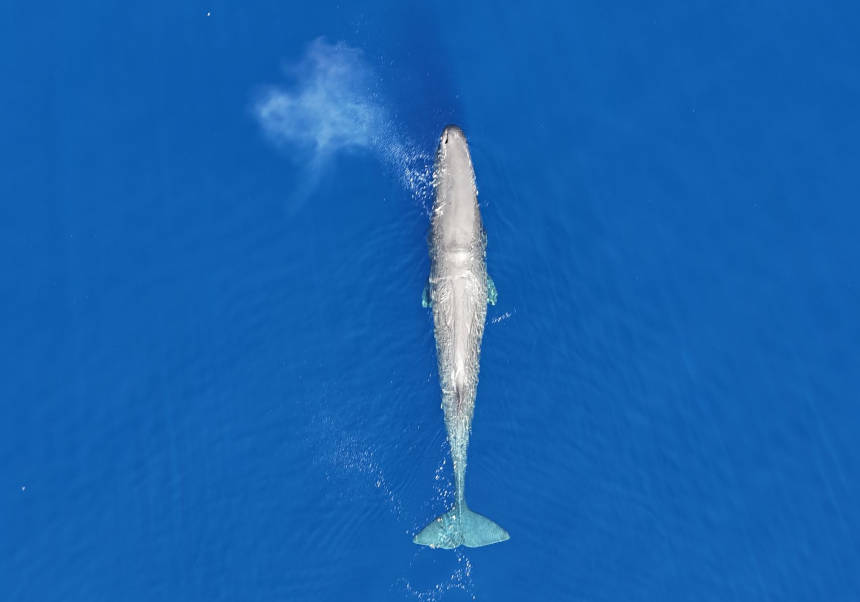
A research team from the Cavanilles Institute of Biodiversity and Evolutionary Biology (ICBiBE) at the University of Valencia (UV) has developed an innovative approach based on low-cost acoustic devices to expand the monitoring of cetaceans in the western Mediterranean. The study, recently published in the journal Remote Sensing in Ecology and Conservation, demonstrates how underwater acoustic sensors and video cameras can be integrated into various platforms of opportunity, such as fishing gear or vessels, to collect key information on the presence of these animals.
Monitoring cetaceans in the ocean is a complex task. Traditional methods, such as visual surveys from boats or light aircraft, depend on environmental conditions and are often limited to short periods. In contrast, passive acoustic monitoring (PAM) enables the detection of animals through the sounds they emit, such as echolocation clicks or whistles, using underwater sensors (hydrophones), regardless of visibility, sea conditions or time of day. This non-invasive approach also allows the study of cetacean behaviour, distribution and interactions with human activities.
The high cost of traditional systems has limited their widespread use. In this context, an international team led by the Spatial Marine Lab at the University of Valencia has assessed the use of compact, affordable and user-friendly acoustic devices, deployed in collaboration with fishers, scientific organisations and whale-watching operators. These sensors were installed on fishing gear and used during boat-based surveys, demonstrating their ability to record vocalisations of species such as the sperm whale and various dolphins.
“Bioacoustics is a key tool for understanding how marine ecosystems function, as sound is a fundamental component of the ocean. However, its use is still quite limited”, explains David March, principal investigator of the project. “The possibility of integrating low-cost acoustic sensors into platforms of opportunity, such as boats or fishing gear, opens the door to significantly expanding our capabilities for observing and monitoring the ocean”, he adds.
The study also highlights the potential of these devices to promote citizen science. Their ease of use allows divers, fishers and wildlife-watching companies to contribute to data collection, generating large-scale, distributed monitoring networks.
Greta Jankauskaite, a doctoral researcher at the University of Valencia and lead author of the article, emphasises the importance of this approach for cetacean conservation: “Many cetacean species spend much of their lives underwater and are difficult to spot visually. Acoustic monitoring allows us to ‘listen’ to them and better understand their presence, behaviour and responses to human pressures, which is essential for their protection”.
This work forms part of several research initiatives led by or involving the University of Valencia. These include the IOS4DOM project, funded by the Generalitat Valenciana through the CIDEGENT programme, which promotes the integration of non-invasive methods to improve the monitoring of marine megafauna. Also, the TECMAR project, focused on bioacoustic monitoring and the analysis of interactions between marine fauna and human activities in the Cabrera Archipelago National Park, and the European LIFE-OASIS project, aimed at developing smart fishing gear that, in addition to reducing impacts, can contribute to the monitoring of marine biodiversity.
Article reference: Jankauskaite, G.; Poisson, F.; Abascal, I. et al. 2026. “Multi-Platform Deployments of Low-Cost Devices for Cetacean Passive Acoustic Monitoring”. Remote Sensing in Ecology and Conservation 1–13. https://doi.org/10.1002/rse2.70077

 Science Culture and Innovation Unit


