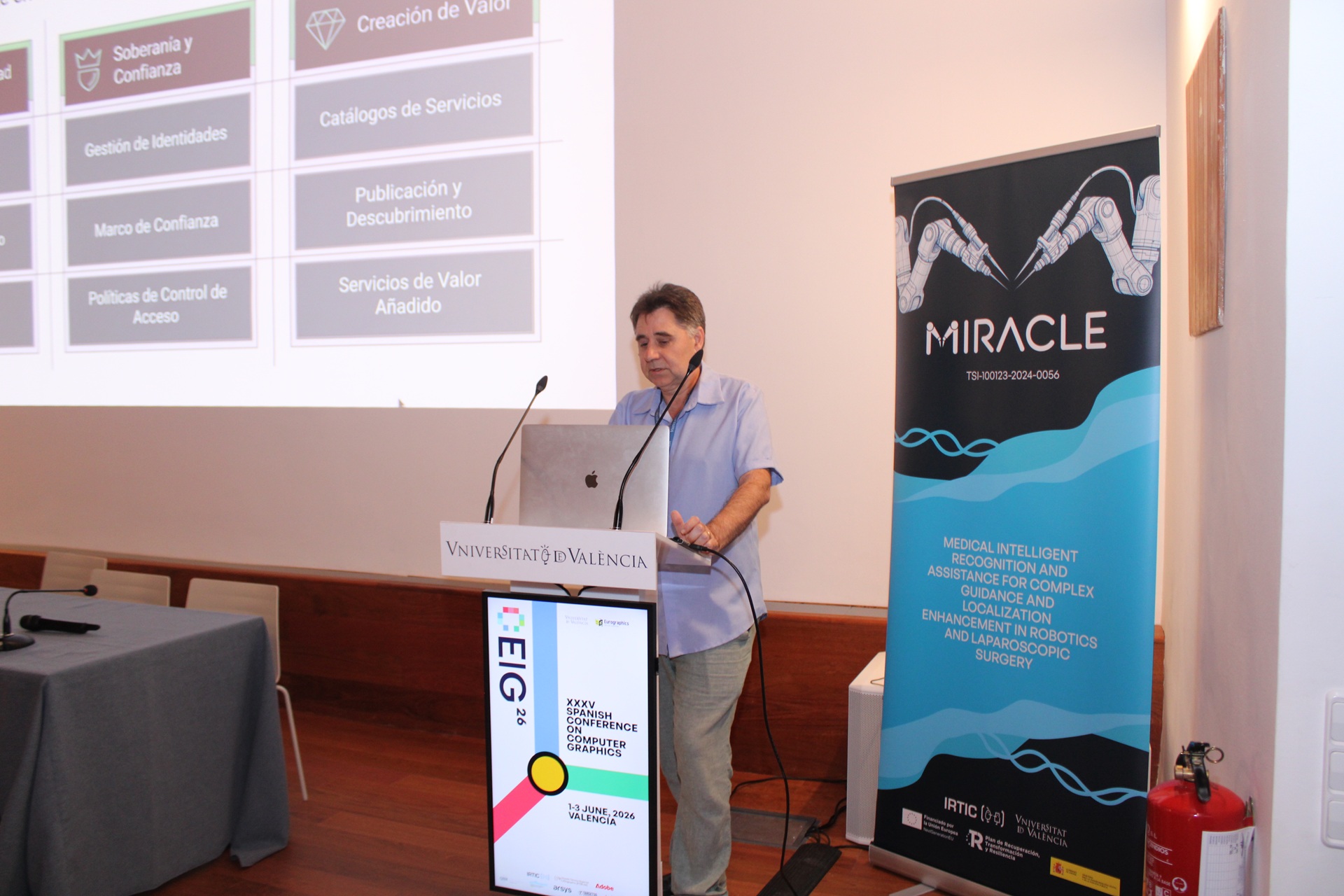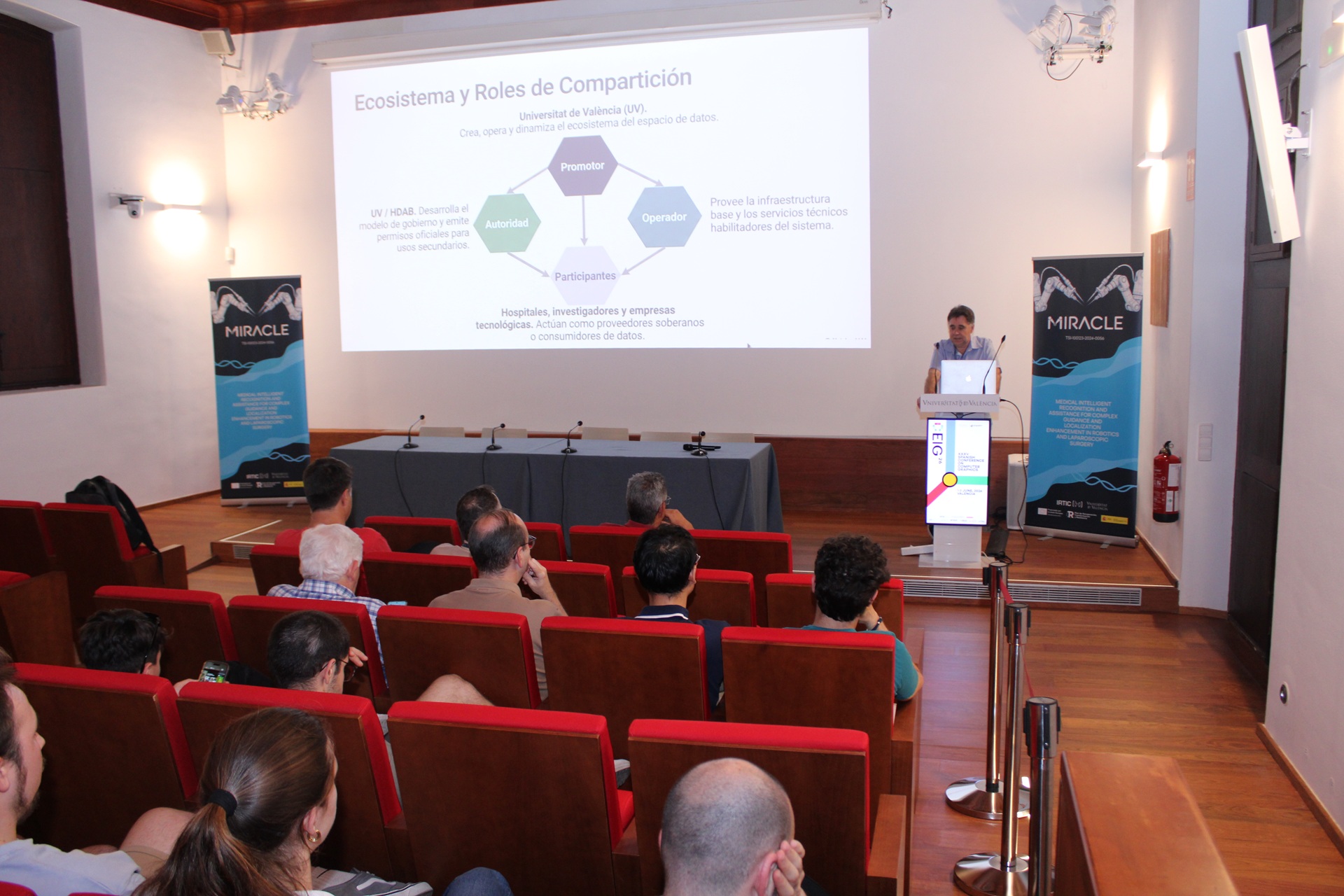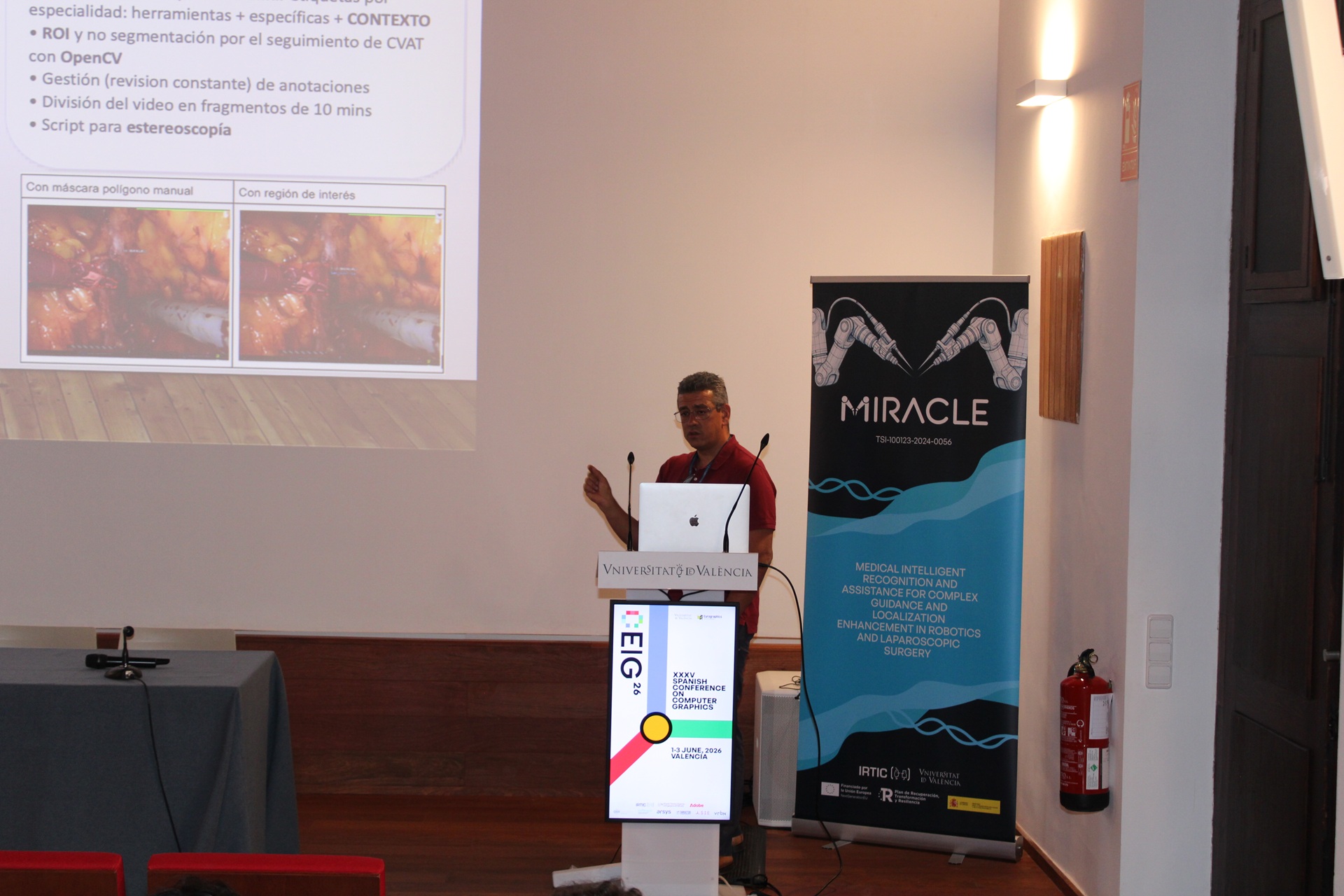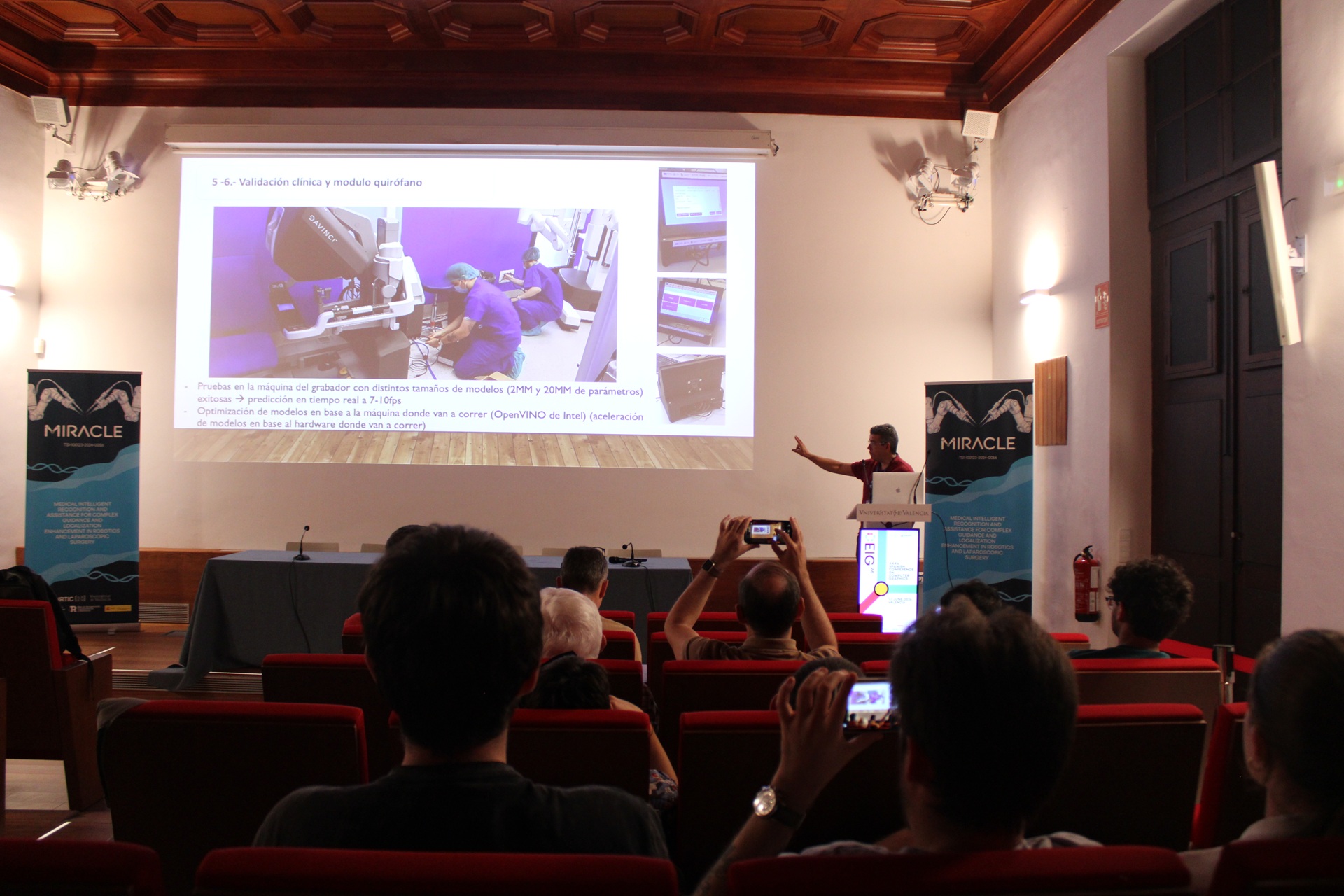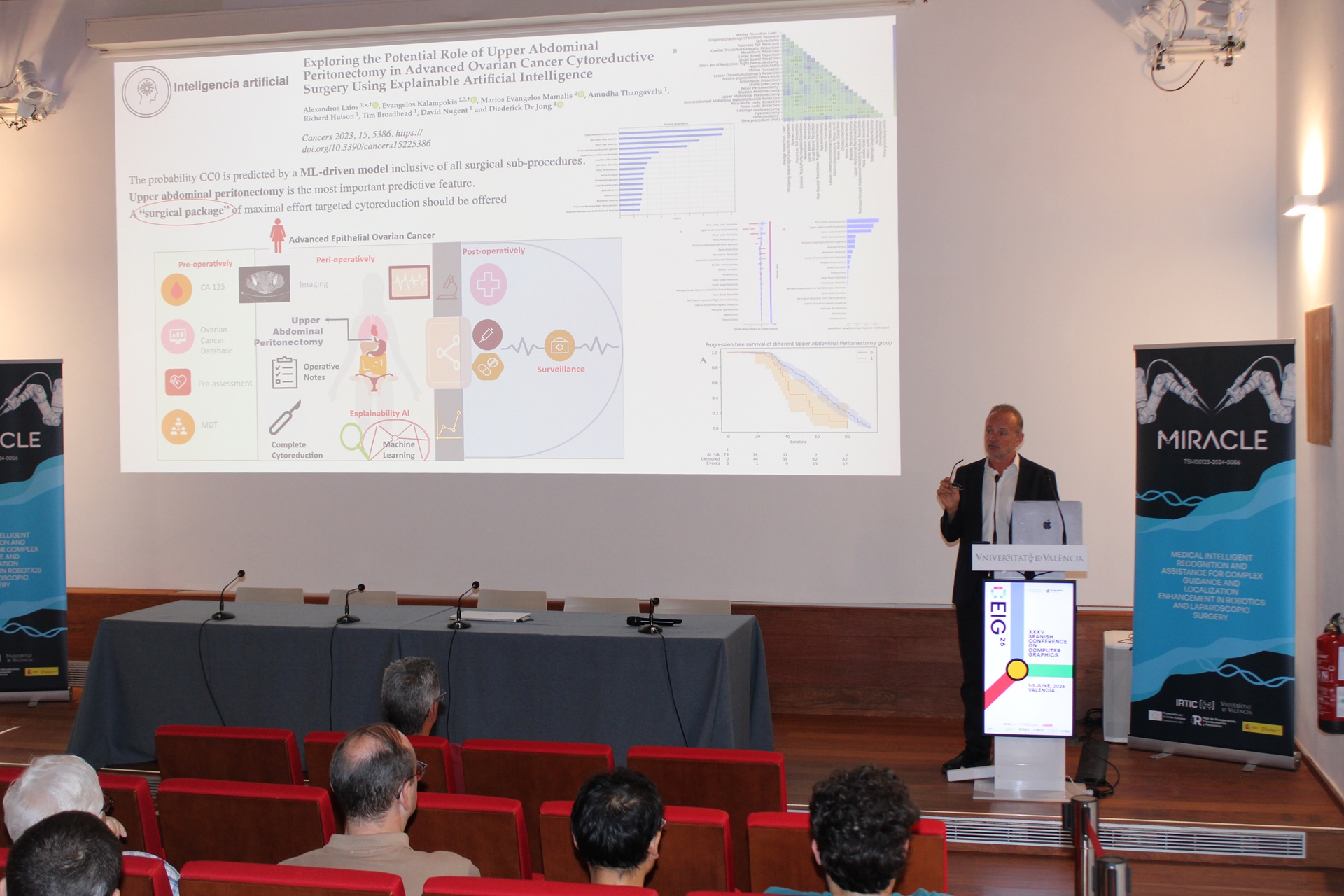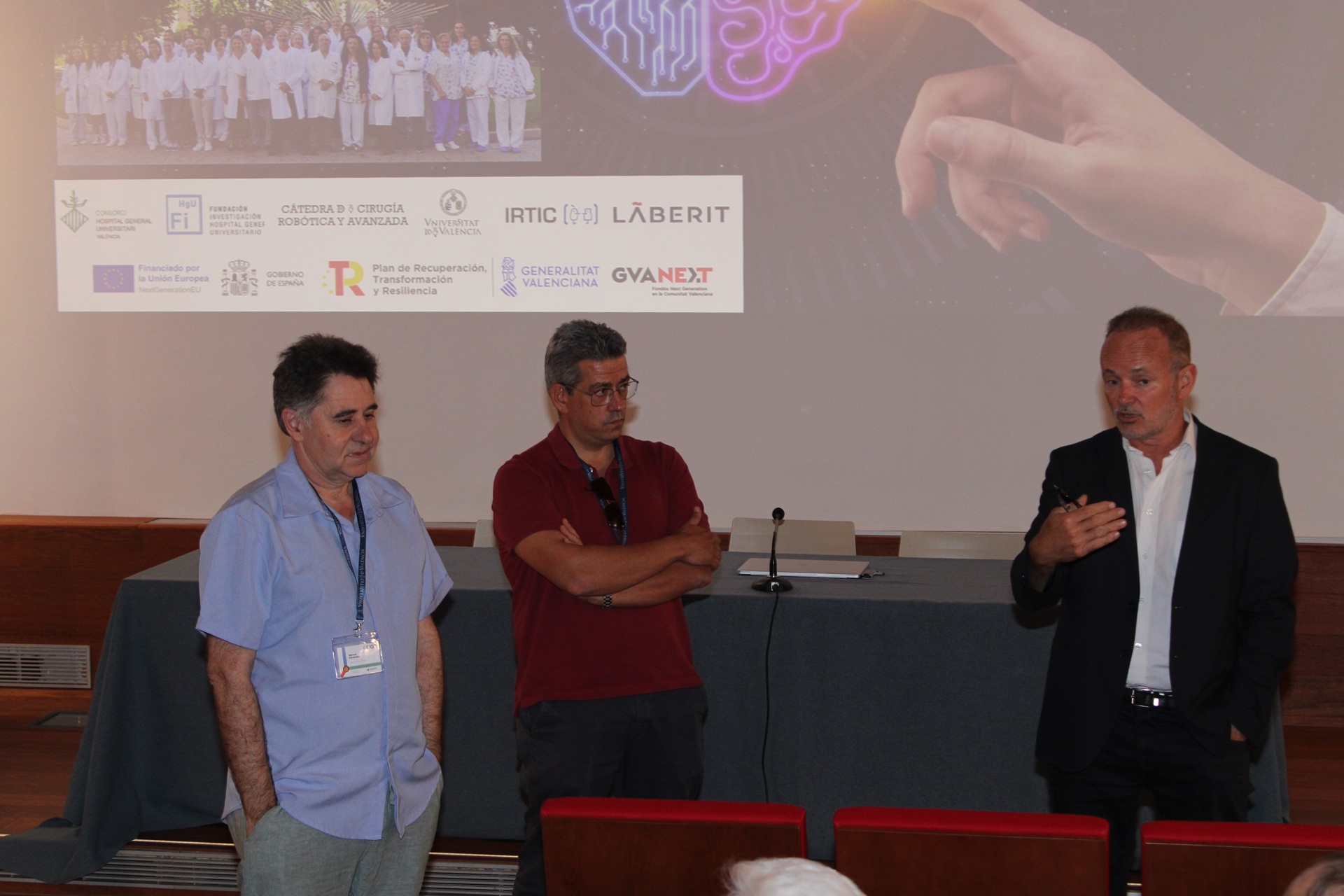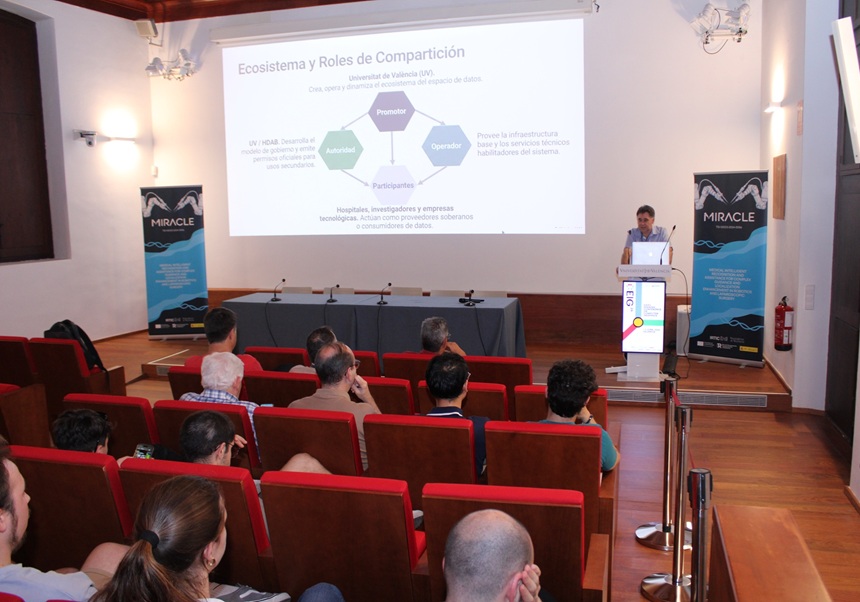
The MIRACLE data space project presented its progress and objectives on Wednesday 3 June at the 35th Spanish Conference on Computer Graphics (CEIG), held at La Nau at the University of Valencia. The event also featured a presentation on the SIRA robotic surgery initiative and the challenges facing the field.
MIRACLE, whose full name stands for “Medical Intelligent Recognition and Assistance for Complex guidance and Localisation Enhancement in Robotics & Laparoscopic Surgery”, focuses on creating a secure and interoperable data space for robotic and laparoscopic surgery. In this way, clinical information can be processed intelligently to improve surgical outcomes, support medical professionals and foster innovation in digital health across Europe.
The coordinator of MIRACLE, Marcos Fernández, highlighted during his speech the project’s efforts to promote the implementation of high-value sector-specific data spaces, specifically in the areas of digital health and surgical intelligence.
In this sense, the initiative demonstrates how data and artificial intelligence (AI) can improve clinical decision-making, enhance patient safety and optimise surgical workflows through practical use cases, such as real-time anatomical recognition, predictive alerts during robotic procedures and integration with systems that include robotic arms and enable monitoring of the operation, such as Da Vinci.
This initiative, coordinated by the University of Valencia, is supported by the Ministry for Digital Transformation and the Civil Service and is partly funded by the Next Generation EU programme as part of the plan to promote sectoral data spaces in strategic areas such as health and digital sovereignty.
In addition, researcher José Vicente Rivera, as project lead for SIRA, explained the development of an artificial intelligence system that recognises organs and foreign objects in real time during robotic surgery, with a view to improving the precision and safety of procedures.
SIRA will also be able to make real-time suggestions to surgeons performing the operation to optimise decision-making. The initiative has used 3.000 hours of surgical recordings inside the human body to train the AI model to successfully identify organs, tissues, and objects related to the surgical procedure.
Finally, Juan Gilabert Estellés, Head of the Gynaecology Department at the University General Hospital, outlined the current challenges being addressed within the healthcare sector in relation to artificial intelligence and robotic surgery. To bring the event to a close, the speakers engaged with the audience in a discussion about the future of these IT applications in healthcare.


The contents of this publication are the sole responsibility of IRTIC (UV) and do not necessarily reflect the opinion of the European Union.
Images: