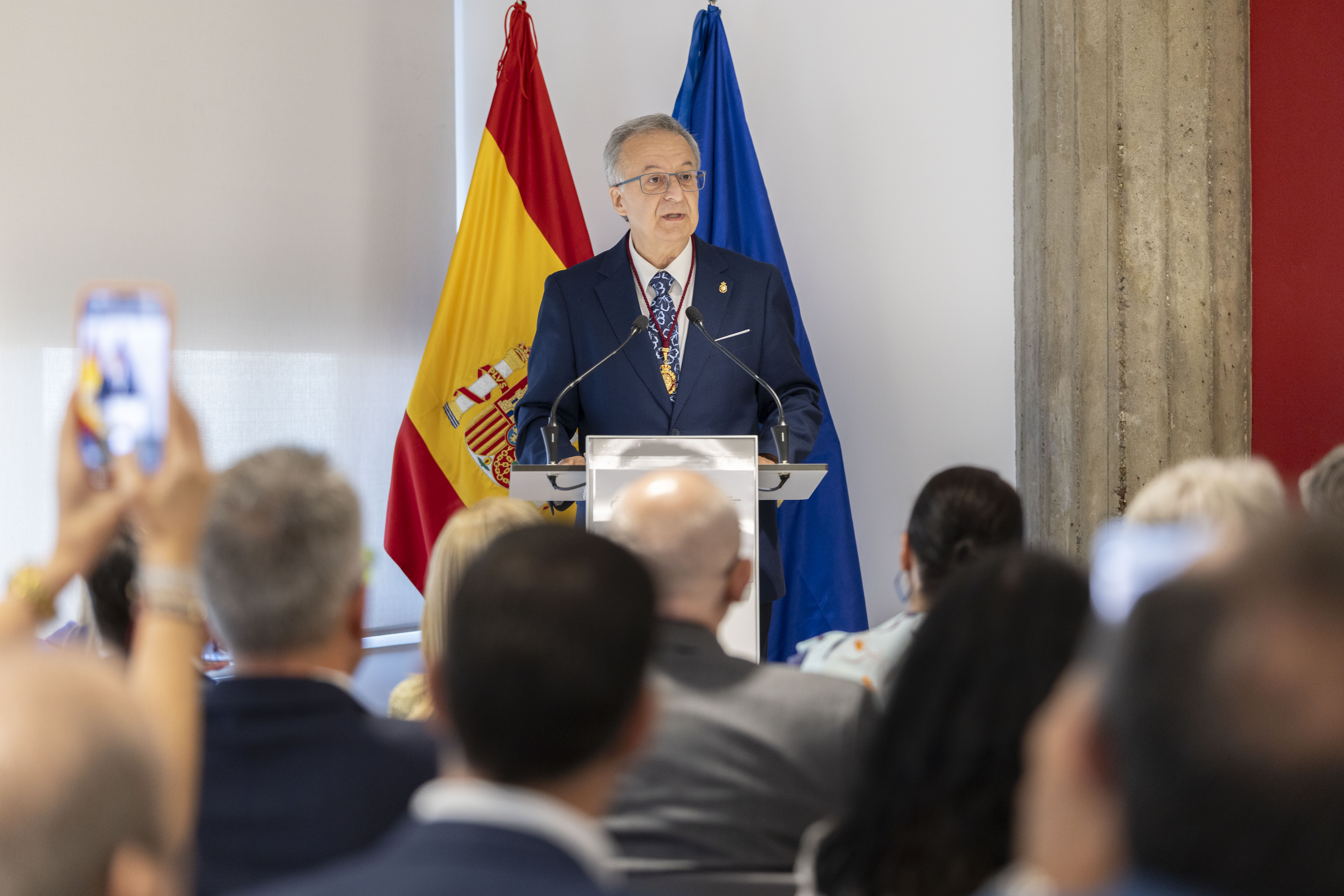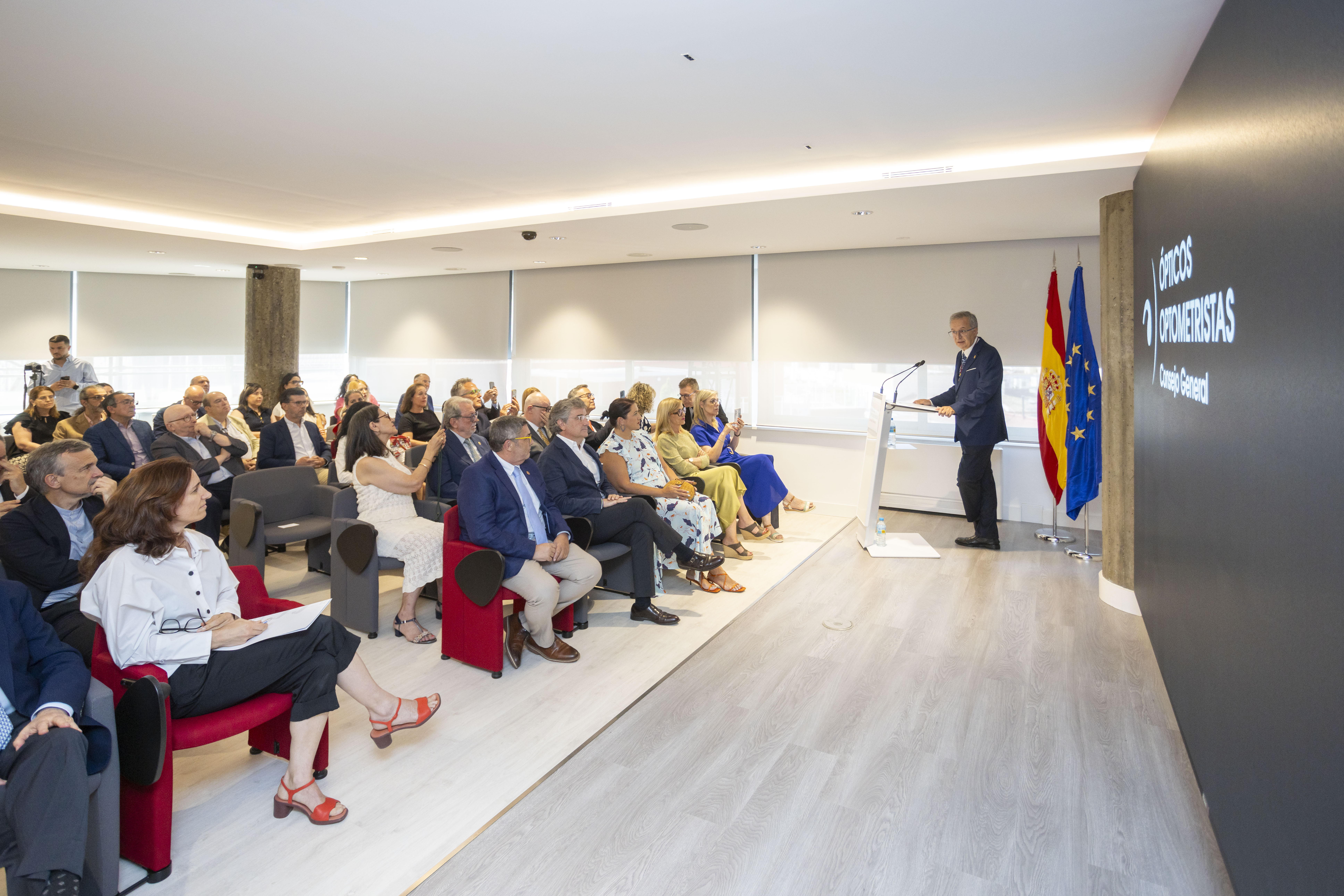
Professor at the Universitat de València begins a new term at the helm of the highest representative body of the profession in Spain. The ceremony, held in Madrid, was attended by Spain's Minister of Health, Mónica García, together with representatives from healthcare, academic, and scientific institutions.
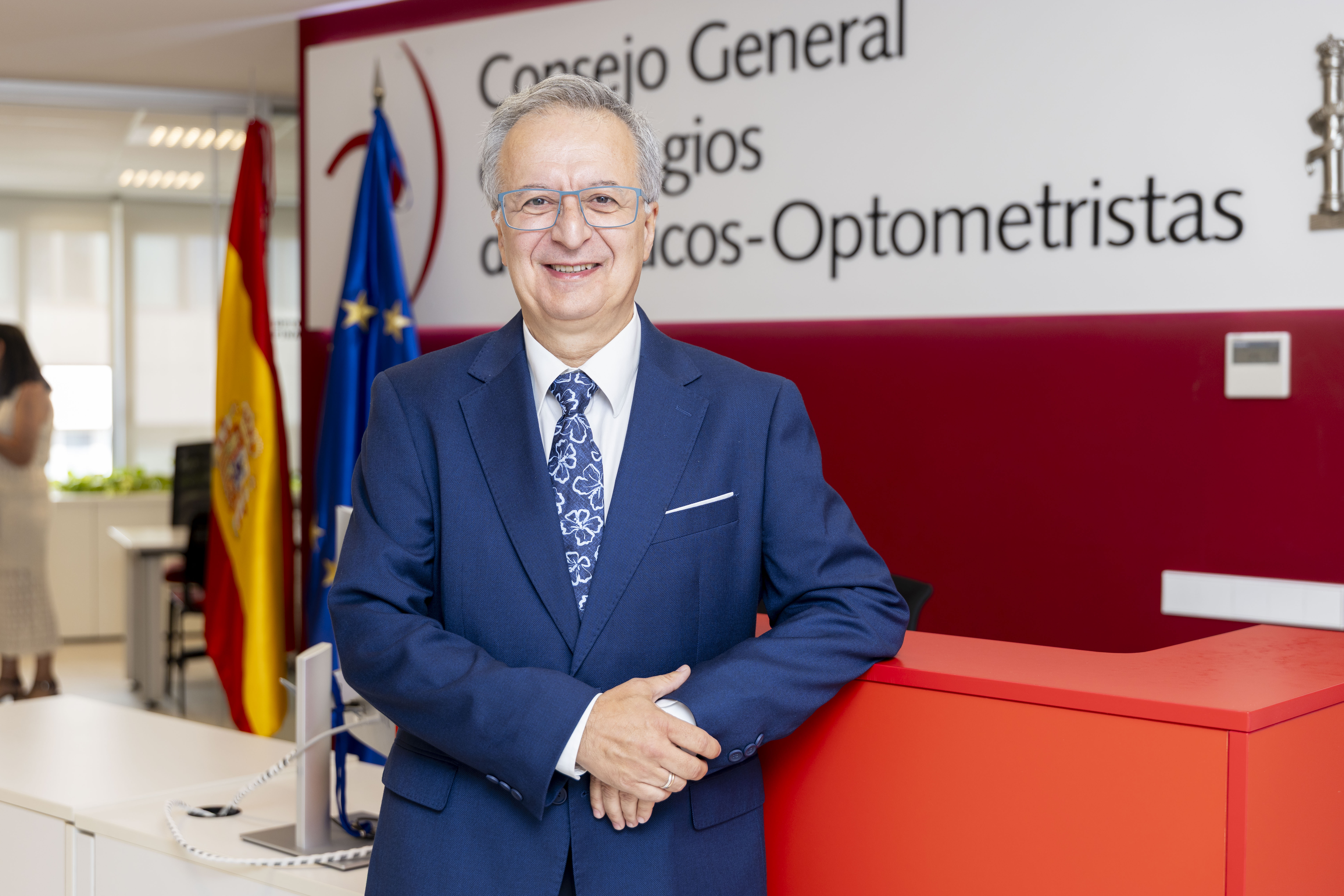
Andrés Gené Sampedro, Professor in the Department of Optics and Optometry and Vision Sciences and member of the INTRAS Research Institute at the Universitat de València, has officially taken office as President of the General Council of Colleges of Opticians-Optometrists (CGCOO).
The inauguration ceremony took place on 13 July in Madrid and brought together representatives of professional healthcare councils and associations, universities, scientific societies, academic institutions, and organizations involved in vision care.
The ceremony was attended by Minister of Health Mónica García, who congratulated the new president and expressed the Ministry's commitment to maintaining close collaboration with the General Council. In her address, the Minister highlighted the importance of progressively integrating vision care into public health policies and placing the needs of patients and citizens at the centre of healthcare decision-making.
Gené succeeds Juan Carlos Martínez Moral, who has chaired the CGCOO since its establishment in 2010. During the ceremony, the new president acknowledged his predecessor's work and expressed his determination to preserve the progress achieved while addressing the profession's new healthcare, scientific, technological, academic, and social challenges.
"A presidency is not a personal distinction, but a temporary commitment to serving an institution, a profession and, above all, society," Andrés Gené stated during his speech.
The new president placed vision health at the core of his programme, emphasizing its importance for learning, employment, mobility, personal independence and full participation in society. He also underlined the role of opticians-optometrists as healthcare professionals qualified to assess visual function, detect abnormalities, monitor patients, promote healthy habits and refer patients to other healthcare professionals whenever necessary.
Four priorities for a new term
His programme is structured around four priorities: building a more useful, accessible and transparent General Council; strengthening the healthcare and social role of the profession; promoting rigorous professional advocacy based on scientific evidence; and reinforcing unity, continuing professional education and the shared future of optometry.
Among his main objectives is to promote the effective integration of opticians-optometrists into Spain's National Health System, particularly within primary care, through safe, coordinated and measurable care models. Gené also stressed the capacity of the extensive network of optical healthcare establishments to improve accessibility, strengthen prevention and early detection, and help reduce avoidable waiting times.
Another key priority will be to strengthen collaboration with universities, scientific societies and academic institutions. Gené believes that the future of the profession depends on excellent, up-to-date university education closely linked to clinical practice, healthcare needs and social realities. Planned initiatives include updating university curricula, strengthening clinical placements and adapting education to the scientific and clinical evolution of optometry.
Commitment to higher education and research
Andrés Gené Sampedro is an optician-optometrist, university lecturer and researcher. He carries out his academic work in the Department of Optics and Optometry and Vision Sciences and is affiliated with the University Research Institute on Traffic and Road Safety (INTRAS) at the Universitat de València. His teaching, research and professional career have focused particularly on vision health, binocular vision, road safety, and the scientific and social development of optometry.
In his closing remarks, Gené reaffirmed his intention to lead the Council through dialogue, sound methodology, transparency and a spirit of public service. He also stressed the need to transform the knowledge, training and experience of opticians-optometrists into greater institutional influence and tangible benefits for society.
Images:"Opticians-optometrists do much more than help people see better. We help people enjoy greater opportunities, greater independence and a better quality of life. Ultimately, we help them see a better world," he concluded.