.svg)



An intervention programme to treat burnout reduces symptoms of depression in teachers
- Marketing and Communication Service - Scientific Culture and Innovation Unit
- September 24th, 2026
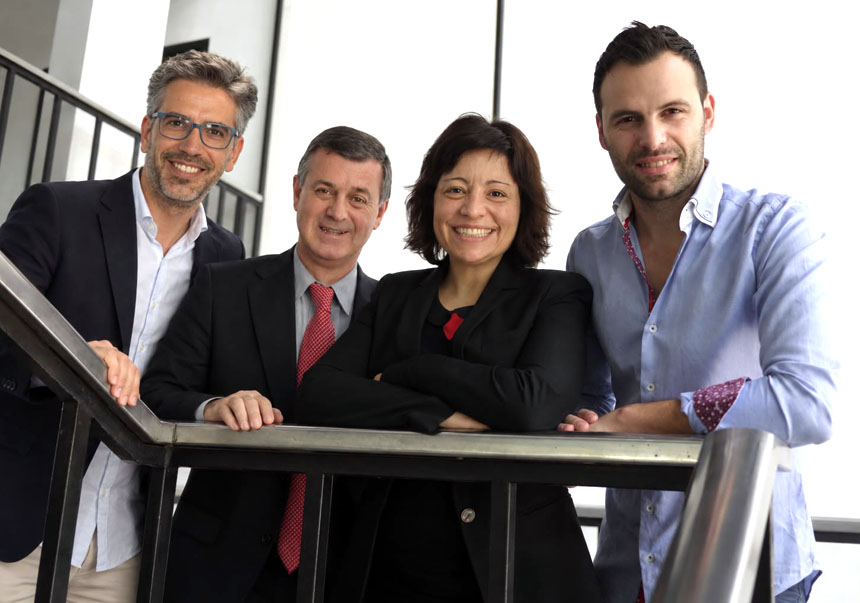
Authors of the article published in Behavioral Sciences. From left to right: Ribeiro do Couto, Gil-Monte, Grau-Alberola and Figueiredo-Ferraz.
Researchers at the University of Valencia (UV) have developed an intervention programme to treat burnout, or work-related burnout syndrome, which has reduced symptoms of depression among primary and secondary school teachers.
The study on the programme’s effectiveness has now been published in the journal Behavioral Sciences. The programme has also been adapted for university teaching staff and implemented among teaching and research staff at the National Autonomous University of Mexico (UNAM), where it has also proved effective in treating technostress, a state of psychological and physical tension caused by the excessive use or poor management of information and communication technologies.
In the case of primary and secondary school teachers, the programme developed by researchers from the Unit for Psychosocial Research on Organisational Behaviour (UNIPSICO), led by Pedro R. Gil-Monte, professor of Social Psychology at the UV, significantly reduced levels of burnout, symptoms of depression and salivary cortisol levels among participants with high levels of work-related psychosomatic problems, compared with a similar control group that did not take part in the intervention programme.
“In addition, the trained participants improved their ability to cope with their workload, manage available resources and deal with interpersonal conflicts, while their perceived self-efficacy also improved. The results were observed when the groups were compared after the programme had ended and four months later”, explains Pedro R. Gil-Monte.
Burnout is a response to chronic occupational stress. The World Health Organization has included it in ICD-11 as a health problem arising exclusively from work-related activity. If high levels of burnout persist over long periods, they can have harmful consequences for workers’ health, leading to illnesses involving psychosomatic disorders and depression, as well as for organisations, which may experience an increase in sick leave.
The programme is a pioneering initiative at both national and international level. It adopts a multi-component approach combining psychological, interpersonal and physiological intervention strategies to improve the emotional, cognitive and attitudinal deterioration experienced by people affected by work-related burnout. The intervention techniques included cognitive restructuring, problem-solving, emotional regulation, role negotiation, self-organisation and social support.
The research team for this study also included Ester Grau-Alberola (Catholic University of Valencia, UCV) and Hugo Figueiredo-Ferraz (International University of Valencia, VIU), both also members of UNIPSICO, and Bruno Ribeiro do Couto (University of Murcia, UMU).
Programme replicated in Mexico
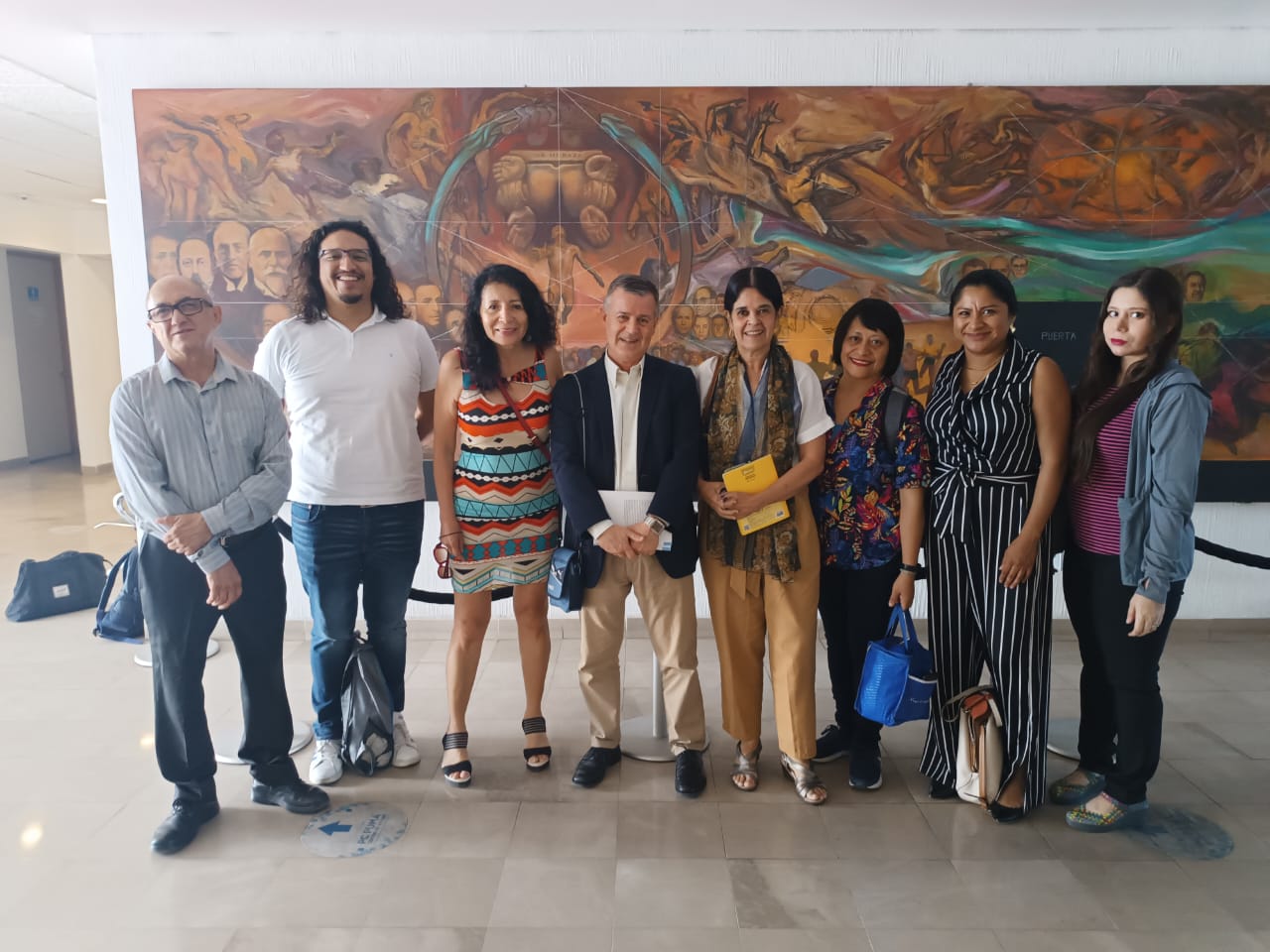
The programme was successfully replicated among teaching staff at the National Autonomous University of Mexico (UNAM), coordinated by researchers from the university, specifically Sara Guadalupe Unda Rojas, Marlene Rodríguez Martínez and José Horacio Tovalín Ahumada. Pedro R. Gil-Monte and Pedro Gil-LaOrden, a student on the UV’s doctoral degree in Psychology Research, also contributed to the initiative.
The programme implemented in Mexico involved 29 lecturers. At the end of the programme, participants in the trained group (n = 15) showed a significant reduction in overall levels of burnout and a significant improvement in their perception of technostress. There was also a significant reduction in their perception of work-related psychosomatic health problems.
The book describing the programme, written jointly by researchers from UNAM and the UV, concludes that the intervention had beneficial effects on selected indicators of technostress, health problems and coping resources among university teaching staff exposed to remote working and intensive use of information and communication technologies (ICT). It also recommends complementing psychoeducational strategies with organisational measures that address workload, clarity of roles, social support and the boundaries of digital work.
The study conducted at the UV received funding from Spain’s Ministry of Economy and Competitiveness (MINECO) through project PSI2013-48185-R. The study conducted in Mexico received funding from the Directorate-General for Academic Staff Affairs (DGAPA) of UNAM through project PAPIIT IN302922.
Article reference:
Grau-Alberola, E., Gil-Monte, P. R., Ribeiro do Couto, B., & Figueiredo-Ferraz, H. (2026). A longitudinal quasi-experimental evaluation of a cognitive-behavioral intervention in teachers: Changes in psychosocial risks, burnout, depression, and salivary cortisol. Behavioral Sciences, 16(9), Article 1668. https://doi.org/10.3390/bs16091668
Caption: Members of the UNAM research team and Pedro R. Gil-Monte.