University of Valencia logo Logo Universitat de València - Valencia Digital Summit (UV-VDS) Logo del portal


VDS UV

UV FORUM 2026
 

From Knowledge to Climate Action:
Multidisciplinary Science for a Resilient Future


Date: October 22

Time: 3:00 PM – 5:00 PM

Location: Innovation Stage

Language: English

Moderator: Lucía Hipólito

Organizer: José Vicente Riera


From Knowledge to Climate Action: Multidisciplinary Science for a Resilient Future

Climate change is a complex challenge that cannot be addressed from a single discipline. This forum brings together leading researchers from the Universitat de València to explore how science and technology can help us understand, monitor, mitigate and adapt to a rapidly changing climate.

From advanced materials, circular chemical processes and industrial decarbonisation to artificial intelligence, Earth observation, predictive modelling and other emerging scientific approaches, the session will showcase complementary perspectives united by a common goal: turning knowledge into actionable solutions.

Four researchers from different fields will present how their work contributes to tackling environmental and climate-related challenges. Their talks will be followed by a round-table discussion exploring how multidisciplinary research, technological innovation and collaboration can accelerate the transition towards a more sustainable, resilient and climate-ready society.

MODERATOR

Lucía Hipólito

SPEAKERS

Gustau Camps-Valls. From Prediction to Action: AI for Anticipating and Addressing Climate Polycrises

Artificial intelligence can transform how we understand and manage climate polycrises by leveraging satellite observations, improving predictive models, strengthening early-warning systems, and moving beyond correlation towards causal understanding. This talk explores how AI can help anticipate, explain, and mitigate the impacts of wildfires, floods, droughts, and other increasingly frequent and severe climate extremes.

Chantal Ferrer-Roca. Hands-on science: evidence, learning and citizenship in a troubled world

Humanity is facing challenges that require a genuine understanding of science and its role in our lives; not only by experts in technological and business sectors, but also common citizens, who should endorse the appropriate policies. In a context of rampant spread of misinformation and hoaxes, such as those related to global warming, we need high-quality education and outreach that convey the scientific method and not just final results. Everybody should understand how evidence-based models and quantitative predictions can address real-world problems. Fostering curiosity, experimentation and understanding, not only leads to highly valued professional profiles, but it is also a requisite to get us out of the present difficult situation.

José Badia. Polymers Technology and Chemical Engineering: A Binomial to address Environmental Challenges

Addressing the environmental challenges of the coming decades requires rethinking both the materials we use and the chemical processes that produce them. This talk showcases three complementary strategies at the intersection of materials science, especially polymers technology, and chemical engineering: membrane technologies as a route to process decarbonisation, recycling technologies for plastic and textile waste, and the ecodesign of plastics informed by biorefinery principles. Together, these approaches illustrate how material science and chemical engineering, taken as a binomial rather than as separate disciplines, can offer concrete pathways toward a more sustainable industrial model.

Maria Josep Picó. Climate journalism in the age of post-truth. From disinformation and denialism to the gamification of public dialogue

The digital paradigm -and, in particular, social media and the new model of multidirectional communication- has completely transformed the fundamentals of climate journalism. The challenge of conveying climate-related knowledge to the public and fostering an informed public opinion on sustainability is compounded by the spread of misinformation and the impact of climate change denialist fake news, designed to serve economic and ideological interests. The task of distinguishing between truth and falsehood has become vastly more complicated with AI; consequently, new approaches are needed, such as media literacy, particularly amongst youth, and the gamification of the science-society dialogue to tackle the climate crisis with greater participation from all sectors. It is also necessary to explore new formats such as living labs, where the four pillars of active innovation converge: academia, government, society and the business sector. In this vein, we will discuss the experience of the RossetaUVLab.

Lucía Hipólito

Lucía Hipólito

Lucía Hipólito (Valencia, 1982) holds a PhD in Pharmacy from the University of Valencia, where she is currently a professor and researcher. Since the beginning of her scientific career in 2005, she has worked in the field of neuropharmacology of addiction, with a particular focus on alcohol addiction. She has carried out research at renowned institutions such as the University of Cambridge, Rutgers University, and Columbia University.

Dr. Hipólito has received numerous awards, including the Young Investigator...

Read more

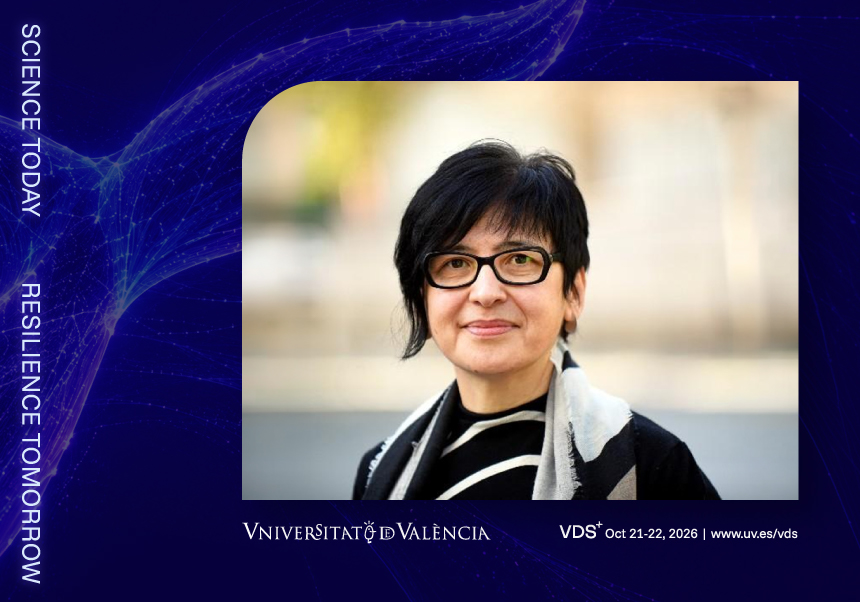
Gustau Camps-Valls

Gustau Camps-Valls, https://www.uv.es/gcamps, earned a Ph.D. degree in Physics (2002, summa cum laude) from the Universitat de València, and is currently Full Professor in Electrical Engineering in the same university. He is the Group Leader of the Image Processing Lab (IPL) group, https://isp.uv.es, an interdisciplinary group of 50+ researchers working at the intersection of AI and machine learning for Earth and Climate sciences.

His research interests involve developing novel AI and causality algorithms for better...

Read more
Gustau Camps-Valls
Chantal Ferrer-Roca

Chantal Ferrer-Roca

Bachelor's degree in Physics (1987) from the University of Valencia and Laurea in Physics from the University of Padua (1994). She began her research career in 1988 in Italy, first at the INFN (1988) and then at the CNR (1989-1993) with an FPU scholarship, a stay that led to her obtaining a PhD in Physics (University of Valencia, 1994) with a thesis on interferometric measurement of plasma density, in the RFX fusion project-experiment, Reversed Field Pinch (RFP) type.

She has been a tenured professor of applied physics at the...

Read more

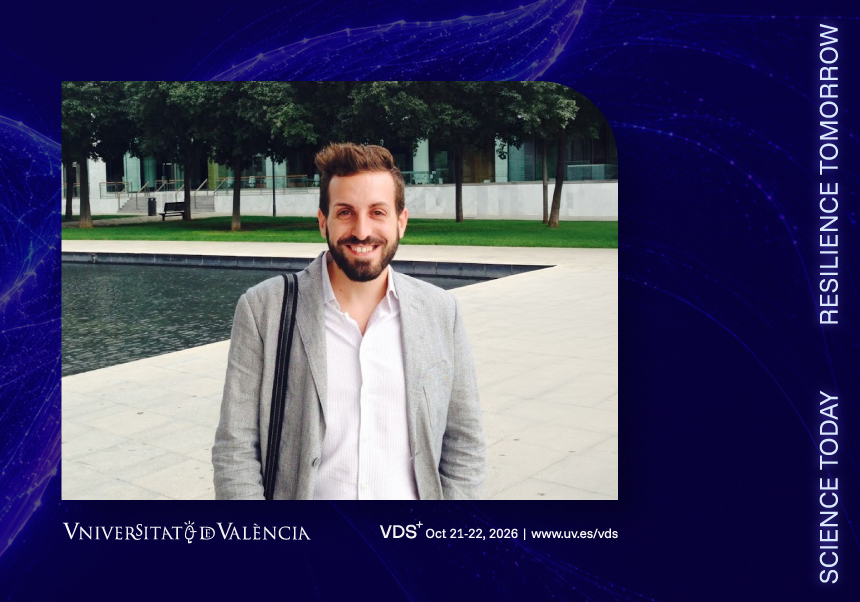
José Badía Valiente

Dr. JD Badia is Associate Professor at the Department of Chemical Engineering (DIQ) of the University of València (UV). He holds M.Sc. degrees in Chemical Engineering (Extraord. Award), Mechanical Engineering and Materials, and Erasmus Mundus Materials and Sensor Systems for Environmental Technologies, as well as a PhD in Engineering and Industrial Production (Extraord. Award).
 

RESEARCH
His work has been devoted towards (i) the Design and Functionalisation of polymer-based dispositives for application...
Read more
José Badía Valiente
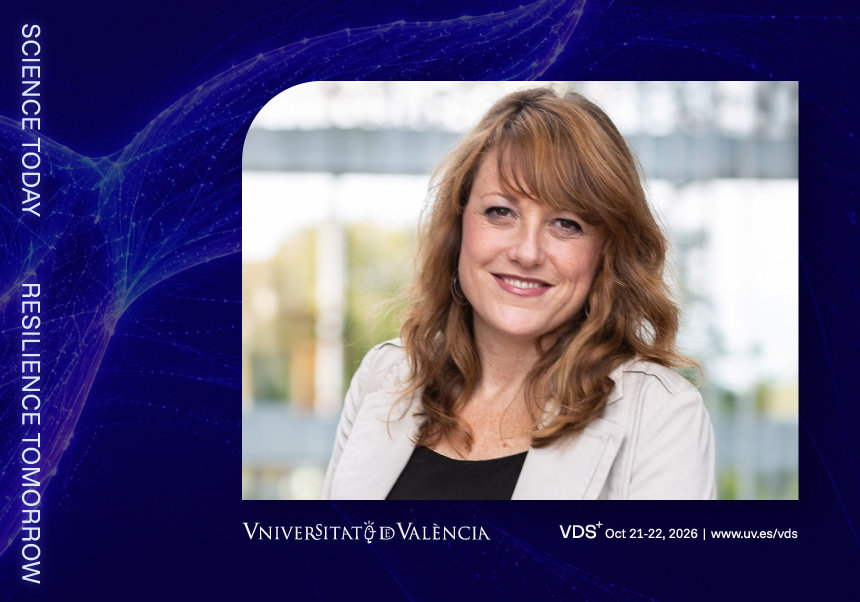
Maria Josep Picó

Maria Josep Picó

Maria Josep Picó Garcés has a degree in Information Sciences (Cardenal Herrera-CEU, 1996), PhD (Universitat de València, 2016) and Official Master in New Trends and Innovation Processes in Communication (UJI, 2019). She is Assistant Professor in the area of Journalism at the Department of Teoria dels Llenguatges i Ciències de la Comunicació of the Universitat de València. She directs the radio of the Faculty of Philology, Translation and Communication, Espai Pòdcast UV.

She...

Read more