

-

Factors Associated with Suicidal Behavior in Adolescents: An Umbrella Review Using the Socio-Ecological Model
Prades-Caballero, V. ; Navarro-Pérez, JJ. ; Carbonell, Á.
(2025). ArticleCommunity Mental Health Journal. No.61, 612–628
Adolescent suicide is a critical social issue with profound and lasting individual and collective consequences. This umbrella review examines factors associated with adolescent suicidal behavior through the socioecological framework of prevention and seeks to identify gaps in the existing literature. The review followed the Preferred Reporting Items for Systematic Reviews and Meta-Analyses (PRISMA) guidelines and included a comprehensive search of the of the Web of Science, Scopus, and Cochrane databases in both English and Spanish, covering the period from 2018 to 2024, using terms related to adolescence and suicidal behavior. Out of 6,138 articles identified, 37 met the quality criteria...
Adolescent suicide is a critical social issue with profound and lasting individual and collective consequences. This umbrella review examines factors associated with adolescent suicidal behavior through the socioecological framework of prevention and seeks to identify gaps in the existing literature. The review followed the Preferred Reporting Items for Systematic Reviews and Meta-Analyses (PRISMA) guidelines and included a comprehensive search of the of the Web of Science, Scopus, and Cochrane databases in both English and Spanish, covering the period from 2018 to 2024, using terms related to adolescence and suicidal behavior. Out of 6,138 articles identified, 37 met the quality criteria and were selected for analysis. The studies highlighted individual risk factors such as age, gender, belonging to ethnic or gender minorities, emotional disorders, self-destructive behavior, emotional regulation, and experience of physical or emotional pain. Interpersonal factors such as parental relationships, sexual abuse, social isolation, peer pressure, and loneliness were also found. However, the review revealed a worrying lack of studies on societal and community factors and a paucity of research focusing on protective factors. The study highlights the need to include factors related to the physical and social environments that influence health and behavior in future research, as well as to enhance the resources and strengths of adolescents.
Read more HideCita:
Prades-Caballero, V., Navarro-Pérez, JJ. & Carbonell, Á. (2025) Factors Associated with Suicidal Behavior in Adolescents: An Umbrella Review Using the Socio-Ecological Model. Community Mental Health Journal 61, 612–628 . https://doi.org/10.1007/s10597-024-01368-2
DOI: https://doi.org/10.1007/s10597-024-01368-2 -
Evaluación de buenas prácticas en experiencias de legalización y pacificación de pandillas juveniles iberoamericanas: un estudio Delphi
Carbonell, Ángela; Martínez-Gregorio, S.; Navarro-Pérez, J.-J.; Feixa, C.
(2025). ArticleAmérica Latina Hoy. No.95, e32220
Las pandillas juveniles representan un desafío global, frecuentemente asociado a la violencia, lo que requiere intervenciones urgentes. Este estudio, mediante el uso del método Delphi con 27 expertos, busca elaborar una lista de buenas prácticas para políticas públicas dirigidas a la legalización y la pacificación de agrupaciones juveniles de calle (AJC). Los resultados ofrecen un consenso en siete áreas clave, proporcionando una guía esencial para diseñar y evaluar políticas centradas en prevenir la violencia, reducir actividades ilícitas e impulsar la inclusión social.
Cita:
Carbonell, Ángela, Martínez-Gregorio, S., Navarro-Pérez, J.-J., & Feixa, C. (2025). Evaluación de buenas prácticas en experiencias de legalización y pacificación de pandillas juveniles iberoamericanas: un estudio Delphi. América Latina Hoy , 95, e32220. https://doi.org/10.14201/alh.32220
DOI: https://doi.org/10.14201/alh.32220 -
Development and Validation of the Adolescent and Children in Risk of Abuse and Maltreatment Protective Factors Scale (ACRAM-PFS)
García-Mollá, A., Carbonell, Á., Navarro-Pérez, J.J. & Tomas, JM.
(2024). ArticleChild & Adolescent Social Work Journal. No.41, 789–801
Child maltreatment is a significant global problem concerning over 25% of children around the world. Traditionally, the assessment of children’s welfare was characterized by the creation of instruments and models from the deficit-based theoretical framework. This study aims to develop an instrument to measure protective factors (the Adolescent and Children Risk of Abuse and Maltreatment Protective Factors Scale, ACRAM-PFS) and gather evidence on its psychometric properties. ACRAM-PFS is an 18-items scale for the assessment of protective factors of child maltreatment developed from the socioecological framework.Structural validity, reliability and convergent-related validity were studied for...
Child maltreatment is a significant global problem concerning over 25% of children around the world. Traditionally, the assessment of children’s welfare was characterized by the creation of instruments and models from the deficit-based theoretical framework. This study aims to develop an instrument to measure protective factors (the Adolescent and Children Risk of Abuse and Maltreatment Protective Factors Scale, ACRAM-PFS) and gather evidence on its psychometric properties. ACRAM-PFS is an 18-items scale for the assessment of protective factors of child maltreatment developed from the socioecological framework.Structural validity, reliability and convergent-related validity were studied for this measure in a sample of 616 children and adolescents, with age ranging from 0 to 18 years old (M = 12.14; SD = 5.22). Cases were informed by 286 child welfare workers. The sample was split in two subsamples, one to perform an Exploratory Factor Analysis (EFA) and the second to perform a Confirmatory Factor Analysis (CFA). The CFA corroborate the three-factor structure that includes the children and adolescents’ resources, the family/caregiver’s resources and the community resources (χ2 = 278.005, df = 132, p < .001, CFI = 0.955, SRMR = .084, RMSEA = .061, [90% CI: .051-.071]). Results of convergent-related validity indicated significant correlation with CTQ-SF and protective factors dimension of C-CAPS.The results support that ACRAM-PFS is a rigorous measure for assessing protective factors for child maltreatment. The scale can serve as a key tool for designing strengths-based intervention strategies tailored to the actual needs of children and adolescents. The present study provides the implications for the development of protective factor scales in the field of child welfare.
Read more HideGarcía-Mollá, A., Carbonell, Á., Navarro-Pérez, J.J. & Tomas, JM. (2024). Development and Validation of the Adolescent and Children in Risk of Abuse and Maltreatment Protective Factors Scale (ACRAM-PFS). Child & Adolescent Social Work Journal 41, 789–801. https://doi.org/10.1007/s10560-022-00908-7
DOI: https://doi.org/10.1007/s10560-022-00908-7 -

The Hodgepodge Reality: A Qualitative Systematic Review of the Challenges and Barriers in Child and Adolescent Mental Health Care Systems
Carbonell, Á. ; Georgieva, S., Navarro-Pérez, JJ. ; Prades, V.
(2024). ArticleAdolescent Research Review. No.9, 563–586
The literature to date has documented the presence of challenges and barriers in mental health systems and services for children and adolescents worldwide. However, studies addressing this reality often do so in a fragmented, residual, incomplete, or generalized way, therefore hindering a comprehensive understanding of this complex phenomenon. The aim of this qualitative systematic review is to analyze the barriers and challenges affecting global mental health care for children and adolescents. Searches were made in the Web of Science, Scopus, and PubMed databases between 2018 and 2022 using terms connected with mental health, childhood, adolescence, and health systems. The search resulted...
The literature to date has documented the presence of challenges and barriers in mental health systems and services for children and adolescents worldwide. However, studies addressing this reality often do so in a fragmented, residual, incomplete, or generalized way, therefore hindering a comprehensive understanding of this complex phenomenon. The aim of this qualitative systematic review is to analyze the barriers and challenges affecting global mental health care for children and adolescents. Searches were made in the Web of Science, Scopus, and PubMed databases between 2018 and 2022 using terms connected with mental health, childhood, adolescence, and health systems. The search resulted in the extraction of 9075 articles, of which 51 were considered eligible for inclusion and complied with quality indicators. A number of closely related structural, financial, attitudinal, and treatment barriers that limited the quality of life and well-being of children and adolescents with mental health needs were found. These barriers included inadequate public policies, operational deficiencies, insufficient insurance coverage, privatization of services, stigma, lack of mental health literacy, lack of training, overburdened care, dehumanization of care, and lack of community and integrated resources. The analysis of these barriers displays that this treatment gap reflects the historical injustice towards mental illness and the disregard for real needs in these crucial stages, perpetuating a systematic lack of protection for the mental health of children and adolescents. The complexity of the disorders and the absence of public resources have resulted in a hodgepodge of mental health services for children and adolescents that fails to provide the continuing specialist health care they need.
Read more HideCarbonell, Á., Georgieva, S., Navarro-Pérez, JJ. & Prades, V. (2024). The Hodgepodge Reality: A Qualitative Systematic Review of the Challenges and Barriers in Child and Adolescent Mental Health Care Systems. Adolescent Research Review 9, 563–586. https://doi.org/10.1007/s40894-023-00227-7
DOI: https://doi.org/10.1007/s40894-023-00227-7 -
Child Maltreatment Profiles among Children and Adolescents in the Spanish Child Welfare System
Fernández, I. ; Malonda-Vidal, E. ; Navarro-Pérez, J.J. ; Llorca, A.
(2024). ArticleChild Indicators Research. No.17, 1829–1849
Maltreatment is a complex and multidimensional construct. Several types of maltreatment exist, but not all of them necessarily co-occur. In the last decades, researchers have tried to untangle the heterogeneity of maltreatment. However, few studies have been carried out outside the U. S. and none of the previous studies had considered all stages of maltreatment. In this study, we aimed at exploring latent profiles of maltreatment in a sample of 635 children and adolescents enrolled at different intervention plans within the Child Protective Services (CPS) in the Valencian Community, Spain. Latent Profile Analysis (LPA) was performed. Profiles were based on the five types of maltreatment...
Maltreatment is a complex and multidimensional construct. Several types of maltreatment exist, but not all of them necessarily co-occur. In the last decades, researchers have tried to untangle the heterogeneity of maltreatment. However, few studies have been carried out outside the U. S. and none of the previous studies had considered all stages of maltreatment. In this study, we aimed at exploring latent profiles of maltreatment in a sample of 635 children and adolescents enrolled at different intervention plans within the Child Protective Services (CPS) in the Valencian Community, Spain. Latent Profile Analysis (LPA) was performed. Profiles were based on the five types of maltreatment (physical abuse, emotional abuse, sexual abuse, emotional neglect and physical neglect), as measured by the Chilhood Trauma Questionnaire-Short Form. Moreover, associations between the emerging profiles and sociodemographic, health- and school-related variables were also examined. Three profiles of maltreatment were found: “Relative low maltreatment” (58.58%), “Neglected” (35.92%), and “Severely abused and neglected” (5.5%). Then, profiles were contrasted with the reasons why court dictated maltreatment status of the child/adolescent to validate the maltreatment profiles. Results regarding the cumulative nature of maltreatment and its severity suggest tailoring public policies by level of risk of maltreatment. This study further proposes moving the focus of action from individuals themselves to the elements that characterize different maltreatment profiles, with the aim of protecting them. Future research ought to expand knowledge on maltreatment profiles in other European countries so as to promote generalization of results.
Read more HideFernández, I., Malonda-Vidal, E., Navarro-Pérez, J.J. & Llorca, A. (2024) Child Maltreatment Profiles among Children and Adolescents in the Spanish Child Welfare System. Child Indicators Research 17, 1829–1849 . https://doi.org/10.1007/s12187-024-10138-1
DOI: https://doi.org/10.1007/s12187-024-10138-1 -
Cognitive and personality variables as predictors of sexism against women in Spanish adolescents
Oliver, A., Navarro-Pérez, J.J., Tomás, JM. & Rodrigo, M. F.
(2023). ArticleJournal of Social and Personal Relationships. No.vol 40, issue 5, 1645
Previous research on the antecedents of sexism against women have not considered simultaneously the effects of sex, personality, and cognitive variables (need for closure and critical thinking disposition) in relation to sexism. We evaluated whether in adolescence, these indicators could predict sexist attitudes towards women using structural models. The sample comprised 709 Spanish high-school students (mean age = 16.79). 51.5% were female. Sex (being male), need for closure and critical thinking were the most relevant predictors of sexism. The disposition to think critically is as relevant as the motivational dimension of cognition (need for closure) to predict sexism. Multi-group...
Previous research on the antecedents of sexism against women have not considered simultaneously the effects of sex, personality, and cognitive variables (need for closure and critical thinking disposition) in relation to sexism. We evaluated whether in adolescence, these indicators could predict sexist attitudes towards women using structural models. The sample comprised 709 Spanish high-school students (mean age = 16.79). 51.5% were female. Sex (being male), need for closure and critical thinking were the most relevant predictors of sexism. The disposition to think critically is as relevant as the motivational dimension of cognition (need for closure) to predict sexism. Multi-group structural models by sex were estimated, and a moderator effect was found between openness to experience and sexism. We suggest future lines of research to disentangle the effects of personality and cognition on sexism and to guide intervention programs to reduce sexist attitudes among adolescents.
Read more HideOliver, A., Navarro-Pérez, J.J., Tomás, JM. & Rodrigo, M. F. (2023) Cognitive and personality variables as predictors of sexism against women in Spanish adolescents Journal of Social and Personal Relationships 40 5 1645 1669 https://doi.org/10.1177/02654075221133062
DOI: https://doi.org/10.1177/02654075221133062 -
Evaluation of an Intervention Program Based on Mobile Apps to Learn Sexism Prevention in Teenagers
Morillo, P., Navarro-Pérez, J.J., Orduña, J.M & Fernandez, M.
(2022). ArticleTransactions On Multimedia Computing Communications And Applications.
The fight against sexism is nowadays one of the flagship social movements in western countries. Adolescence is a crucial period, and some empirical studies have focused on the socialization of teenagers, proving that the socialization with the surrounding environment prevent sexist practices. In a previous work, we developed and tested the effectiveness of a mobile app, called Liad@s, with the goals of helping teenagers to prevent sexism and build healthy couple relationships. In this article, we carry out a study where (using a real situation) we compare the effectiveness of the Liad@s app in front of traditional interventions like a workshop about sexism for teenagers. Also, we evaluate...
The fight against sexism is nowadays one of the flagship social movements in western countries. Adolescence is a crucial period, and some empirical studies have focused on the socialization of teenagers, proving that the socialization with the surrounding environment prevent sexist practices. In a previous work, we developed and tested the effectiveness of a mobile app, called Liad@s, with the goals of helping teenagers to prevent sexism and build healthy couple relationships. In this article, we carry out a study where (using a real situation) we compare the effectiveness of the Liad@s app in front of traditional interventions like a workshop about sexism for teenagers. Also, we evaluate the usability of the app and the user satisfaction with this application. In this study, our primary hypothesis is that the effectiveness of using our mobile application, in terms of knowledge acquired about sexism, would be at least as good as attending the workshop. Our secondary hypothesis is that the user satisfaction with the mobile application would be higher than the one with the workshop, causing a preference for the app. The results of this study show significant differences in learning appeared between gender and between the two different procedures when separately evaluating the data collected from both hostile sexism (HS) and benevolent sexism (BS) questionnaires. These results validate our primary hypothesis. Also, most of the population under study preferred the mobile app in front of the traditional workshop, validating also our secondary hypothesis.
Read more Hide DOI: https://dl.acm.org/doi/10.1145/3471139 -
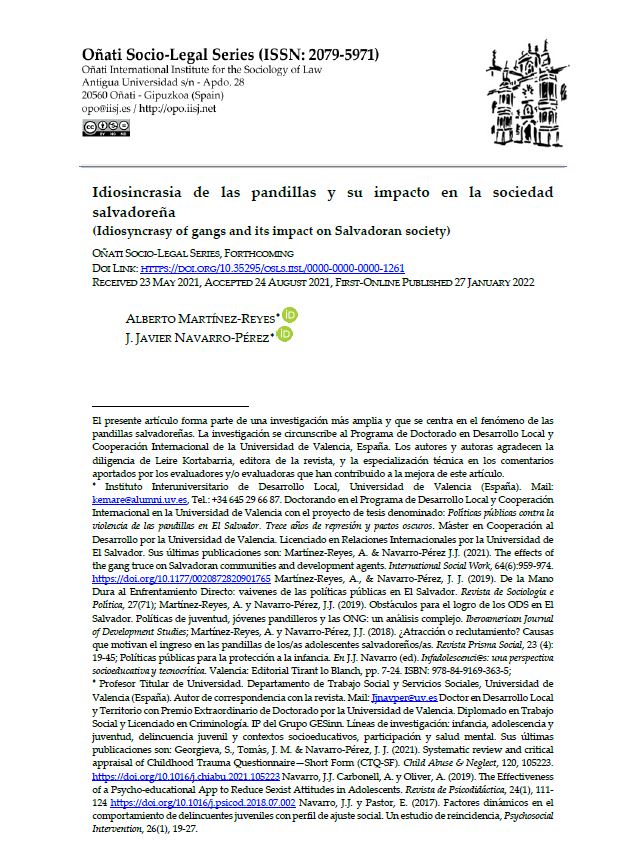
Idiosincrasia de las pandillas en El Salvador y su impacto en la vida pública
Martinez-Reyes, A; Navarro-Pérez, J.J.
(2022). ArticleSe presenta una investigación cualitativa que a través de la entrevista y el relato de vida pretende identificar los elementos característicos de las pandillas salvadoreñas y sus diferencias respecto a otras estructuras similares de la región. Se presenta un marco teórico que permite situarse en los antecedentes históricos y en los factores sociales y políticos que permitieron el surgimiento y expansión de las pandillas. Los resultados describen a las pandillas como estructuras sólidas, jerarquizadas con alta capacidad de adaptación y cada vez más sofisticadas. La discusión extrapola el fenómeno a otros contextos con características similares para comprender la dimensión del problema.
DOI: https://doi.org/10.35295/osls.iisl/0000-0000-0000-1261 -
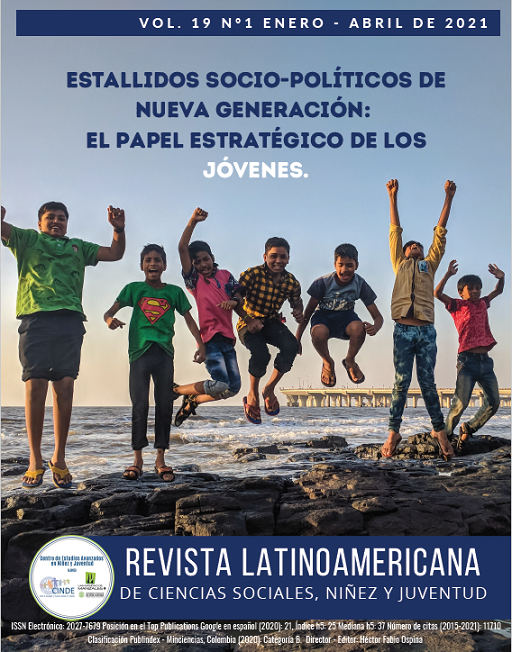
Prevención de riesgo psicosocial en adolescentes: el rol de los Centros de Día de Menores en España
Capella, S. & Navarro-Pérez, J. J.
(2021). ArticleRevista Latinoamericana De Ciencias Sociales, Niñez Y Juventud. No.19(1), 1-22.
El artículo analiza la función de los Centros de Día de Menores (CDM) como recursos especializados en la intervención socioeducativa con adolescentes en riesgo. Se trata de una investigación cualitativa, en la que se han integrado diferentes técnicas con el fin de triangular evidencias objetivas. En el plano metodológico participó una muestra de 30 profesionales, implementando diferentes técnicas: entrevistas y grupos de discusión. Los datos obtenidos se codificaron y categorizaron. Los resultados destacan la especificidad de los CDM como recurso de proximidad en el proceso de socialización y de acompañamiento progresivo, individualizado y flexible de adolescentes en riesgo. Las...
El artículo analiza la función de los Centros de Día de Menores (CDM) como recursos especializados en la intervención socioeducativa con adolescentes en riesgo. Se trata de una investigación cualitativa, en la que se han integrado diferentes técnicas con el fin de triangular evidencias objetivas. En el plano metodológico participó una muestra de 30 profesionales, implementando diferentes técnicas: entrevistas y grupos de discusión. Los datos obtenidos se codificaron y categorizaron. Los resultados destacan la especificidad de los CDM como recurso de proximidad en el proceso de socialización y de acompañamiento progresivo, individualizado y flexible de adolescentes en riesgo. Las conclusiones inciden en la especialización del recurso en la atención a adolescentes que atraviesan procesos vitales complejos y en la consolidación del recurso como alternativa socioeducativa a la educación formal, utilizando en el territorio como generador de oportunidades.
Read more Hide19(1), 1-22.
DOI: https://doi.org/10.11600/rlcsnj.19.1.4293 -
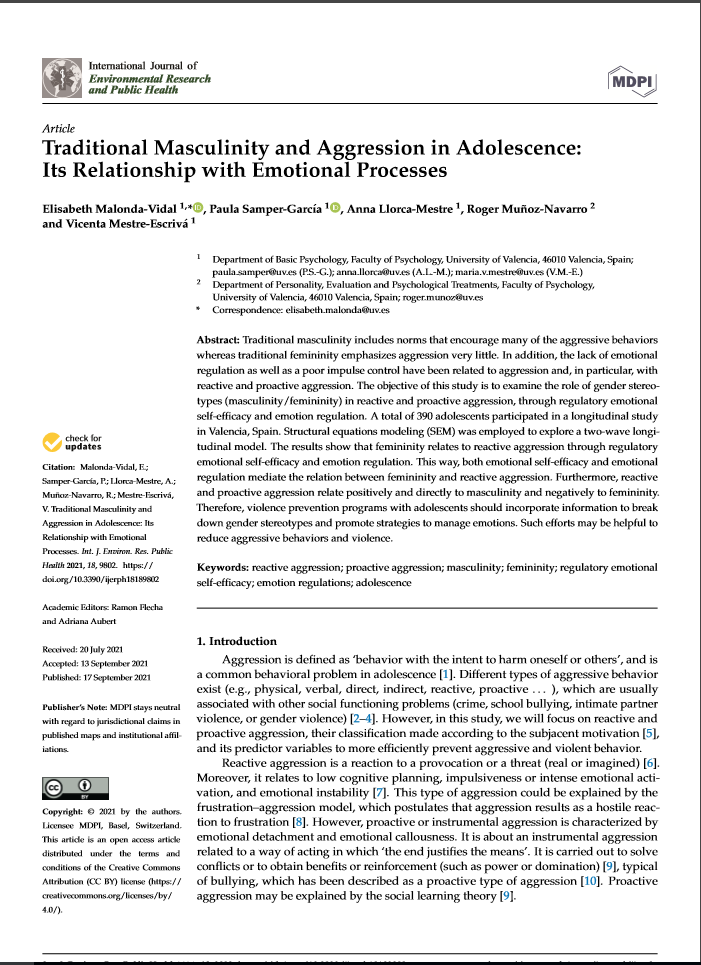
Traditional Masculinity and Aggression in Adolescence: Its Relationship with Emotional Processes
Malonda-Vidal, E., Samper-García, P., Llorca-Mestre, A., Muñoz-Navarro, R., Mestre-Escrivá, V.
(2021). ArticleInternational Journal of Environmental Research and Public Health. No.18(18):9802
Traditional masculinity includes norms that encourage many of the aggressive behaviors whereas traditional femininity emphasizes aggression very little. In addition, the lack of emotional regulation as well as a poor impulse control have been related to aggression and, in particular, with reactive and proactive aggression. The objective of this study is to examine the role of gender stereotypes (masculinity/femininity) in reactive and proactive aggression, through regulatory emotional self-efficacy and emotion regulation. A total of 390 adolescents participated in a longitudinal study in Valencia, Spain. Structural equations modeling (SEM) was employed to explore a two-wave longitudinal...
Traditional masculinity includes norms that encourage many of the aggressive behaviors whereas traditional femininity emphasizes aggression very little. In addition, the lack of emotional regulation as well as a poor impulse control have been related to aggression and, in particular, with reactive and proactive aggression. The objective of this study is to examine the role of gender stereotypes (masculinity/femininity) in reactive and proactive aggression, through regulatory emotional self-efficacy and emotion regulation. A total of 390 adolescents participated in a longitudinal study in Valencia, Spain. Structural equations modeling (SEM) was employed to explore a two-wave longitudinal model. The results show that femininity relates to reactive aggression through regulatory emotional self-efficacy and emotion regulation. This way, both emotional self-efficacy and emotional regulation mediate the relation between femininity and reactive aggression. Furthermore, reactive and proactive aggression relate positively and directly to masculinity and negatively to femininity. Therefore, violence prevention programs with adolescents should incorporate information to break down gender stereotypes and promote strategies to manage emotions. Such efforts may be helpful to reduce aggressive behaviors and violence.
Read more Hide




© 2026 UV. - Campus dels Tarongers Av. Tarongers, s/n 46022 València