- Universitat de València
- Ramirez Muñoz, Diego
- PDI-Catedratic/a d'Universitat
Current technologies for measuring electric current are fundamentally based on: current transformer, shunt resistance, Hall effect, Rogowsky-Chattock probe and magnetoresistive technology.
Shunt technology is the most classic and consists of passing the electric current of interest i(t) through a resistance of a certain value and, by means of Ohm's Law, processing the voltage drop between its terminals. This measurement method does not offer galvanic isolation, so if one of the two terminals of the resistance is at a high potential, this aspect must be taken into account due to the possible consequences that it could have in the subsequent stages. Above all, because it will require that the subsequent conditioning stage have a sufficiently high common mode voltage. Conventionally, magnetoresistive current sensors are configured in a Wheatstone bridge in which four sensor magnetoresistors are needed, two increasing their value with the field and two decreasing it, thus achieving the required linearity.
However, in none of the prior art documents the current is measured using a single magnetoresistance. They don’t have an electronic device for measuring electric current through galvanic and non-dissipative isolation, with adjustment of offset and polarization to current through a triple voltage-current converter.
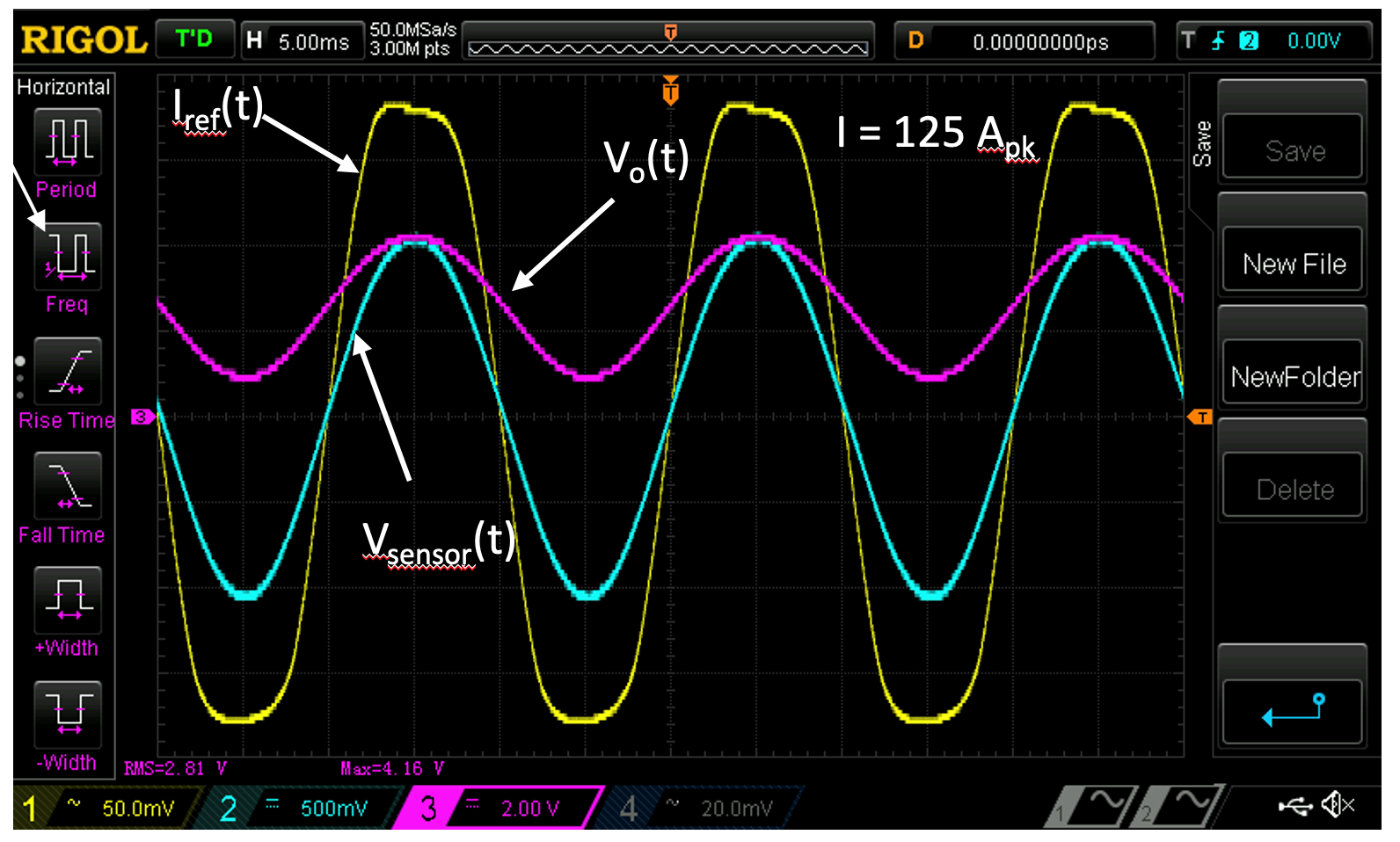
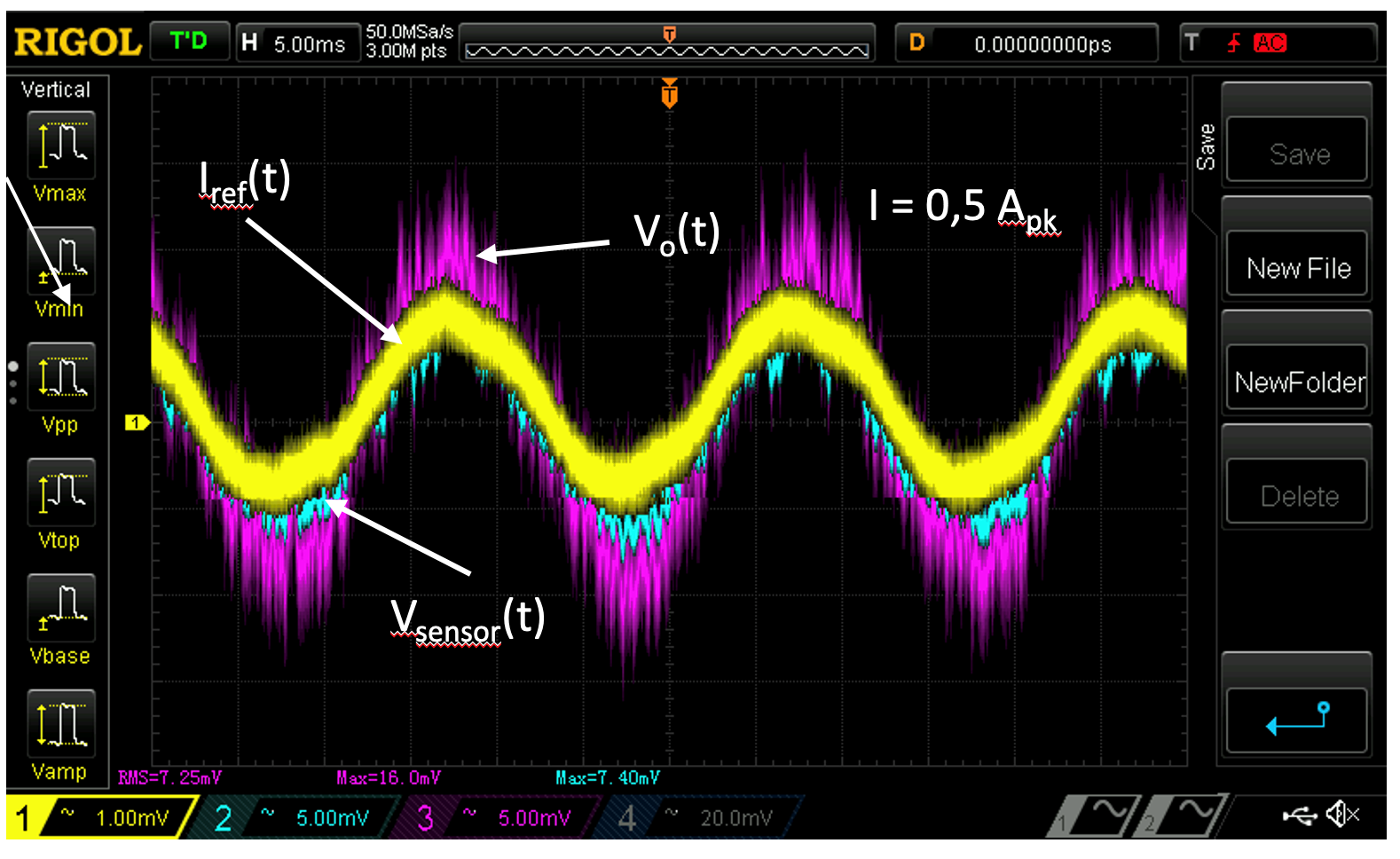
Research staff from the University of Valencia have developed a novel electronic device for measuring electric current through galvanic and non-dissipative isolation, with adjustment of offset and polarization to current using a triple voltage-current converter, based on a single magnetoresistance configured as a sensor element (RS) configured to offer galvanic isolation (A) with respect to an electric current to be measured.
The present invention is applicable in multiple areas, in general, all those in which it is necessary to measure electric current, such as, for example: the photovoltaic sector (solar inverters), energy consumption pricing, battery charge management, consumer electronics, switching power supplies, and/or the control of AC motors and drives.
This invention:
- Measures continuous or constant currents over time.
- Reduces the measurement elements with a single magnetoresistance instead of 4 as in conventional devices.
- Measures electric current through galvanic and non-dissipative isolation.
- Allows offset adjustment.
- Allows polarization to current through a triple current voltage converter.
- Patent granted
Blasco Ibáñez Campus
C/ Amadeu de Savoia, 4
46010 València (València)