.jpg)
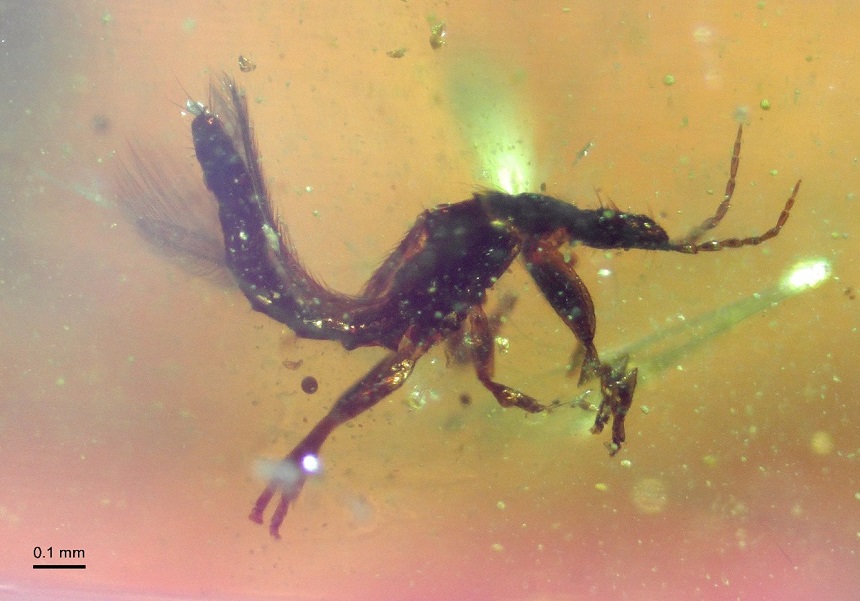
Research led by Alba Sánchez-García, a researcher at the Department of Botany and Geology of the University of Valencia, has concluded that the El Soplao amber deposit (Cantabria, Spain) is one of the most important deposits in Europe for understanding what terrestrial ecosystems were like during the Early Cretaceous, around 105 million years ago.
The article, published in the Journal of the Geological Society, the scientific journal of the Geological Society of London, brings together almost two decades of research, compiling the discoveries made at this site and demonstrating why it has become an international benchmark for the study of past life.
The study, which also involved Enrique Peñalver of the Geological and Mining Institute of Spain (IGME-CSIC), Xavier Delclòs of the University of Barcelona and Ricardo Pérez-de la Fuente of the Oxford University Museum of Natural History, confirms that the deposit has yielded exceptional fossils of arthropods, dinosaur feathers and some of the earliest evidence of ecological interactions preserved in amber.
Amber is resin produced by trees which, when fossilised, can preserve in extraordinary detail organisms that became trapped in it millions of years ago. More than 1,500 arthropod inclusions have been recovered at El Soplao, and 40 species have been identified, most of them described for the first time in science. Many preserve microscopic structures that make it possible to reconstruct both their anatomy and aspects of their biology and ecology.
The fossils include insects, spiders, mites, crustaceans, myriapods, remains of fungi and plants, and even feathers from theropod dinosaurs. The deposit, which came to light during roadworks in Cantabria and discovered in 2007 by two scientists from the IGME, also preserves some of the oldest known examples of several groups of arthropods.
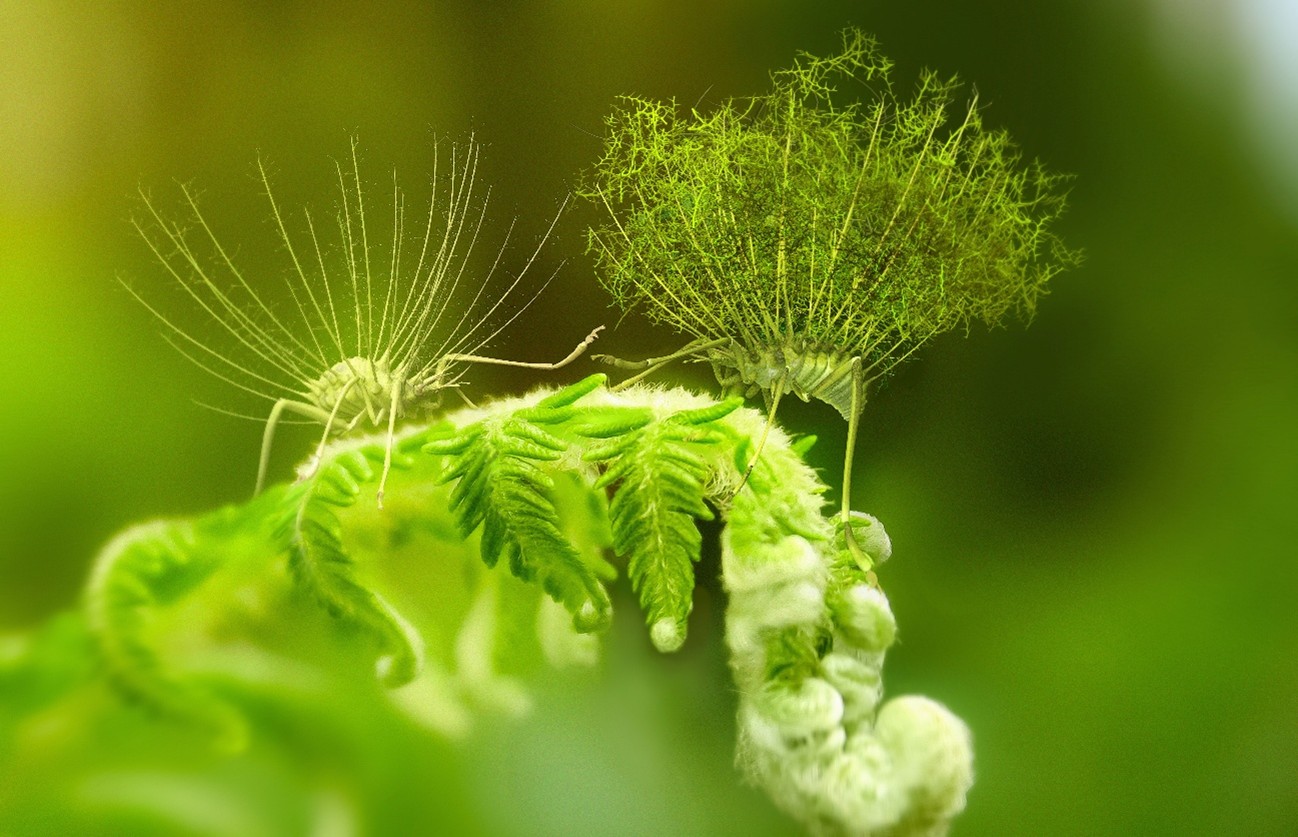
In addition to preserving organisms, the amber from El Soplao captures scenes from the everyday life of a Cretaceous forest. Thanks to this exceptional preservation, researchers have documented evidence of predation, parasitism, mutualism and commensalism, as well as behaviours rarely recorded in the fossil record, such as the transport of various remains by lacewing larvae to camouflage themselves from both predators and prey.
Interactions between arthropods and plants, between arthropods and vertebrates, and other direct evidence of how these ecosystems functioned more than 100 million years ago have also been identified.
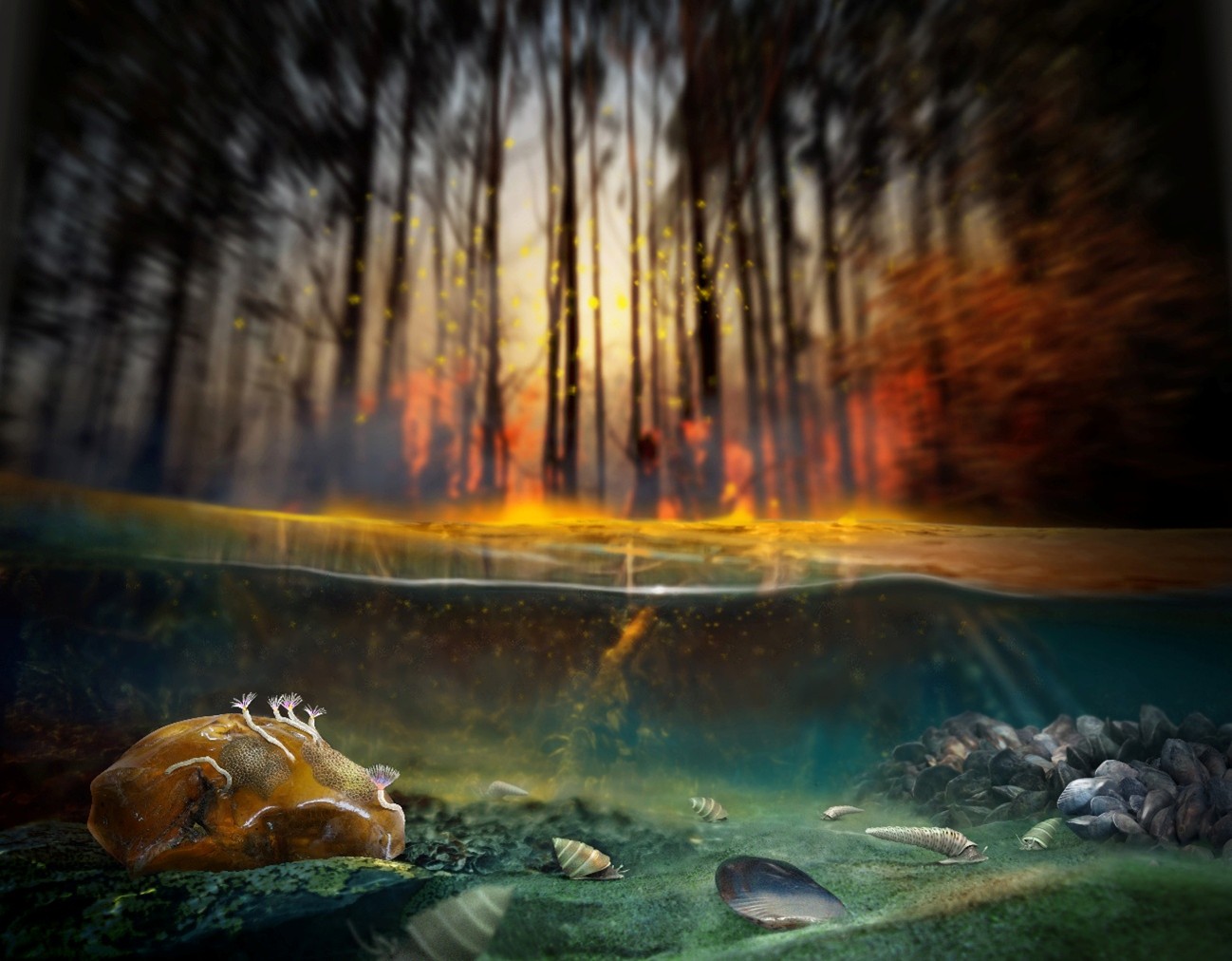
The article includes two reconstructions by palaeoartist J. A. Peñas, produced under the supervision of the researchers. One recreates the appearance in life of the lacewing larva Hallucinochrysa diogenesi, showing the characteristic covering of plant debris that it used for camouflage and which constitutes some of the oldest known evidence of this behaviour. The second reconstruction offers a glimpse of the ecosystem in which the deposit originated, depicting both the resin-producing forest, which was subject to recurrent wildfires that promoted resin production and accumulation, and the swampy environment in which the resin became buried.
El Soplao has also enabled researchers to study how resin was produced by Cretaceous trees. Among the most distinctive discoveries is the identification of fossilised microscopic emulsions of sap and resin, a finding made in material from Cantabria despite being apparently widespread in Cretaceous amber. This provides direct information about the physiology of resin-producing trees and the earliest processes that led to the formation of amber.
The distinctive bluish-violet colour displayed by this amber in natural light, due to its chemical composition, is another of the deposit's defining characteristics.
An international benchmark for palaeontology
The article highlights that El Soplao is currently one of Europe's most important Cretaceous amber deposits containing bioinclusions and an international benchmark for understanding terrestrial biodiversity during a key period in the history of life, when the expansion of flowering plants and the subsequent emergence of modern terrestrial ecosystems took place during the Cretaceous.
This research was carried out as part of several projects funded by the Valencian regional government, the Spanish Ministry of Science, Innovation and Universities, and the Government of Cantabria, through the semi-public company El Soplao S.L.
Reference article:
Sánchez-García, Alba et al. 2026. The El Soplao Konservat-Lagerstätte: a key Cretaceous amber deposit from Spain. Journal of the Geological Society, 183 (5). https://doi.org/10.1144/jgs2026-022
Secondary image 1. Life reconstruction of the fossil lacewing larva Hallucinochrysa diogenesi, preserved in El Soplao amber. This insect used plant debris for camouflage, a behaviour still observed today that already existed around 105 million years ago. Illustration by J. A. Peñas under the supervision of the authors.
Secondary image 2. Palaeoecological reconstruction of the forest that produced the El Soplao amber and of the environment in which the resin was ultimately buried and began its transformation into amber. Illustration by J. A. Peñas under the supervision of the authors.
Images: