Research led by the Universitat de València (UV) revealed that civil society quickly organised itself to create citizen initiatives and support the affected in order to face the slow and deficient perception of the public administration after the dana on 29 October 2024. Furthermore, the digital activism subsequent to the catastrophe was key in socio-environmental resilience and between 70 % and 80 % of citizen's initiatives perceive universities, institutes and schools as trustworthy.
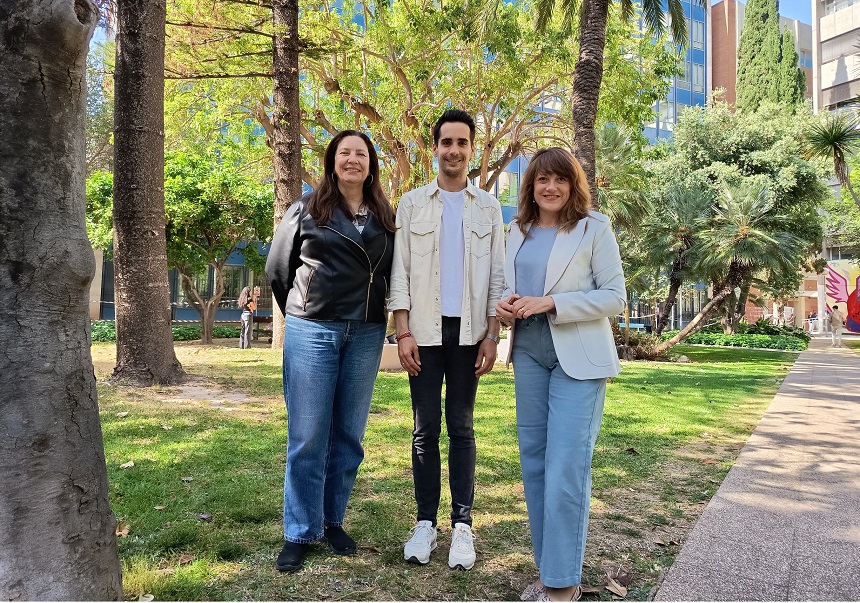
These are some of the conclusions belonging to a published article in the journal Partecipazione e Conflitto by Javier Serrano and Dolores Pitarch, research staff at the Inter-University Institute for Global development (IIDL) and the Department of Geography; and Maria Josep Picó (Department of Language Theory and Communication Sciences) of the UV.
The study analysed it and surveyed 22 social initiatives such as Salvem Les Fotos and AyudaDANA to research the civil organisation and the role that these social initiatives had after the dana. Between the 80 % and 90 % of the surveyed citizen's initiatives reported a lack of trust in the autonomous government and the Diputació de Valencia (Valencia’s provincial council), while half of them did not trust the governments of each affected municipality.
According to the research, due to the perception of a deficient response by the public administrations left an informative gap that citizens filled via alternative channels that generated trust. "The responses from the citizens that were born as a response to the disaster demonstrated that civil society is capable of organising each other quickly using social media and communicative technologies to disseminate information and organise the help" remarked José Javier Serrano, the first signatory of the article.
Furthermore, social media was identified as one of the preferred channels for the communication of the citizen's initiatives, since it facilitated the validation and amplification of messages. Instagram, Facebook and TikTok were crucial in mobilising citizens, sharing trustworthy information and building alternative narratives, based on mutual help, according to the article.
The research team pointed out that the narrative of the citizens emphasised action, solidarity and reconstruction, which stayed away from the pessimism in order to focused all the effort on solutions, reconstruction and action, which allowed the resignification of the catastrophe. That fact contributed to the reduction of the collective trauma.
Moreover, Javier Serrano, Dolores Pitarch and Maria Josep Picó quoted trustworthy entities which over time became well-established such as Salvem les Fotos, Reamuebla.org or Proyecto Alicia. Initiatives such as Suport Mutu or Alcem-se Esport also coordinated groups and specific sectors.
Another conclusion offered by the study is that between the 70 % and 80 % of citizens' initiatives perceive educational administrations —universities, institutes y schools— as trustworthy entities, as opposed to the autonomous government, the Diputación Valenciana and town halls. The trust deposited on collaborative social media and academic entities suggests that, to face possible future disasters, those channels and cooperation must be strengthened, since they can improve social resilience to disasters, Serrano, Pitarch and Picó noted.
The research was financed by the Ministry of Science, Innovation and Universities : PID23150567OB-100 ("(“Desarrollo de la resiliencia social ante riesgos de inundaciones en el contexto del cambio climático”) and by the Conselleria de Educación, Cultura y Empleo of the Generalitat Valenciana : CIACO/2023/081 (“Riesgo de inundaciones y cambio climático. Desarrollo de la resiliencia social a través de la educación y proyectos de participación ciudadana”).
Article referenced: Serrano-Lara, J., Pitarch-Garrido, M., & Picó-Garcés, M. (2026). Emerging Citizen Digital Networks in the Face of the Climate Crisis: Radiography of Solidarity Initiatives in the Valencia DANA Flooding Catastrophe (2024). PARTECIPAZIONE E CONFLITTO, 19(1), 17-38. doi:10.1285/i20356609v19i1p17