University of Valencia logo Logo Valencian Pilota Chair Logo del portal

Pilota around the world

Pilota is just the Valencian way to play a univeral hand ball game. Many cultures throughout the world practice hand ball games from the beginning of times until now. Olmecs, Mayans, Egyptians, Greeks and Romans practiced ball sports. There exist several European and American related games, like palla eh, jeu de pauma, kaatsen and chazas.

To unite the diversity of pilota, the International Confederation of Jeu de Paume (CIJB) was funded in 1928 and restores in the 90s thanks to Valencia representatives. Since then, CIJB has organised 19 international competitios with federations from Argentina, Belgium, Bolivia, Colombia, Costa Risa, Chile, Ecuador, Euskadi, France, Netherlands, England, Italy, Mexico, Paraguay, Portugal, Venezuela and the Federation of Valencian Pilota. It also organises the Elite World One Wall of individual modality and the Coupe des Champions for European llargues club.


CIJB aims to develop and broaden pilota among affiliated federations while stimulating the contact between them, and to organise the international competition. For summer 2021, after the delay due to the COVID-19 pandemic, the Belgium 10th Pilota World Championship will be celebrated.


Euskal Herria
Euskal Herria

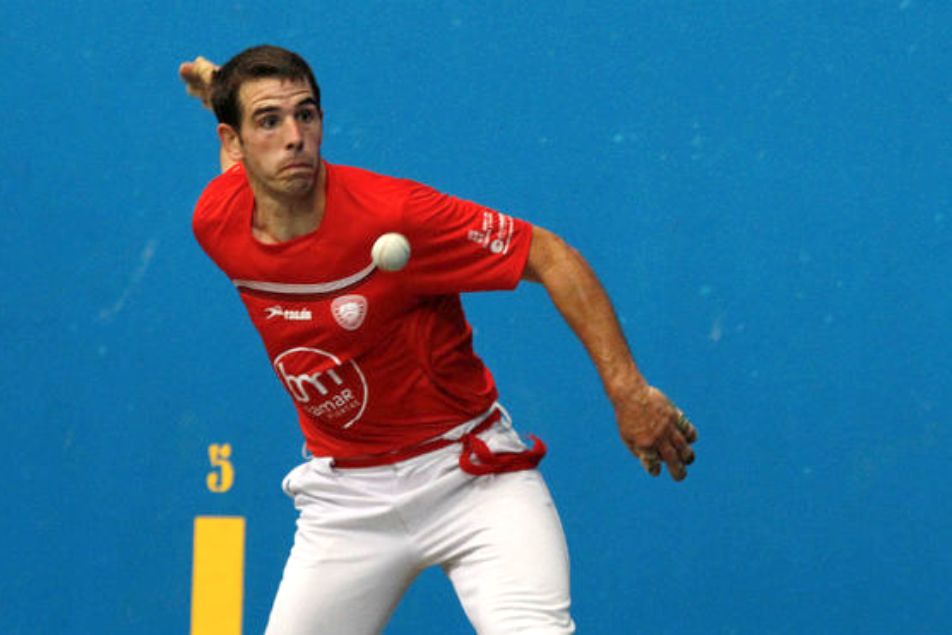
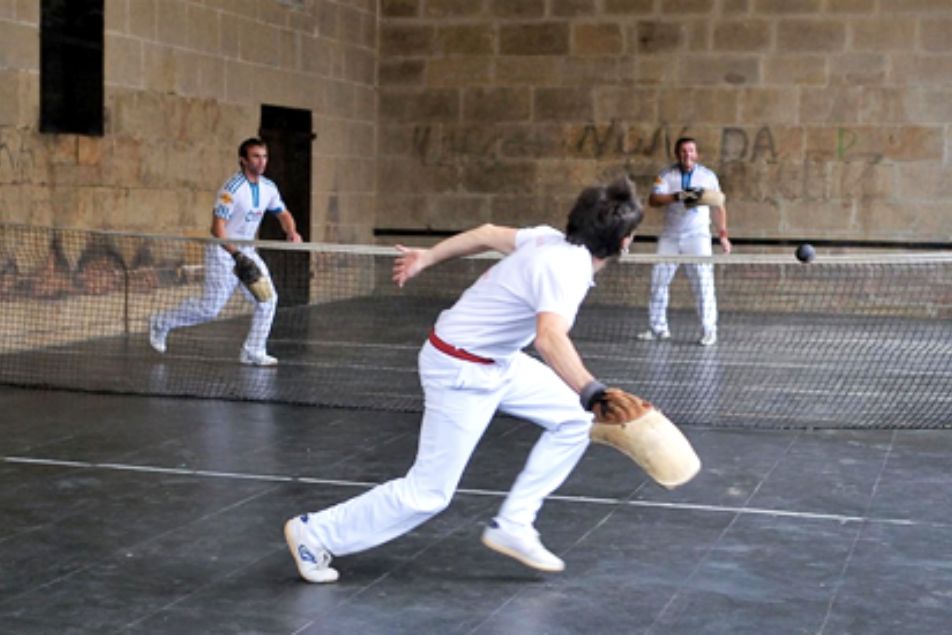
Basque pilota is a reference for this historic journey of Valencian pilota since the classic era until now. Basque-Valencian frontó competitions are not recent events. Som competitions go back the the 19th century.


More information


Castella i Lleó, Aragó, Catalunya i Castella La Manxa
Castilla y León, Aragón, Catalonia and Castilla y la Mancha

La Rioja, Castilla y León (particularly in Burgos and Soria), Catalonia and Aragon practice frontó a mà, a modality of Basque pilota.


More information


Les Illes Canàries
Canary Islands

Pelotamano is practiced in Lanzarote. That is how they call llargues, although it is played exactly like the Valencian modality.


More information


Itàlia
Italy

Italy is the cradle of Greek-Latin culture and has spread several modalities that are still alive. Many regions of the peninsula practice modalities like pallone a bracciale, pallapugno, palla elastica, pantalera, palla toscana, pallapugno leggera, tamburello and palla eh.


More information


França
France

France had the first ancient pilota games restoration. With teams in opposing fields, they began playing hitting the ball with their hands, so they named it jeu de paume. The game was the same as Valencian llargues, with a punctuation divided in four quinzes (15-30-40 and Joc).


More information


Bèlgica
Belgium

In Belgium, pilota is played on hard terrain with drawn lines on the floor that have given shape and definitios of international llargues. On the opposite side of the serve area, there is a goal space of 5 by 19 meters. In Brussels there is a square named Place du Jeu de Balle where pilota was traditionally played at.


More information


Holanda
Netherlands

In the Friesland region of the Netherlands, they play kaatsen (keatsen in Frisian), a pilota game modality named balle pellote is practices and longue paume in the French Picardie. It is played on grass, with a field 60 meters long and 32 meters wide. 


More information


Anglaterra i Escocia
England and Scotland

Several regions of the British islands in the south and the west, from London to Scotlant play indirect styles pilota sports. Rugby fives or fives are very common.


More information


Irlanda
Ireland

Gaelic pilota is practiced in Ireland with four modalities: one wall, 4-wall, softball and hardball. Four indirect style games that differ just in the number of walls, the field and the ball used. 4-wall is played in a very similar field to the esquaix. Quinzes are spectacular due to the bounces.


More information


Canadà
Canada

Handball is also practiced all over Canada with a field of one, three or four walls. One wall fields include a frontis while 4 wall include all four sides and a roof. The fields are about 5 by 7 meters. 


Estats Units
United States

North America holds an immense mix of cultures and pilota has also been influenced in by Irish and Mexican inmigrants. Indirect modalities are the most usual. Ushandball is the organisation regulating pilota sports, with thousands of members and international championships.


More information


Mèxic
Mexico

Mexico has several modalitis of pilota, some of which are even more prosperous than Valencian pilota, like rebote, purepetxa pilota and mixteca pilota. The first one is played in Zacatecas state and is an indirect modality, with a one wall modality, with similar rules and dimensions to València, Ireland, USA and the Netherlands.

 
Colòmbia, Perú, Veneçuela i Equador
Colombia, Peru, Venezuela and Ecuador

Countries where llargues are deeply roted, specially in the countryside, where the came is called chaza. In Pasto, Nariño, the CIJB 9th Championshio of Hand Ball was celebrated.

 
Argentina, Uruguai i Xile
Argentina, Uruguay and Chile

These Southamerican countries have been greatly influenced by indirect pilota games like frontó or Basque trinquet, with hand or paddle. They are now experiencing a stimulating rebirth of these games.


More information


International competitions

In 1993, the Five Nations Cup reunited for the first time Belgium, Netherlands, Italy, Fance and Spain in an international championship of llargues. Victory went to the Valencian team and it became the pebble over which the European and global games of pilota were built with several selections from around the world competeing. International modalities and one wall have been stablished for these championships as well as a female cathegory. The last World Cup took place in 2017 in Colombia, with the victory of the Valencian Selection.

Information from the article 'Pilota al món' ('Pilota around the world') by Victor Iñurria on PilotaViu,  from the book 'Joc de Pilota, Historia de un deporte valenciano' ('Game of Pilota, History of a Valencian Sport') by Alberto Soldado and the CIJB corporate website.


Learn more