OLIVE TREES ARE BORN IN GAZA
Face-to-face
Beneath the fire, the fighting, and the debris, people were cleaning the streets, planting the earth, opening schools, and holding weddings. Why they act like t
Gaza: The Apocalypse and the Revelation
Beneath the fire, the fighting, and the debris, people were cleaning the streets, planting the earth, opening schools, and holding weddings. Why they act like that?
The last image I have is one of the car journey along Salah al-Din Road, between craters, shattered buildings and thick plumes of smoke, when I was crossing the Gaza Strip, from Gaza City, in the north, to the Rafah Border Crossing, in the south. I can see through the window how farmers are still transporting vegetables in their carts, how vendors sitting in shops’ doorways are waiting for customers and how cleaners are sweeping what remains of the streets. "If the end of the world comes and you are sowing, keep on sowing" is a prophetic expression well-known in Palestine.
While for those in the Global South, apocalypses are daily reality, those from the North fear they are heading in that same direction. Yayo Herrero and José Luis Vicente reflect that “Within the debris, life’s possibilities also spring up”. From here we can try to understand what really means to sow and live under the worst possible conditions. We could simply ask our grandparents who had to survive a war and a post-war.
One April morning, in the fields of Khuza’a I see a young couple with their little daughter. They are harvesting wheat together, along with their grandparents, siblings, cousins, neighbours. All kneeling, they are working together. Over their heads, warplanes flying in the sky. Beyond the fence, the snipers are aiming at them. And sometimes, they shoot to kill. The family smiles, and I feel peace, joy and strength. What secret do they hold in their hearts that we don’t know?
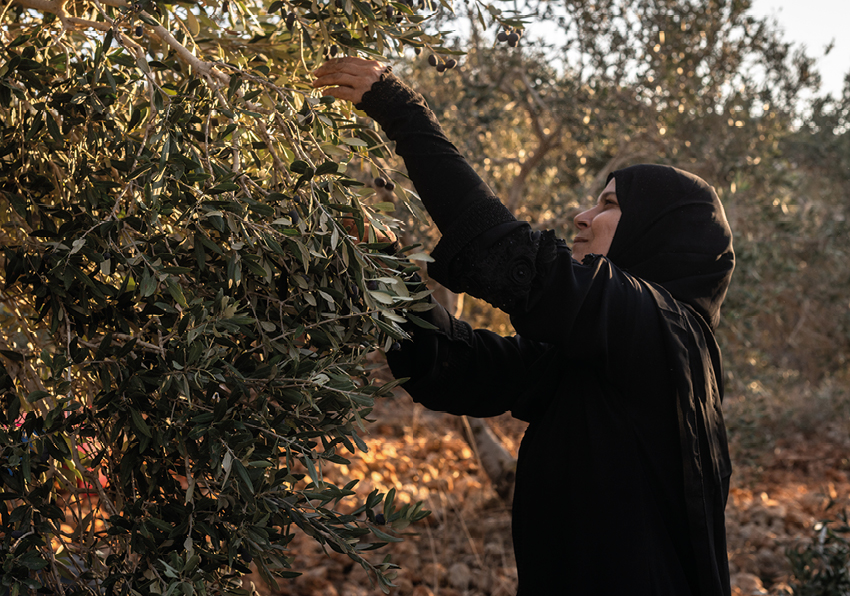
Gaza is just a tiny strip, an oasis by the sea, a tormented concentration camp, a ghetto which is on fire. It is the city which was conquered and destroyed by Alexander the Great 24 centuries ago. Gaza, the city that connects Africa, Asia and Europe. It is the land where the mother tries to protect her children, hidden inside her core, so that the AI-guided war machine cannot find them. In the ruins, they left this message: as long as olive trees and thyme remain, we will stay.
David Segarra
ScheduleFrom 10 december 2025 to 22 march 2026. Tuesday, wednesday, thursday, friday, saturday and sunday at 19:30 to 23:00.
Place
Centre Cultural La Nau. Claustre i Sala Acadèmia
Carrer de la Universitat, 2.
València, Espanya. (46003)
Centre Cultural La Nau de la Universitat de València.