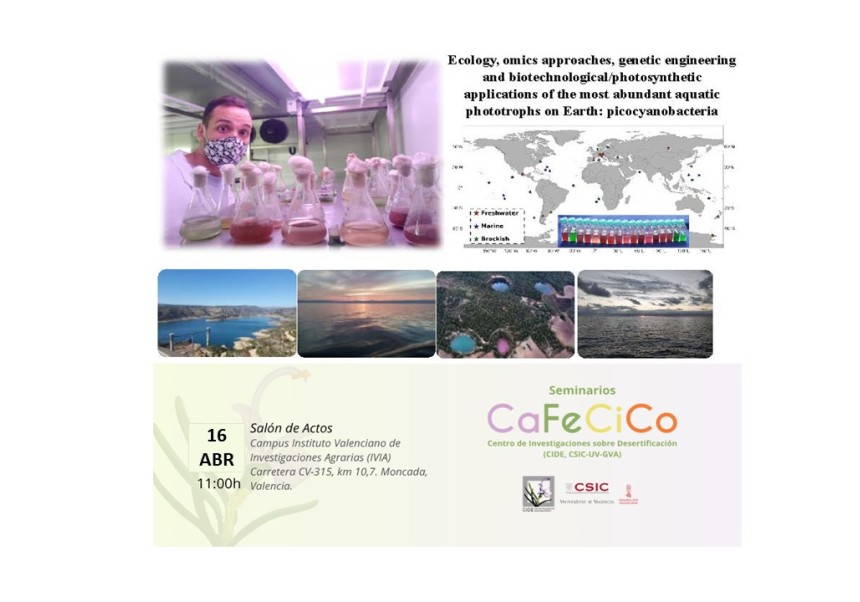
Cyanobacteria are the only prokaryotes capable of performing oxygenic photosynthesis, one of the most important biological processes on our planet. Among them, picocyanobacteria contribute approximately 25% of marine carbon fixation, as well as 20–25% of global oxygen production on Earth. However, this group is also fundamental in freshwater ecosystems, which are a critical resource for many applications such as agriculture and human consumption.
By studying salt‑adapted (marine/brackish) and non‑salt‑adapted (freshwater) picocyanobacteria, this research aims to contribute to microbiology and biology more broadly by addressing a fundamental question: what differentiates a marine biological entity from a freshwater one? Through omics approaches, physiological studies, genetic engineering and biotechnology, this work seeks to significantly expand our understanding of phototrophs and photosynthesis, microbial ecology and evolutionary biology, while also exploring potential applications in plants and other eukaryotes.
Speaker: Pedro José Cabello Yeves. Ramón y Cajal Researcher at the Institute of Biodiversity and Evolutionary Biology (ICBIBE), University of Valencia.
The seminar will be delivered in English.
Date: Thursday, April 16, at 11:00 a.m.
Venue: Assembly Hall, Valencian Institute for Agricultural Research (IVIA)
CV‑315 road, km 10.7 – Moncada, Valencia.
CIDE Communication