

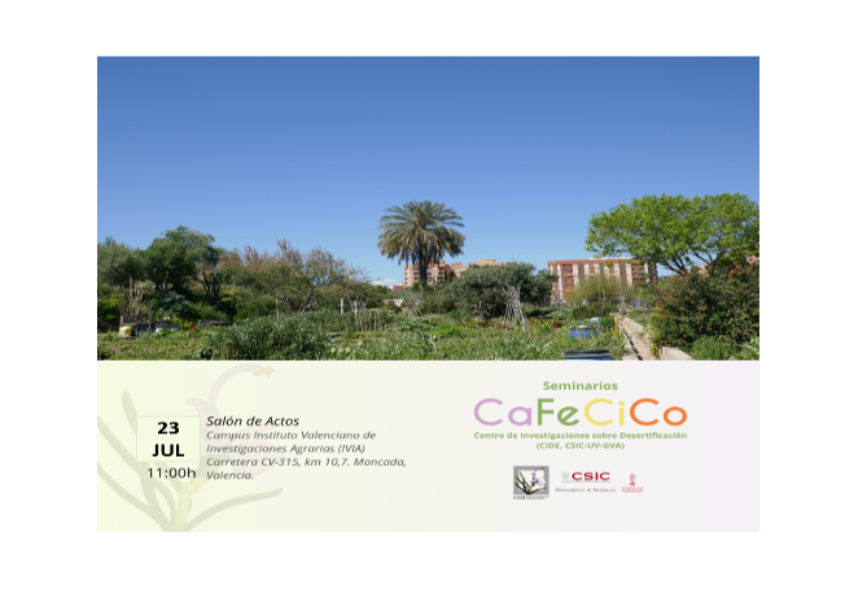
CaFeCiCo 23/07/26: Urban gardens as biodiversity reservoirs
Urban green spaces have the potential to sustain biodiversity. Particularly, urban gardens function as small oases of biodiversity within the city. The diversity of crops, flowers, hedges, and undisturbed corners creates microhabitats where numerous species can thrive. This fosters key ecological processes. Due to urban sprawl, in many cases these spaces are threatened, and their biodiversity can be lost. Documenting this biodiversity has a dual value: on the one hand, it allows us to better understand the garden's ecosystem, and on the other, it generates useful data for citizen science and environmental education.
Our study assessed the diversity of flower-visiting insects in urban community gardens in Valencia (Spain) and shows that urban gardens, managed with biodiversity-friendly practices, can function as key refuges for flower-visiting insects when management practices allow wild growing plant species to act as complementary resources to cultivated plants.
Presented by: Ambra Caron, master student at the University of Padova and Desertification Research Centre (CIDE-CSIC-UV-GVA)
The seminar will be held in English
Date: Thursday, 23 July at 11.00 am
Venue: Auditorium of the Valencian Institute of Agricultural Research (IVIA).
Carretera CV-315, km 10.7 – Moncada, Valencia.
CIDE Communication



