

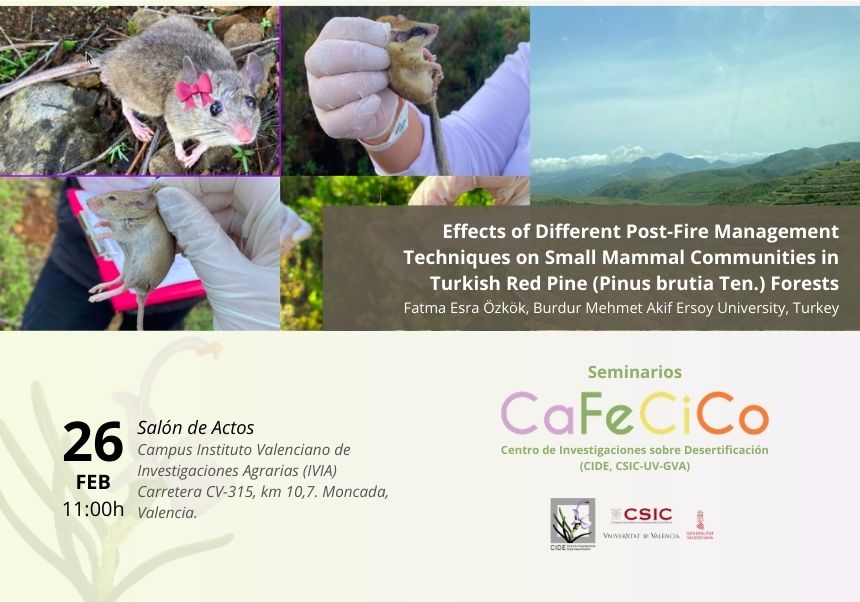
Fire is a key ecological driver shaping Mediterranean ecosystems. In Türkiye, thousands of hectares of Pinus brutia (Turkish red pine) forests are affected by wildfires each year. Fire influences communities through both short-term direct effects—such as mortality and habitat destruction depending on fire severity—and long-term indirect effects, including successional changes, species interactions, and adaptive colonization strategies.
Post-fire management techniques, such as salvage logging and plantation can substantially alter abiotic and biotic conditions, thereby influencing community structure and recovery trajectories. However, while post-fire successional dynamics have been extensively studied in Turkish red pine forests, the effects of different post-fire management techniques on faunal community structure and dynamics remain poorly understood.
This study aims to evaluate how alternative post-fire management techniques affect small mammal community structure and dynamics in Pinus brutia forest ecosystems. Fieldwork was conducted in fire-affected areas around Marmaris (Muğla, southwestern Türkiye), representing different fire histories and management approaches. Small mammals were sampled using Sherman and pitfall traps, and microhabitat variables—including plant species richness, total vegetation cover, vegetation height, and ground surface characteristics—were assessed.
Field data collection has been completed and analyses are currently ongoing. By addressing a significant gap in the literature, this study will contribute to a better understanding of faunal responses to post-fire management and provide valuable guidance for future forest restoration and management planning in Mediterranean ecosystems.
Presented by: Fatma Esra Özkök, Master Student in T.C. Burdur Mehmet Akif Ersoy University, Turkey
The seminar will be conducted in English
Date: Thursday, 26 February, at 11:00 a.m.
Location: Salón de Actos del Instituto Valenciano de Investigaciones Agrarias (IVIA). Carretera CV-315, km 10.7 - Moncada, Valencia.
CIDE Communication



