



Do you want to get to know the Faculty of Chemistry? What degrees do we offer?
The Universitat de València organises the “Conèixer la Universitat” programme with the aim of bringing the Universitat closer to high schools and showing future students its educational offer and services.
“Conèixer la Universitat” is an initiative of the Office of the Vice-Principal for Studies that is coordinated by the Information and Promotion Service (Sedi) and has the participation of the centres and services of the Universitat de València.
-
Degree in Chemistry

The Degree in Chemistry (also Dual Mention Option) studies the composition, synthesis, properties, behaviour, and reactivity of matter. It analyses the properties of all kinds of inorganic, organic and biological material compounds, as well as the aspects related to change and reactivity. It includes research about structures and mechanisms of chemical transformations, synthesis of new compounds, and also the development of tools for analysis. Chemistry impact hugely on all human activity areas. It plays a key role in health and environment protection, enhancement of hygienic and sanitary conditions, qualitative and quantitative improvements in food production and in the manufacturing of new and cheaper materials contributing to the life quality improvement. Chemistry's future shall be closely related to nanomaterials and energy.
-
Degree in ChemistryProfile
These studies facilitate a wide range of employment opportunities, including industry, teaching, research, public administration, new technologies and services. In 2019, the Degree in Chemistry was awarded the Eurobachelor international label, which guarantees the quality criteria, relevance, transparency, recognition and mobility within European Higher Education institutions, attesting to employers the knowledge and practices acquired by the graduates throughout their studies.
-
Degree in ChemistryUseful information
- Also Dual Mention option.
- This degree provides solid training in the most relevant areas of chemistry, making competent and qualified professionals to carry out their professional activity, both in industry and in education. Furthermore, it is the starting point for access to specialised postgraduate studies, on research, development and innovation.
- The optional subjects offer includes an internship, in which students have the chance to get first-hand experience in the labour world of the chemical sector.
- Laboratory practices account for 38% of the teaching load of the compulsory subjects.
- Students can enrol in an international double degree programme, taking two years at a foreign university.
-
Degree in ChemistryCredit: 240Courses: 4Classes: face-to-facePlaces: 160Language: Spanish, ValencianPrize: 17,34 €/CreditSpecific website:www.uv.es/grado/quimicaCut-off marksOver 25 years5General10,739Over 40 years5Univ. graduates5Over 45 years5Elite sportspeople5Func diversity ppl.5Faculty of ChemistryBurjassot/Paterna CampusAv. Vicent Andrés Estellés, 1946100 Burjassot (Valencia)+34 963 544 323Geolocation
-
Degree in ChemistryWeightings
Les ponderacions són els coeficients multiplicadors que s’utilitzen en el càlcul de la nota d’admissió a la titulació (NAT). S’estableixen segons la relació que existeix entre les assignatures examinades en les PAU i una titulació concreta.Poden ser 0, 0,1 o 0,2.
Les taules amb la ponderació que correspon a cada assignatura i grau són fixades per cada universitat.En aquest apartat del web podeu consultar les ponderacions vigents a la Universitat de València.
-
Double Degree in Physics and Chemistry
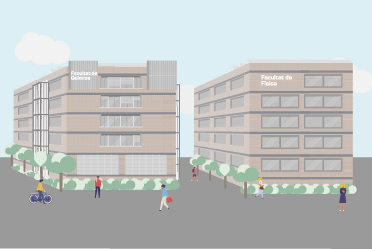
The double degree in Physics and Chemistry provides students with a solid theoretical and experimental training in these two scientific disciplines. In their attempt to interpret nature, both physics and chemistry share a common core of knowledge and skills, so the curriculum has been designed in a way that students obtain both degrees in just five years with a reasonable annual teaching load: between 62 and 71 credits per year.
-
Double Degree in Physics and ChemistryProfile
Students who complete the double degree will enter the world of teaching, research and industry sector in an ideal position. In the teaching field, physics and chemistry share subjects up to the sixth year of Spanish high school and also the same teaching specialty for high school education. Moreover, many of the current research challenges require interdisciplinary perspectives, physics and physical chemistry go hand in hand in fields such as: materials science, thermodynamics, fluid mechanics, transport phenomena, atomic and molecular physics and physical chemistry. The skills acquired in the double degree broaden as well the job prospects, as they cover many professional aspects: production and marketing in the chemical and pharmaceutical industry, food technology, new materials, environment, optics, consultancy, etc.
-
Double Degree in Physics and ChemistryUseful information
- Courses are mainly taken from both the Bachelor's Degree in Physics and from the Bachelor's Degree in Chemistry, sharing classrooms and faculties. The content of some courses has been adapted to avoid repetition and to facilitate the training of students with an optimal itinerary.
- Theoretical courses include practical problem-solving classes in small groups of students, which facilitate study and understanding and also contribute to the general assessment.
- In the experimental laboratories, students become familiar with measurement and data analysis techniques and instrumentation. They work in small groups with personalised attention from the lecturers and playing an active and practical role.
- Physics and Chemistry degrees are traditional at the University of Valencia. Both stand out in the top positions of the most prestigious rankings. The Nature INDEX of 2019 places them in second position in Spain. Both degrees have a high-level teaching staff who have been involved in educational innovation projects since the degrees were introduced in 2010.
- For accessing double degrees, the same subjects weighted for each separate degree will be taken into account.
-
Double Degree in Physics and ChemistryCredit: 332Courses: 5Classes: face-to-facePlaces: 20Prize: 17,34 €/CreditCut-off marksOver 25 years5General12,604Over 40 years5Univ. graduates6,12Over 45 years5Elite sportspeople5Func diversity ppl.5Faculty of PhysicsBurjassot/Paterna CampusAv. Vicent Andrés Estellés, 1946100 Burjassot (Valencia)+34 963 543 307GeolocationFaculty of ChemistryBurjassot/Paterna CampusAv. Vicent Andrés Estellés, 1946100 Burjassot (Valencia)+34 963 544 323Geolocation
-
Double Degree in Physics and ChemistryWeightings
Les ponderacions són els coeficients multiplicadors que s’utilitzen en el càlcul de la nota d’admissió a la titulació (NAT). S’estableixen segons la relació que existeix entre les assignatures examinades en les PAU i una titulació concreta.Poden ser 0, 0,1 o 0,2.
Les taules amb la ponderació que correspon a cada assignatura i grau són fixades per cada universitat.En aquest apartat del web podeu consultar les ponderacions vigents a la Universitat de València.
-
Double Degree in Chemistry and Chemical Engineering
The Double degree in Chemistry and Chemical Engineering provides a strong theoretical and practical training in the two disciplines that gathers: chemistry, as science that studies the composition, synthesis, characteristics, behaviour and reactivity of the matter, and chemical engineering, which applies the knowledge and developments to the transformation of raw material in useful products manufactured in industrial scale. Therefore, it covers the necessities of the chemical industry and offers solutions to problems related to health, food, energy and the environment among others, contributing to the constant progress of society.
-
Double Degree in Chemistry and Chemical EngineeringProfile
This double and complementary profile is ideal for researching, project development, products and processes design, production and management of productive activities, as well as for teaching in high school, educational cycles and university studies.
The double degree enables the students for the regulated profession of industrial technical engineer and has the support of the Chemistry and Environmental Association of the Chemistry Sector of the Valencian Community. Furthermore, both the degree and the engineering have been recognized with the signature EuroBachelor® and Eur-Ace®.
-
Double Degree in Chemistry and Chemical EngineeringUseful information
- Information leaflet of the Double degree in Chemistry and Chemical Engineering
- The double degree enables the students for the regulated profession of industrial technical engineer.
- The planning of these studies allows to obtain the degrees in Chemistry and Chemical Engineering in five years, with reasonable annual dedication (between 63 and 69 credits per year).
- Theoretical subjects include problems resolution practices in reduced groups, that make the study and the comprehension easier and contribute to a global evaluation.
- In the experimentalist laboratories, the students gain competences in the application of measure technics, instruments and industrial equipment management and data analysis.
- Students work in reduced groups with a personalized attention, and an active and practical role of the students.
- The final degree thesis allows students to integrate and apply the competences acquired and increment transversal skills such as interaction with professionals and writing of scientific and technical papers.
-
Double Degree in Chemistry and Chemical EngineeringCredit: 330Courses: 5Classes: face-to-facePlaces: 20Prize: 17,34 €/CreditSpecific website:www.uv.es/double-degree/chemistry-chemical-engineering/Cut-off marksOver 25 years5General11,214Over 40 years5Univ. graduates5Over 45 years5Elite sportspeople9,309Func diversity ppl.5Faculty of ChemistryBurjassot/Paterna CampusAv. Vicent Andrés Estellés, 1946100 Burjassot (Valencia)+34 963 544 323GeolocationSchool of EngineeringBurjassot/Paterna CampusAvinguda de la Universitat s/n46100 Burjassot (Valencia)+34 963 543 211Geolocation
-
Double Degree in Chemistry and Chemical EngineeringWeightings
Les ponderacions són els coeficients multiplicadors que s’utilitzen en el càlcul de la nota d’admissió a la titulació (NAT). S’estableixen segons la relació que existeix entre les assignatures examinades en les PAU i una titulació concreta.Poden ser 0, 0,1 o 0,2.
Les taules amb la ponderació que correspon a cada assignatura i grau són fixades per cada universitat.En aquest apartat del web podeu consultar les ponderacions vigents a la Universitat de València.
-
Double International Degrees in Chemistry

Students of certain UV degrees have the possibility of taking two academic years at one of the foreign partner universities and obtain degrees from both institutions upon completion. These double degrees allow for more mobility and a more competitive training.
Whoever wants to obtain the double degree in Chemistry must pass the credits of the first three courses and have a B1 French level. The request coincides with the Erasmus call and students can submit it in the third course.
-
Double International Degrees in ChemistryUseful information
Degree in Chemistry and Master’s Degree in Organic Chemistry or Master’s Degree in Experimental Techniques + Diplôme d’Ingénieur/Grade/Master i Master Sciences et Technologies, especialització enChimie Moléculaire o Sciences Analytiques (École de Chimie, Polymères et Matériaux (ECPM), Université de Strasbourg)
-
Master’s Degree in Nanoscience and Nanotechnology
 This Master’s Degree it is aimed for training students in the field of Nanoscience and Nanotechnology, so they can start a research activity leading to a Doctoral Thesis. Fields of knowledge in which it arises: basically in the fields of Chemistry, Physics, Engineering, Material Sciences, Biochemistry, Pharmacy and Medicine. The syllabus of the Master’s Degree is somewhere in between Nanoscience/Nanotechnology and molecular sciences. Therefore, it explores scientific areas of increasing interest such as Molecular Electronics, Molecular Magnetism, Supramolecular Chemistry, Surfaces Chemistry or Molecular Materials Sciences.
Registration at RUCT -
Master’s Degree in Nanoscience and NanotechnologyRecommended admission profile
To have completed previous undergraduate degree studies in technical or experimental teachings related to the Master’s Degree goals; among them: Chemistry, Physics, Biochemistry, Biotechnology, Pharmacy, Medicine, Chemical Engineering, Electronic Engineering, or similar fields.
A B2 level of English language is recommended, for guaranteeing that the student can follow theoretical clasess, as they are taught in English language.
-
Master’s Degree in Nanoscience and NanotechnologyAdmission criteria
Students who meet these requirements will be admitted in the Master’s Degree according to the following entry requirements and criteria of
merits assessments:
- Specific admission requirements: to have completed previous undergraduate studies of technical or experimental teachings related
to the Master’s Degree goals; among them: Chemistry, Physics, Biochemistry, Biotechnology, Pharmacy, Medicine, Chemical Engineering, Electronic Engineering,
or similar fields. Regarding to foreign students they must hold an official degree equivalent to some the
previous degrees, or to certify a training level equivalent to the Spanish degrees mentioned above.Assessment criteria of merits:
- Academic Record (80%)
- English Language Skills superior to the minimum required (10%)
- Other CV merits (10%) -
Master’s Degree in Nanoscience and NanotechnologyCredit: 60Courses: 1Classes: face-to-facePlaces: 25Language: EnglishPrize: 35,34 €/CreditUniversities: University of Valencia, Autonomous University of Madrid, University of Alicante, University of Valladolid, University of Castile La Mancha, University of La Laguna and Miguel Hernández University of Elche.Specific website:http://icmol.es/master/nano/Faculty of ChemistryBurjassot/Paterna CampusAv. Vicent Andrés Estellés, 1946100 Burjassot (Valencia)+34 963 544 323Geolocation
-
Master's Degree in Experimental Techniques in Chemistry
 This master's offers advanced and comprehensive training in the knowledge and use of experimental techniques in Chemistry, necessary for the analysis and characterisation of substances. Its curriculum allows graduates to complete their studies in this area of knowledge; the professional orientation provides specific and experimental contents for an immediate application in companies. At the same time, the programme provides a sound base for research both in university and in private companies or official organisations developing projects related with this activity.
 -
Master's Degree in Experimental Techniques in ChemistryRecommended admission profile
The recommended profile for this master’s programme is that of a person holding a degree in Chemistry (or equivalent qualification) willing to improve their education by means of a programme with a professional focus, and a high level of experimentation and research.
-
Master's Degree in Experimental Techniques in ChemistryAdmission criteria
Students whose native language is not Spanish are required to demonstrate a level of Spanish equivalent to B2 to ensure proper participation in the program. This must be certified by official documentation issued by Official Language Schools or equivalent institutions. If the student cannot provide such certification, their level may be formally assessed through a personal interview.
Regarding the required level of English, a B2 level is recommended. This level will be considered accredited when the student provides official certification issued by Official Language Schools or equivalent bodies. In any case, the minimum level required corresponds to a passing grade in the English test of the university entrance examinations. If the student cannot certify their English level through these means, it may be formally assessed through a personal interview.
Student selection will be carried out by the Academic Coordination Committee based on scientific and academic criteria, as follows:
- Academic records (75%)
- Curriculum vitae, with documented evidence of the merits claimed (25%). If deemed appropriate, a personal interview may be conducted regarding the merits listed in the CV.
Additionally, in accordance with Royal Decree 822/2021, which establishes the organization of university education and its quality assurance procedures, students from universities within the European Higher Education Area who still need to complete their Final Degree Project and up to a maximum of 9 ECTS credits may access the master's program, provided that, after enrollment and waiting list procedures for students with completed degrees, places remain available. Students admitted through this route will not be able to obtain the Master's degree unless they have previously completed their Bachelor's degree.
Furthermore, 5% of the places offered in official Master's programs will be reserved for students with a recognized disability of 33% or higher, as well as for students with permanent educational support needs associated with personal circumstances of disability, who in their previous studies have required resources and support to ensure full educational inclusion.
-
Master's Degree in Experimental Techniques in ChemistryCredit: 60Courses: 1Classes: face-to-facePlaces: 24Language: Spanish and valencianPrize: 35,34 €/CreditUniversities: University in ValenciaSpecific website:www.uv.es/masterteqFaculty of ChemistryBurjassot/Paterna CampusAv. Vicent Andrés Estellés, 1946100 Burjassot (Valencia)+34 963 544 323Geolocation
-
Master's Degree in Theoretical Chemistry and Computational Modelling (Erasmus Mundus)
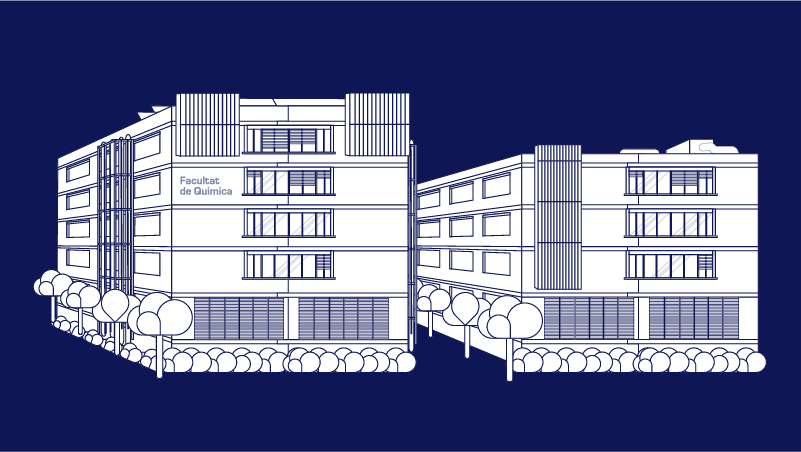 This Master has the support of a consortium of seven universities, is supported by the Erasmus Mundus Programme (European Union) and has been the first Master’s Degree in Chemistry which has achieved the Eurolabel of the European Chemistry Thematic Network Association (ECTNA). This Master aims to train specialists capable of implementing and developing new methods and computer codes and monitoring future doctoral studies in Chemistry, Physics, Life Sciences and Material Sciences. They will be also able to develop professional activities as experts in molecular design in the pharmaceutical, petrochemical and new materials industries, or in any company as computing expert.
-
Master's Degree in Theoretical Chemistry and Computational Modelling (Erasmus Mundus)Recommended admission profileCould register in this Master’s students that:
- Have a Bachelor in Chemistry, Physics or Materials Sciences, or any other equivalent level if is supported by the appropriate legislation of the corresponding European country. Other scientific bachelor may be admitted, provided that the student adapts his/her basic training under the supervision of a tutor.
- A certificate of proficiency in English internationally recognised equivalent to TOEFL with a minimum mark of 213/500, or an IELTS with a minimum mark of 6.
-
Master's Degree in Theoretical Chemistry and Computational Modelling (Erasmus Mundus)Admission criteria
The admission of students will consider the following criteria:
Academic record 50%
Cover letter 15%
References of two people
Certificate of English and Spanish knowledge for candidates of third countries 20%It will be considered the following aspects:
- That students meet the entry requirements regarding to qualifications, considering also the marks in the area of chemistry and physics. Other qualifications different to Chemistry, Physics or Materials Sciences may be admitted, always that students could certificate knowledge at the level of “Chemistry eurobachelor” (or equivalent) of the following subject matters: Chemical Bonding, atomic and molecular structure and molecular interactions, General Physics, General Chemistry Physics, Thermodynamics, Kinetics and Spectroscopy. Some deficiencies can be compensated by bridging courses. However, application forms with deficiencies in two of the mentioned areas cannot be accepted.
- That the candidate has an internationally recognised certificate of proficiency in English equivalent to TOEFL with a minimum mark of 213/500, or an IELTS with a minimum mark of 6. According to the descriptors of the Common European Framework for languages, will be equivalent to a minimum level of B2 or C1.
-
Master's Degree in Theoretical Chemistry and Computational Modelling (Erasmus Mundus)Credit: 120Courses: 2Classes: face-to-facePlaces: 15Language: Spanish and EnglishPrize: 35,34 €/CreditUniversities: Universitat de València, Universidad Autónoma de Madrid, la Universidad de Barcelona, Katholieke Universiteit Leuven-Catholic University of Leuven (Bélgica), Rijksuniversiteit Groningen-University of Groningen (Países Bajos), Università degli Studi di Perugia (Italia), Università degli Studi di Trieste (Italia), Université Paul Sabatier - Toulouse III (Francia).Specific website:http://tccm.qui.uam.esFaculty of ChemistryBurjassot/Paterna CampusAv. Vicent Andrés Estellés, 1946100 Burjassot (Valencia)+34 963 544 323Geolocation
-
Master’s Degree in Organic Chemistry
 This Master’s degree intends to provide a training in advanced Organic Chemistry with special emphasis in its experimental aspect, including the scientific aspects in the research field and the applied and technological aspects in each of the chosen subjects. The students will acquire in this Master’s degree the combination of attitudes, knowledge and abilities required to carry out professional activities in which an organic chemist can be involved, both in the academic field and in the industry. A specific feature of the studies is the training in Pharmaceutical Chemistry in the different aspects related to its industrial dimension in the research and production section.
 -
Master’s Degree in Organic ChemistryRecommended admission profile
The Master’s degree is addressed at students with a previous and specific training in subjects related to the contents of the Master’s degree In accordance with this,
the Academic Committee will value favourably the applications for admission in the master’s degree of those
students from the degrees in Chemistry and Pharmacy. If the students come from other degrees, the Academic Committee will individually study
each application.Spanish C1 Level. English B1 Level is advisable.
-
Master’s Degree in Organic ChemistryAdmission criteria
The Academic Committee of the Doctoral Programme (CAPD) will carry out the selection of students based on:
- Academic Record (80%)
- English Language Skills superior to the minimum required (10%)
- Other merits in the CV (10%)
When assessing the academic record of the applicants, the average
score of prior degrees will be taken into account. Language knowledge, having additional degrees, specialised courses and other relevant merits
will be considered as additional merits. -
Master’s Degree in Organic ChemistryCredit: 60Courses: 1Classes: face-to-facePlaces: 25Language: SpanishPrize: 35,34 €/CreditUniversities: University of ValenciaSpecific website:http://www.uv.es/master-quimica-organicaFaculty of ChemistryBurjassot/Paterna CampusAv. Vicent Andrés Estellés, 1946100 Burjassot (Valencia)+34 963 544 323Geolocation
-
Master’s Degree in Chemistry
 Chemistry is the science that studies the composition. synthesis, properties, behaviour and reactivity of the matter. It focuses on properties of material compounds of any kind, inorganic, organic and biological and also on the aspects of change and reactivity. It includes the research of the structures and mechanisms of chemical transformations and the synthesis of new compounds, as well as the development of new tools for the analysis. With its permanent ability for innovation it has always had a great impact in the progress, developing products and technologies which influence all the fields of activity of the human being. The Science of Chemistry plays a very important role in protecting health and environment, in the improvement of hygiene and sanitary conditions, in the provision and guarantee of food and in the manufacturing of new and cheaper materials that improve the quality of our lives. Its future is specially focused on four fields of general interest: life, environment including natural disasters, nanomaterials and energy. The present super-specialisation can be a problem to give an answer to our needs, as the mentioned fields are multidisciplinary and have to be addressed like that. To solve this situation the scientist has to be open-minded towards other sciences and scientific education has to be more broad.
The Master’s Degree in Chemistry aims at becoming a professional chemist in the professional fields of specialisation: Academic, Research and Industrial. It aims at showing how the problems are dealt with and how a solution is provided from the point of view of the different basic specialities: analytics, physics, organics and inorganics and how multidisciplinarity is needed among the own basic specialities of chemistry and the other sciences in order to supplement and progress in raising awareness.
INFORMATION NOTICE: Although the learning modality indicated in the degree's verification report is in-person (https://www.uv.es/pop/docs-M/INFORMES/MEMORIA/2249_MV1.pdf), since the 2023-2024 academic year, the teaching structure has followed a hybrid or blended learning approach. To facilitate work-life balance, theoretical subjects are delivered via synchronous videoconference sessions (with recordings available for asynchronous viewing), while the practical module (External Internships and Master's Thesis) strictly maintains its in-person format. This methodological adaptation is expected to be officially registered as a blended learning modality in the upcoming major modification of the curriculum and its corresponding verification report.
Chemistry is the science that studies the composition. synthesis, properties, behaviour and reactivity of the matter. It focuses on properties of material compounds of any kind, inorganic, organic and biological and also on the aspects of change and reactivity. It includes the research of the structures and mechanisms of chemical transformations and the synthesis of new compounds, as well as the development of new tools for the analysis. With its permanent ability for innovation it has always had a great impact in the progress, developing products and technologies which influence all the fields of activity of the human being. The Science of Chemistry plays a very important role in protecting health and environment, in the improvement of hygiene and sanitary conditions, in the provision and guarantee of food and in the manufacturing of new and cheaper materials that improve the quality of our lives. Its future is specially focused on four fields of general interest: life, environment including natural disasters, nanomaterials and energy. The present super-specialisation can be a problem to give an answer to our needs, as the mentioned fields are multidisciplinary and have to be addressed like that. To solve this situation the scientist has to be open-minded towards other sciences and scientific education has to be more broad.
The Master’s Degree in Chemistry aims at becoming a professional chemist in the professional fields of specialisation: Academic, Research and Industrial. It aims at showing how the problems are dealt with and how a solution is provided from the point of view of the different basic specialities: analytics, physics, organics and inorganics and how multidisciplinarity is needed among the own basic specialities of chemistry and the other sciences in order to supplement and progress in raising awareness.
INFORMATION NOTICE: Although the learning modality indicated in the degree's verification report is in-person (https://www.uv.es/pop/docs-M/INFORMES/MEMORIA/2249_MV1.pdf), since the 2023-2024 academic year, the teaching structure has followed a hybrid or blended learning approach. To facilitate work-life balance, theoretical subjects are delivered via synchronous videoconference sessions (with recordings available for asynchronous viewing), while the practical module (External Internships and Master's Thesis) strictly maintains its in-person format. This methodological adaptation is expected to be officially registered as a blended learning modality in the upcoming major modification of the curriculum and its corresponding verification report. -
Master’s Degree in ChemistryRecommended admission profile
The appropriated student’s profile of the Master’s Degree Students in Chemistry is that of graduates from degrees of the field of chemistry and/or sciences and technologies related, who wish to complete their training by taking a Master’s of professional or research nature, or oriented towards professional specialisation in Chemical Industry and/or Chemical Company.
Thus, holders of one of the following undergraduate degrees can access to the Master’s:
Degree in Chemistry, Degree in Pharmacy, Degree in Chemical engineering, Degree in Biochemistry and Biomedical Sciences, Degree in Environmental Sciences (Science field of knowledge) or degrees related to chemistry. -
Master’s Degree in ChemistryAdmission criteria
The selection of the students will be made by the Academic Coordinating Committee. The scientific and academic reasons which will be taken into account are:
- The adaptation of the student’s training to the recommended profile (40-50%).
- Academic record (30-40 %).
- The CV submitted (with documentary evidence of the merits alleged) (10-20%). If appropriate, an interview could be conducted.
- In the case of students whose mother tongue is not Spanish and/or Valencian, a B2 level or equivalent is required of that language, which guarantees that the student can follow the theory classes.
- When resolving by cause of equality is necessary, an interview to the involved students will be conducted.
-
Master’s Degree in ChemistryCredit: 60Courses: 1Classes: face-to-facePlaces: 25Language: Spanish and valencianPrize: 35,34 €/CreditUniversities: University of ValènciaSpecific website:www.uv.es/master-quimicaFaculty of ChemistryBurjassot/Paterna CampusAv. Vicent Andrés Estellés, 1946100 Burjassot (Valencia)+34 963 544 323Geolocation
-
Master’s Degree in Health Chemistry and Biochemistry
 The significance of chemistry in the healthcare industry has grown rapidly due to advancements in analytical, biochemical and molecular techniques. Therefore, there is a need to train chemistry and related degree graduates to work in the health sector, particularly in research. Professionals in chemistry and related subjects bring an analytical vision and knowledge of bioanalytical and biochemical processes that enrich research groups. This Master’s Degree offers training in the interdisciplinary area of health chemistry and biochemistry. It covers fundamental concepts of disease and pathology, quality control – essential for laboratory management and method validation – and bioinformatics data analysis, in order to extract data and support decision-making.
 -
Master’s Degree in Health Chemistry and BiochemistryRecommended admission profile
Candidates must hold one of the following university degrees:
- An official Spanish undergraduate degree in Chemistry, Biology, Biochemistry, Biomedical Sciences, Biotechnology or other related degrees with equivalent training, whose curriculum will be evaluated by the Master’s Coordination Committee.
- An official university degree issued by an institution in the European Higher Education Area that is equivalent to the degrees listed above, provided that it grants access to Master’s programmes in the issuing country.
- A foreign degree that may not be recognised as equivalent to the official Spanish university degrees listed above, provided that it grants access to Master’s programmes in the issuing country.
-
Master’s Degree in Health Chemistry and BiochemistryAdmission criteria
The degrees indicated in the admission profile imply direct admission to the degree as long as the number of places offered is not exceeded. If the number of applications exceeds it, an order of priority will be established according to the following criteria:
- Candidates’ academic background (20%). Candidates must have taken courses in chemistry, biology and biochemistry. Courses in these areas – as well as in the field of biomedical sciences – will also be considered positively.
- Academic transcript (60%)
- Student’s interest in the Master’s programme expressed in a letter of motivation (10%)
- Other merits, such as work experience, participation in other training programmes and mobility during their undergraduate studies (10%)
Candidates from universities where Spanish and Catalan are not the primary languages are required to have an A2 certificate in Spanish and Catalan to be admitted. If the required level of Spanish/Catalan is not officially certified, an interview will be conducted to ensure that candidates have the necessary language skills to properly follow the Master’s programme.
-
Master’s Degree in Health Chemistry and BiochemistryCredit: 90Courses: 2Classes: BlendedPlaces: 25Language: Spanish and catalanPrize: 0 €/CreditUniversities: Universidad de Barcelona, Universidad Autónoma de Barcelona, Universidad Rovira i Virgili, Universidad de Girona, Universitat de ValènciaSpecific website:https://links.uv.es/sEc0ctrFaculty of ChemistryBurjassot/Paterna CampusAv. Vicent Andrés Estellés, 1946100 Burjassot (Valencia)+34 963 544 323Geolocation
-
Master Degree in Advanced Materials
 The master's degree in Advanced Materials fits in the academic and researcher profile through an academic offer of subjects in the area of Materials Science and Technology. The approach of the master's allows the development of those aspects, both basic and applied of the advanced materials, that can be found in the intersection between physics, chemistry, biology/medicine and engineering, which shows the interdisciplinary character of this master's degree.
The entities that participate in this master's degree are the universities of València, Alicante, Autonomous of Madrid, Barcelona, Castilla-La Mancha, Málaga, Politècnica de València, Santiago de Compostela y Zaragoza. Precisely, this inter-university nature of the Master’s degree (i) allows the mobility of the students in training activities programmed in the diverse headquarters (public project presentations, conference series, project exhibitions and other events); (ii) provides the master with a scientific level and a multidisciplinarity that any of the universities could reach separately. This master's degree achieves to join together a teaching personnel integrated by the best researchers of each of the participant universities; (iii) boosts in Spain the consolidation of a community of young scientists trained in this strategic research area; (iv) favours the research education of the students in the diverse headquarters for the development of determinate stages of the research projects.
This master's degree is one of the main collaborative actions established in the Complementary Plan on Advanced Materials of the Plan on Recovery, Transformation and Resilience Plan of the Spanish government (2021-2026).
The master's degree in Advanced Materials fits in the academic and researcher profile through an academic offer of subjects in the area of Materials Science and Technology. The approach of the master's allows the development of those aspects, both basic and applied of the advanced materials, that can be found in the intersection between physics, chemistry, biology/medicine and engineering, which shows the interdisciplinary character of this master's degree.
The entities that participate in this master's degree are the universities of València, Alicante, Autonomous of Madrid, Barcelona, Castilla-La Mancha, Málaga, Politècnica de València, Santiago de Compostela y Zaragoza. Precisely, this inter-university nature of the Master’s degree (i) allows the mobility of the students in training activities programmed in the diverse headquarters (public project presentations, conference series, project exhibitions and other events); (ii) provides the master with a scientific level and a multidisciplinarity that any of the universities could reach separately. This master's degree achieves to join together a teaching personnel integrated by the best researchers of each of the participant universities; (iii) boosts in Spain the consolidation of a community of young scientists trained in this strategic research area; (iv) favours the research education of the students in the diverse headquarters for the development of determinate stages of the research projects.
This master's degree is one of the main collaborative actions established in the Complementary Plan on Advanced Materials of the Plan on Recovery, Transformation and Resilience Plan of the Spanish government (2021-2026).
-
Master Degree in Advanced MaterialsRecommended admission profile
·To have taken previous undergraduate degree studies in qualifications on technical or experimental teachings related with the objectives of the master's degree, including: Chemistry, Physics, Materials science, Biology, Biochemistry and Biomedical Sciences, Biotechnology, Pharmacy, Medicine, Engineering (including Materials, Chemistry, Electronic, Mechanics, Energy, Industrial Technologies, Information and Communications Technologies) and similar degrees. Regarding to foreign students they must hold an official degree equivalent to some the mentioned degrees, or to certify a training level equivalent to the Spanish degrees mentioned above.
To prove a B2 level in English that guarantees they can follow theoretical lessons.
-
Master Degree in Advanced MaterialsAdmission criteria
- Academic Record (80%)
- English knowledge superior to the minimum required (10%)
- Other merits of the Curriculum Vitae (10%)
-
Master Degree in Advanced MaterialsPlaces: 10Language: EnglishUniversities: Universidad Autónoma de Madrid; Universidad de Alicante; Universidad de Barcelona; Universidad de Castilla-La Mancha; Universidad de Málaga; Universidad de Santiago de Compostela; Universidad de Zaragoza; Universitat de València y la Universitat Politécnica de ValenciaSpecific website:www.icmol.es/master/materialsFaculty of ChemistryBurjassot/Paterna CampusAv. Vicent Andrés Estellés, 1946100 Burjassot (Valencia)+34 963 544 323Geolocation
UV Degrees admission
Students over 25
Students over 40
Students over 45
Pre-enrolment
Follow us


 Information and Promotion Service for Students


