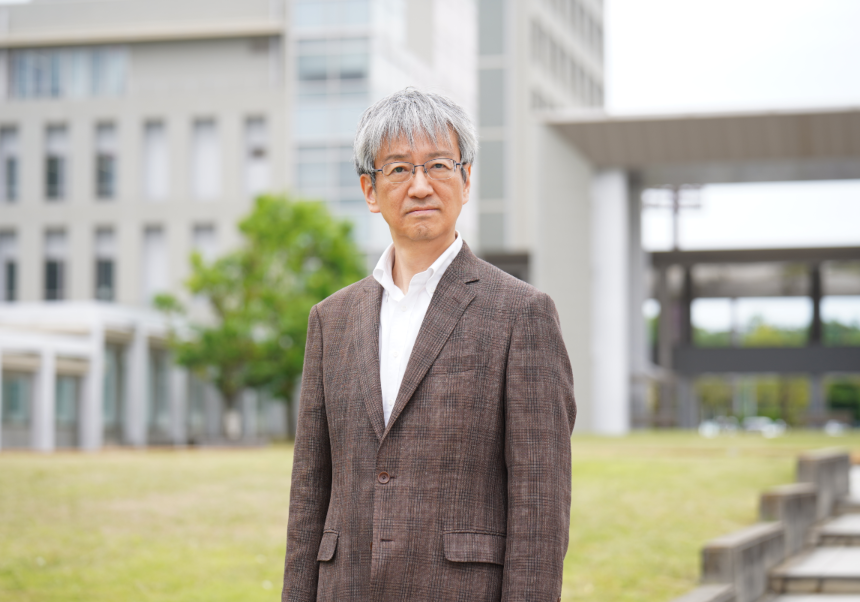
Impartido por: Yoshiyuki KIKUCHI (Aichi Prefectural University, Nagakuate, Japan)
El próximo 24 de septiembre tendrá lugar de forma online el primer seminario organizado por el IILP-UV en el curso 2026-2027. El seminario será impartido por Yoshiyuki KIKUCHI (Aichi Prefectural University, Nagakuate, historiador de la química contemporánea cuyas líneas de investigación se centran en el diseño de laboratorios y en los intercambios internacionales en el ámbito de la ciencia. Doctorado por la Open University (Reino Unido) en 2006, actualmente preside la Comisión de Historia de la Química y las Ciencias Moleculares de la IUHPST/DHST y es presidente de la Sociedad Japonesa de Historia de la Química. Este seminario cuenta con el apoyo del proyecto de investigación Zonas de intercambio en la regulación de la tecnociencia (PID-2023-150413NB-C22).
Jueves 24 de septiembre 2026, 10:00 (CEST), sesión online
Zoom: https://uv-es.zoom.us/j/69082432755
Seminario:The Lab as Contact Zone Revisited: What We Can Learn from Anglo-Japanese Relations in Chemistry
Impartido por: Yoshiyuki KIKUCHI (Aichi Prefectural University, Nagakuate, Japan)
Abstract:
In my monograph, Anglo-American Connections in Japanese Chemistry: The Lab as Contact Zone (2013), I tried to shed new light on how the shapes and structures of spaces such as laboratories and classrooms affect scientific pedagogy and practice by applying the concept of the contact zone, coined by Mary Louise Pratt in her seminar work, Imperial Eyes: Travel Writing and Transculturation (1992). By doing so I characterized teaching spaces as “sites of human encounter,” connecting people from different cultural backgrounds, and focused on “the resulting intricate social interactions that in turn affect the shape of scientific practice” (p. 1). In this seminar I outline the basic arguments of this monograph and discuss the possibility of expanding the relevance of the “contact zone” for the history of science and technology beyond scientific pedagogy.