

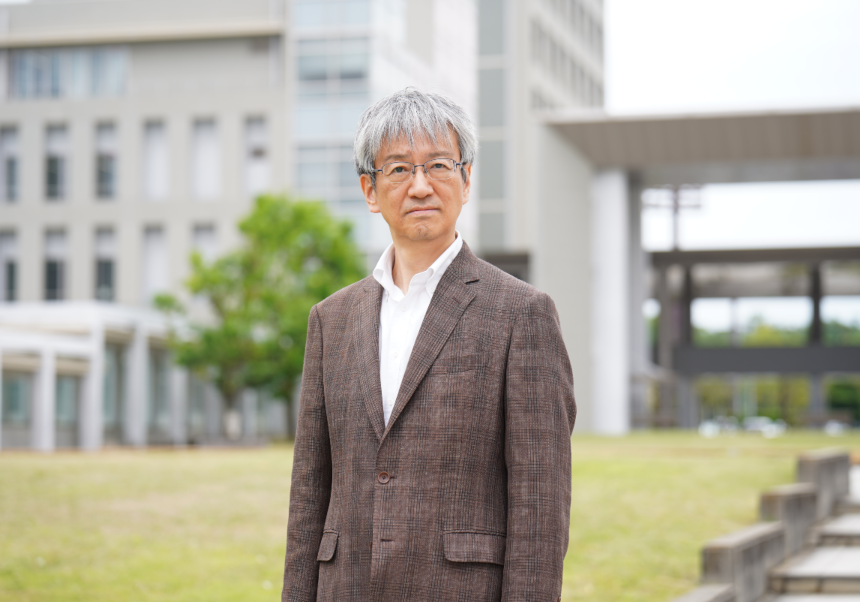
Impartit per: Yoshiyuki KIKUCHI (Aichi Prefectural University, Nagakuate, Japan)
El pròxim 24 de setembre tindrà lloc, en format en línia, el primer seminari organitzat per l’IILP-UV durant el curs 2026-2027. El seminari serà impartit per Yoshiyuki KIKUCHI (Aichi Prefectural University, Nagakute), historiador de la química contemporània les línies d’investigació del qual se centren en el disseny de laboratoris i en els intercanvis internacionals en l’àmbit de la ciència. Doctor per la Open University (Regne Unit) l’any 2006, actualment presideix la Comissió d’Història de la Química i les Ciències Moleculars de la IUHPST/DHST i és president de la Societat Japonesa d’Història de la Química. Aquest seminari compta amb el suport del projecte d’investigació Zonas de intercambio en la regulación de la tecnociencia (PID-2023-150413NB-C22)
Dijous 24 de setembre 2026, 10:00 (CEST), sessió online
Zoom: https://uv-es.zoom.us/j/69082432755
Seminari:The Lab as Contact Zone Revisited: What We Can Learn from Anglo-Japanese Relations in Chemistry
Impartit per: Yoshiyuki KIKUCHI (Aichi Prefectural University, Nagakuate, Japan)
Abstract:
In my monograph, Anglo-American Connections in Japanese Chemistry: The Lab as Contact Zone (2013), I tried to shed new light on how the shapes and structures of spaces such as laboratories and classrooms affect scientific pedagogy and practice by applying the concept of the contact zone, coined by Mary Louise Pratt in her seminar work, Imperial Eyes: Travel Writing and Transculturation (1992). By doing so I characterized teaching spaces as “sites of human encounter,” connecting people from different cultural backgrounds, and focused on “the resulting intricate social interactions that in turn affect the shape of scientific practice” (p. 1). In this seminar I outline the basic arguments of this monograph and discuss the possibility of expanding the relevance of the “contact zone” for the history of science and technology beyond scientific pedagogy.



