A research team from the Faculty of Biological Sciences has shown that female mice modelling Rett syndrome, a rare and very severe neurodevelopmental disorder that causes multiple symptoms, display significant alterations in pain-related behavioural responses. In an article published in the Journal of Molecular Medicine, the authors conclude that, as these disease model mice age, they lose the ability to express pain sensitivity in a typical manner.
The syndrome is caused by a mutation in the MECP2 gene, located on the X chromosome, and occurs almost exclusively in girls and women. Affected individuals experience intellectual and motor disabilities and are fully dependent. There is currently no cure.
In a longitudinal study – that is, conducted over their lifetime –, the team found that young rats carrying Mecp2 mutations showed excessive sensitivity to stimulation of their paws with filaments, to the extent that innocuous stimuli could be perceived as painful. With progressive ageing and the consequent onset of symptoms, the response shifted towards an apparent lack of sensitivity. “Previous studies considered that people with Rett syndrome were less sensitive to pain than healthy individuals. Our data, however, suggest that there may be hypersensitivity, but an inability to express it in a typical way”, explains Carmen Agustín Pavón, researcher in the Department of Cell Biology, Functional Biology and Physical Anthropology and co-director of the study. “Conversations with parents and carers of Rett patients, who lose the ability to speak, have confirmed that pain expression in these patients is atypical and very difficult to interpret”.
In addition, activation of a brain region associated with analgesia – the periaqueductal grey – during exposure to a hot surface was reduced in mutant rats compared to healthy rats. Expression of endocannabinoid receptors was also decreased.
“Our results support the importance of the endocannabinoid system, which forms part of the brain’s analgesic system, as a therapeutic target for Rett syndrome”, explains Jose V. Torres Pérez, Ramón y Cajal researcher in the Department of Cell Biology, Functional Biology and Physical Anthropology and co-director of the study. “In fact, this system is already being explored in relation to other symptoms of the disorder, such as epileptic seizures”.
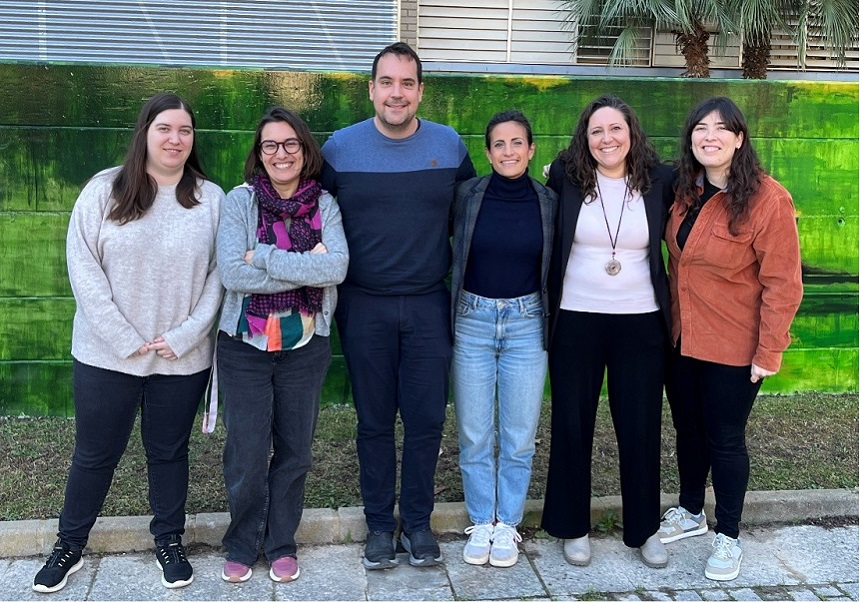
From the same department, Elena Martínez Rodríguez (first co-author), María Abellán Álvaro and Marina Rodríguez Agut also took part in the study. The other first co-author is Javier Cuitavi, who completed his PhD at the University of Valencia and is currently a researcher at Trinity College Dublin. Other University of Valencia researchers involved include Lucía Hipólito, from the Department of Pharmacy and Pharmaceutical Technology and Parasitology, and Anabel Forte, from the Department of Statistics and Operational Research. The team also collaborated with Moisés García Arencibia, from the Regional Ministry of Education, Vocational Training, Physical Activity and Sports of the Government of the Canary Islands, and Mónica Santos, from the Centre for Neuroscience and Cell Biology at the University of Coimbra (Portugal).
The study received funding from the 2019 and 2022 FinRett Grants, promoted by the Spanish and Catalan Rett Syndrome associations, the Regional Ministry of Education, Culture and Universities of the Valencian Government for emerging research groups (CIGE/2024/73), and the 2023 Pickford Award from the British Pharmacological Society.
Reference: Cuitavi, J., Martínez-Rodríguez, E., Abellán-Álvaro, M. et al. Longitudinal analysis in Mecp2-het female mice reveals atypical nociceptive behaviours. J Mol Med 104, 28 (2026). https://doi.org/10.1007/s00109-025-02628-8
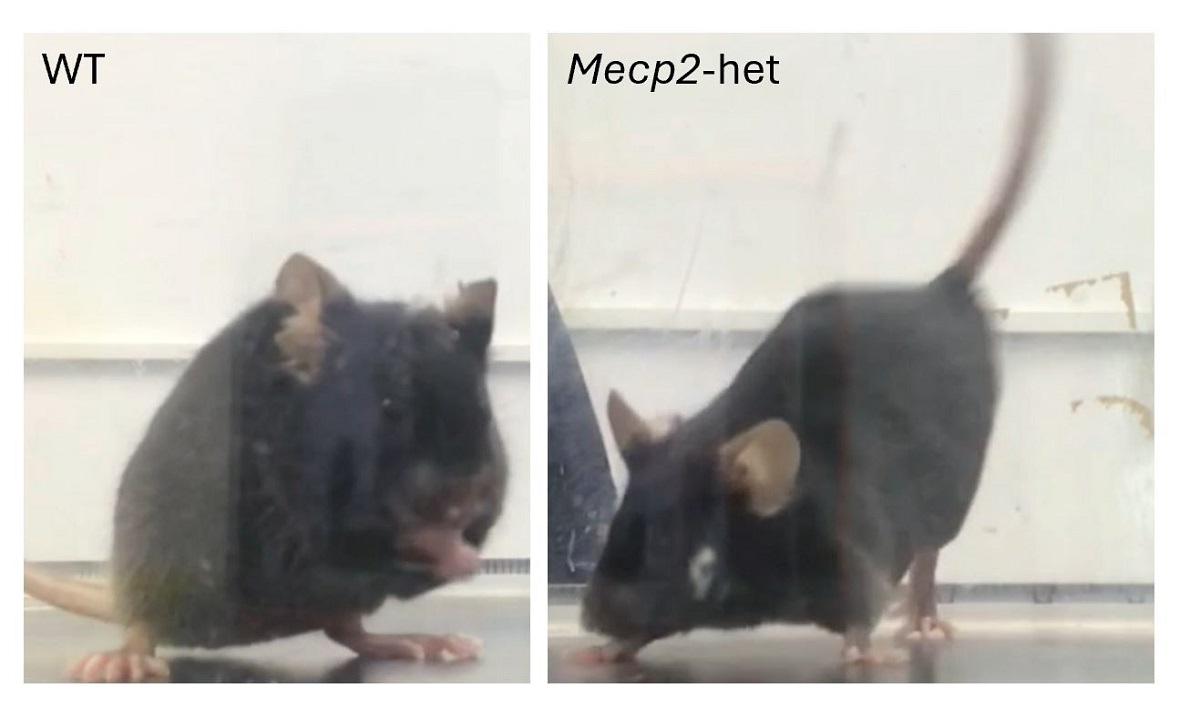
Image: When placed in contact with a hot surface (52°C), healthy rats (WT) lick their paws, while sick rats (Mecp2-het) are unable to lick their paws and walk backwards.
Images: