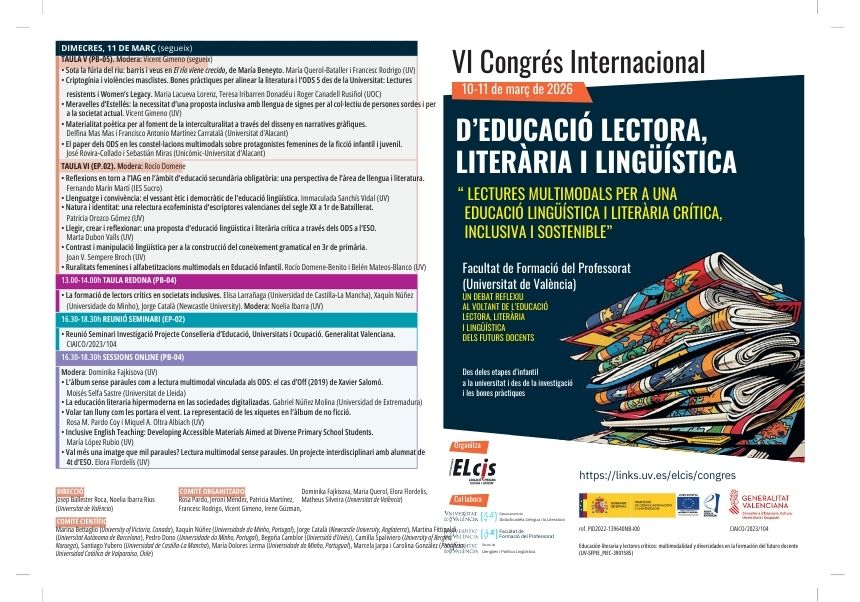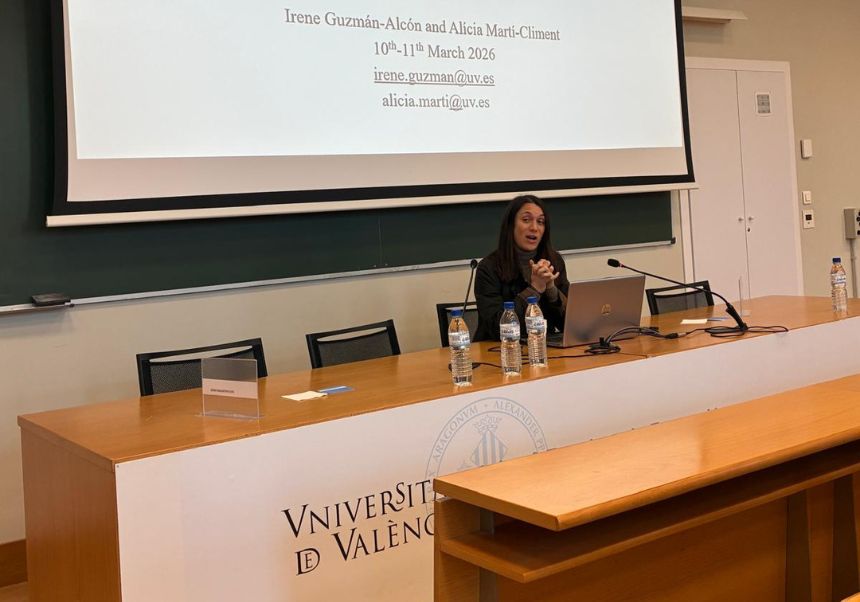
Members of the VIDECOM research project has participated in the 6h International Congress on Reading, Literary, and Linguistic Education.
The conference was held under the slogan ¨Multimodal readings for critical, inclusive, and sustainable language and literary education¨ at the Faculty of Teacher Education at the Universitat de Valéncia. The team´s participation has made it possible to present preliminary results at the lines of action that the project is promoting in the initial training of the future professionals.
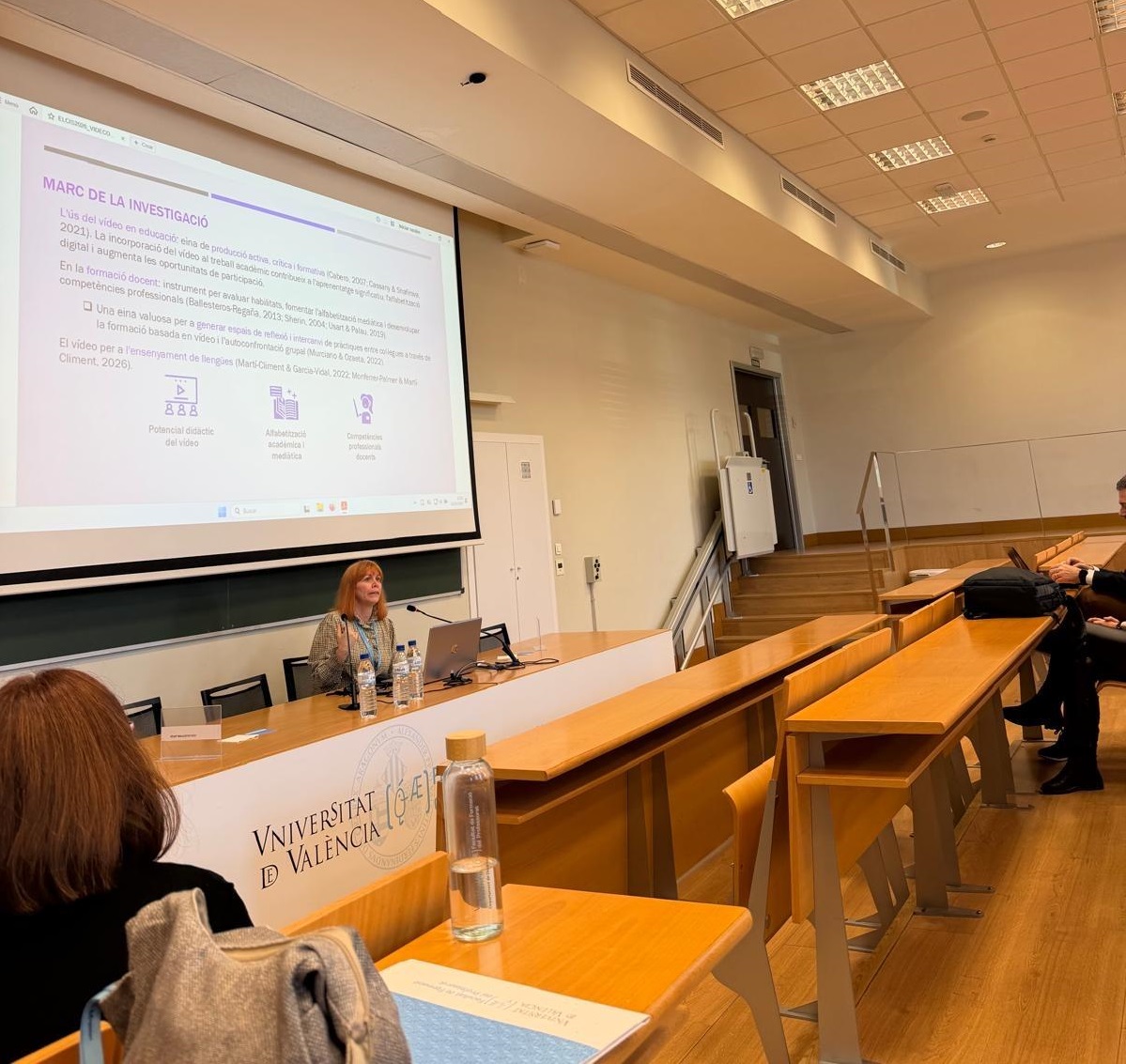
Martí-Climent, Reig, Guzmán-Alcón y Cruselles presented VIDECOM: video, multilingualism, and professional teaching competence in initial teacher training (VIDECOM: vídeo, plurilingüismo y competencia profesional docente en la formación inicial del profesorado). The presentation outlined the basis of the project and highlighted the role of the video as a tool in promoting critical thinking, language awareness, and analysis of educational practice in multilingual contexts.
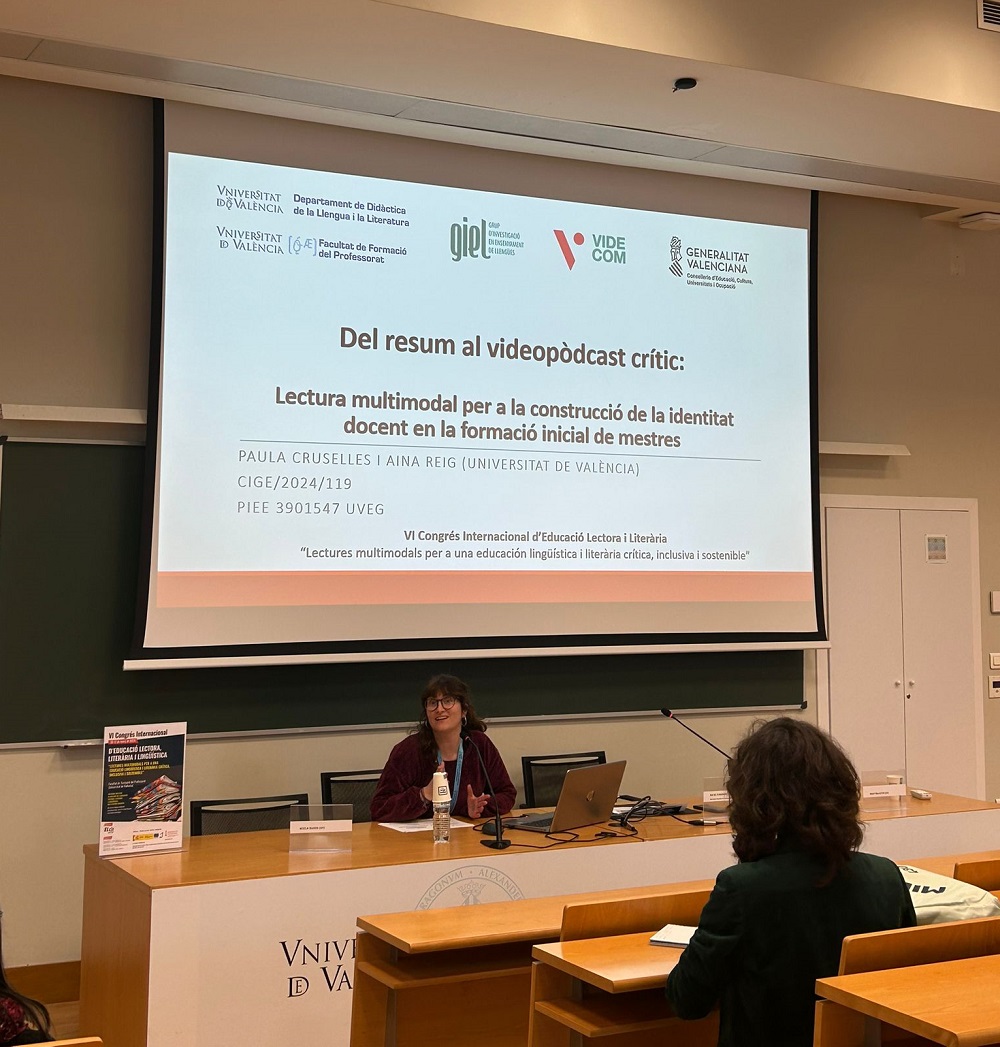
In another statement, Cruselles and Reig presented From summary to critical video podcast: multimodal reading for the construction of teaching identity in initial teacher training (Del resumen al videopódcast crítico: lectura multimodal para la construcción de la identidad docente en la formación inicial de Maestros). An innovative approach that shows the potential of video podcast as a training resourse to develop communicative competence and professional training identity.
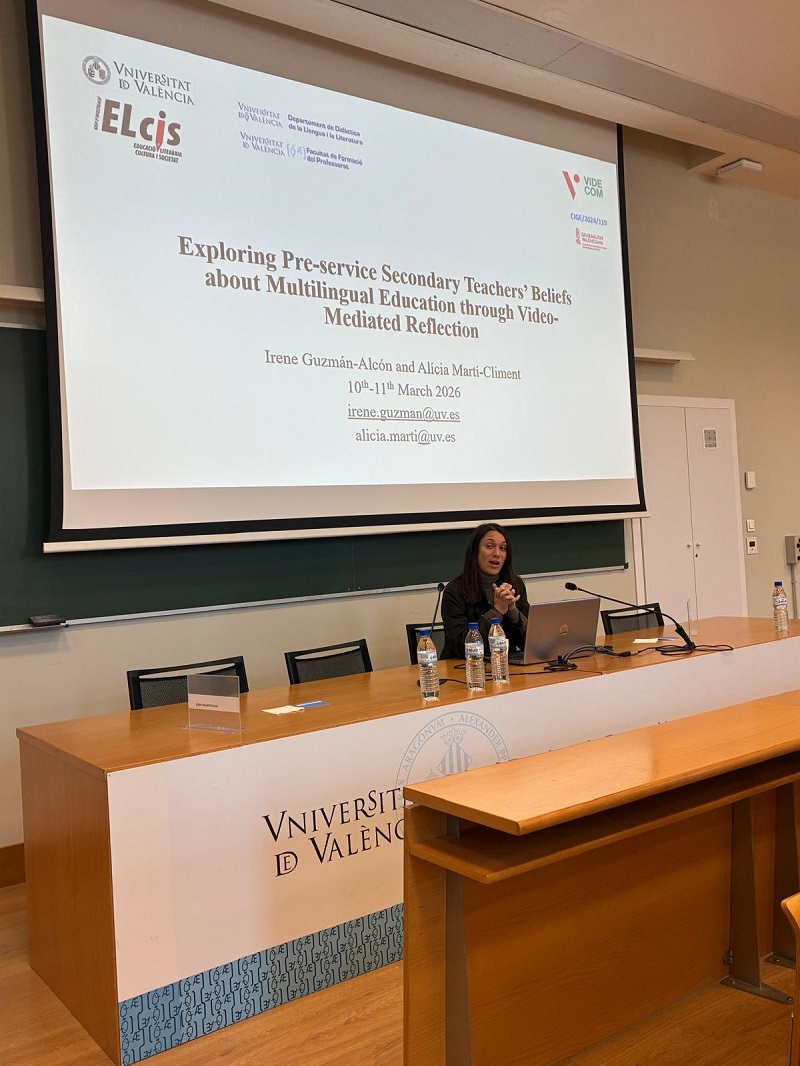
Guzmán-Alcón and Martí-Climent held the last presentation, Exploring Pre-service Secondary Teachers' Beliefs about Multilingual Education through Video-Mediated Reflection. The study examines the beliefs of future secondary school teachers about multilingual education through reflection processes guided by audiovisual recordings.
The participation in this international congress consolidates VIDECOM´s presence in the field of language teaching research. The project continues improving in the implementation of multimodal practices that responds to current educational challenges and reinforce critical, inclusive teacher training aligned with the multilingual reality of classrooms.