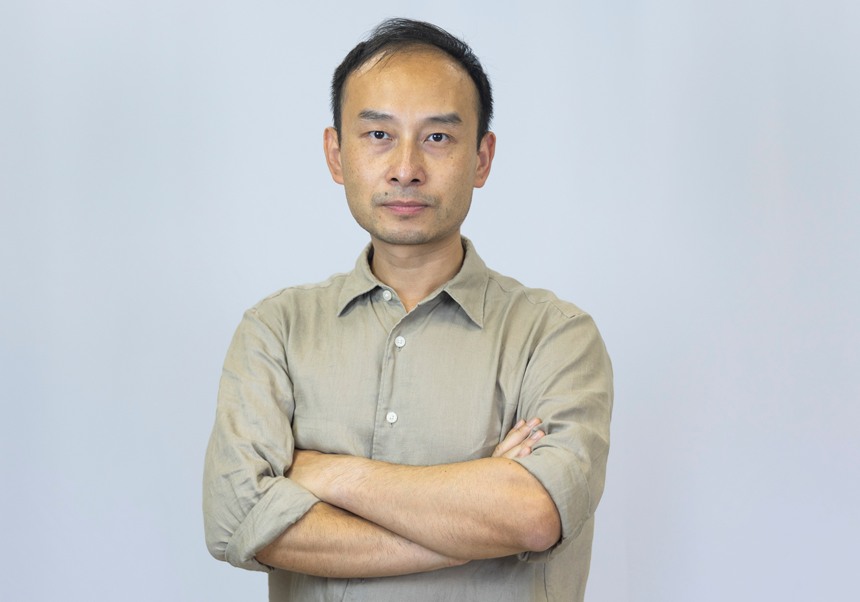
The Econcult researcher contributes to two new scientific articles addressing sustainability and cultural heritage, on the one hand, and artificial intelligence, multilingualism and inclusive governance, on the other
Two new publications by Chuan Li explore the role of AI and immersive technologies in social and cultural transitions
The Econcult researcher contributes to two new scientific articles addressing sustainability and cultural heritage, on the one hand, and artificial intelligence, multilingualism and inclusive governance, on the other.
Chuan Li, researcher at the Research Unit for Cultural Economics and Tourism (Econcult) at the University of Valencia, has contributed to two new scientific articles examining, from complementary perspectives, the role of digital technologies in the transformation of cultural heritage, social innovation and inclusive governance.
Both studies, co-authored with Mónica Edwards-Schachter from the International University of Valencia (VIU), address key issues within Econcult’s research lines related to digital transformation, sustainability, artificial intelligence and social innovation processes.
Immersive technologies, cultural heritage and sustainability
Immersive technologies and the sustainability transition: A critical review of their integration in cultural heritage and museums
The first article, published in the Journal of Engineering and Technology Management, analyses twenty-five years of research on the integration of immersive technologies into cultural heritage and museums.
The study shows that, although digital transformation has become a central focus in this field, the environmental and social dimensions of sustainability continue to receive comparatively less attention. At the same time, the research identifies a shift from traditional museum conservation models towards hybrid innovation platforms, with the increasing integration of technologies such as virtual reality, augmented reality, artificial intelligence, digital twins and the metaverse.
Based on a bibliometric and qualitative analysis of 479 publications and 19 meta-reviews, the authors identify eight research clusters and highlight opportunities related to AI-powered smart heritage management, virtual tourism, inclusive digital storytelling and participatory urban planning.
This publication represents the first scientific output of the IMMERCULT project – Advanced application of UTAUT models in the cultural and creative sectors, and contributes to a deeper understanding of the relationship between digital, ecological and social transitions in the cultural sectors.
Artificial intelligence, multilingualism and inclusive governance
AI multilingual tools for social innovation: new perspectives on civic technologies, digital empowerment and inclusive governance
The second publication, published in Frontiers in Political Science, examines the potential of AI-enabled multilingual tools to foster social innovation, citizen participation and more inclusive forms of governance.
The analysis of a systematic sample of 158 civic technology platforms reveals that approaches focused on technological efficiency, performance and scalability remain predominant, while citizen empowerment, linguistic diversity, deliberation and co-creation continue to receive less attention.
The data show that 80.3% of the platforms facilitate problem identification and 73.4% support the search for solutions, while only 32.9% explicitly incorporate processes of knowledge co-production or co-creation.
The article highlights that AI-enabled multilingual tools can help reduce language barriers affecting minority and vulnerable groups. However, it also stresses that their transformative potential depends on the alignment between technological design, governance mechanisms and the capacity to enable genuinely inclusive participation.
This research is part of the European project IDEAL – Inclusive Democratic Engagement and Language Technologies in Europe, funded by the European Union’s Horizon Europe research and innovation programme (Grant Agreement No. 101178191). Together, the two publications strengthen Econcult’s research on the effects of the triple transition —digital, green and social— on the cultural and creative sectors.