

Theatre. By AMORODIO Teatro
Brazaletes (Armbands)
AMORODIO Teatro
Carmen Facorro and Javier Castiñeira. Directed by Santiago Cortegoso. Dramaturgy by Ernesto Is.
September 28, 1975. Campos de Sport de El Sardinero. Match day Sunday.
Racing de Santander hosts Elche CF in the fourth round of the First Division championship. The referee blows the whistle and the match begins. On the pitch, the game unfolds completely normally, but a murmur rises from the stands every time local players Aitor Agirre and Sergio Manzanera touch the ball. On the green-and-white sleeves of their shirts, the Racing centre-forward and winger wear two black cords as makeshift armbands. They were the only two people, among the thousands present that afternoon in the Santander stadium, who dared, through that small gesture, to challenge a dying dictatorship and protest against the final executions carried out by the Franco regime.
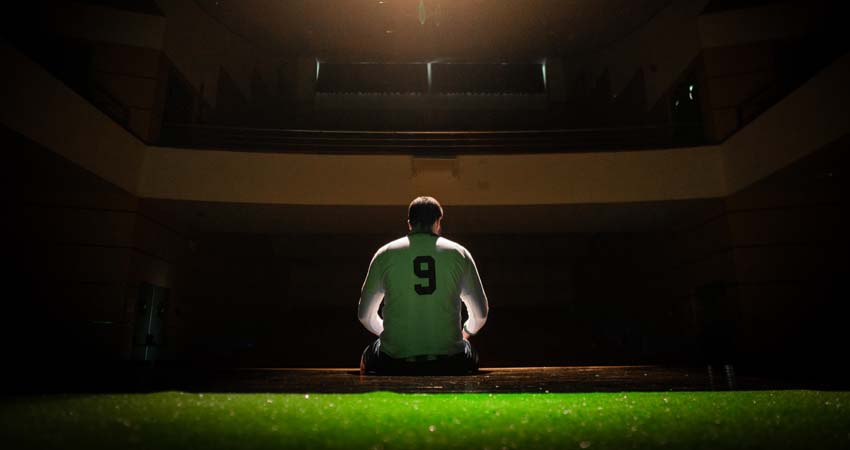
Armbands, the new production by AMORODIO Teatro, takes the symbolic action of Agirre and Manzanera as the backbone for a performance about politically committed footballers during “the longest night” in human history, as sung by Luis Eduardo Aute.
Galician players such as Bebel García, the Deportivo captain executed at the beginning of the Spanish Civil War, and international figures such as Sócrates, the star of Sport Club Corinthians Paulista and the Brazilian national team during Brazil’s military dictatorship, appear on stage in this one-man show by Javier Castiñeira, which seeks to question the sexist, corrupt, and violently capitalist policies of the so-called “beautiful game.”
Because, as Eduardo Galeano wrote, “fortunately, there still appears on the football fields, even if only once in a long while, some shameless street kid who breaks free from the script and commits the madness of dribbling past the entire opposing team — and the referee, and the crowd in the stands — for the pure joy of a body embarking on the forbidden adventure of freedom.”



