

Resultados de la búsqueda67 resultados
-
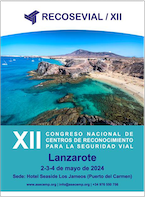
RECOSEVIAL/XII
Francisco Alonso
(2024). Participació en congressosEl Dr. Francisco Alonso, Director del INTRAS, ha participado en el Congreso Nacional de Centros de Reconocimiento de Conductores para la Seguridad Vial, RECOSEVIAL/XII, que se ha celebrado en Lanzarote del 2 al 4 de mayo de 2024. Tras el acto inaugural, el Dr. Alonso ha presentado la ponencia "El futuro de la investigación y la práctica sobre Seguridad Vial", en la que ha relacionado toda una serie de problemáticas incipientes incluyendo las epidemiológicas, además de dibujar el mapa de otras futuras, explicando determinados desarrollos metodológicos y tecnológicos. Así mismo, Alonso ha expuesto las implicaciones prácticas que pudiera comportar todo ello, centrándose en lo que se refiere...
El Dr. Francisco Alonso, Director del INTRAS, ha participado en el Congreso Nacional de Centros de Reconocimiento de Conductores para la Seguridad Vial, RECOSEVIAL/XII, que se ha celebrado en Lanzarote del 2 al 4 de mayo de 2024. Tras el acto inaugural, el Dr. Alonso ha presentado la ponencia "El futuro de la investigación y la práctica sobre Seguridad Vial", en la que ha relacionado toda una serie de problemáticas incipientes incluyendo las epidemiológicas, además de dibujar el mapa de otras futuras, explicando determinados desarrollos metodológicos y tecnológicos. Así mismo, Alonso ha expuesto las implicaciones prácticas que pudiera comportar todo ello, centrándose en lo que se refiere al “factor humano” como mayor factor explicativo de los accidentes de tráfico, intentando generar cierta estrategia de afrontamiento.
Leer más Ocultar -
How to resolve the contradiction between driving safety and lighting energy conservation in a highway tunnel? − An experiment on linear guiding system
Yongzheng Yang, Francisco Alonso, Zhigang Du, Sergio Useche
(2024). ArticleTransportation Research Part F: Traffic Psychology and Behaviour. Num.103:319-339
High rates of traffic accidents and lighting energy consumption are significant problems in highway tunnels. To address these problems, this study proposes a linear guiding system that uses line-shaped visual guiding facilities to improve the local luminance and contrast, and outlines the tunnel contour and road alignment. In addition, the principle, function, setting method, and composition of the linear guiding system are discussed. Using the existing highway tunnels as prototypes, we built simulation scenarios with different luminance and conducted driving simulation experiments and questionnaire surveys. We analysed the human factor demands of tunnel driving, studied the change rule of...
High rates of traffic accidents and lighting energy consumption are significant problems in highway tunnels. To address these problems, this study proposes a linear guiding system that uses line-shaped visual guiding facilities to improve the local luminance and contrast, and outlines the tunnel contour and road alignment. In addition, the principle, function, setting method, and composition of the linear guiding system are discussed. Using the existing highway tunnels as prototypes, we built simulation scenarios with different luminance and conducted driving simulation experiments and questionnaire surveys. We analysed the human factor demands of tunnel driving, studied the change rule of various human factor indicators under different luminance levels, and comprehensively evaluated the impact of linear guiding system on driving safety from multiple perspectives of the driver’s vision, psychology, and behaviour. We introduce the concept of equivalent luminance, quantify the impact of linear guiding system on the driver, and explore the role of linear guiding system in energy conservation. The results showed that the linear guiding system has a positive effect on driver vision, psychology, and behaviour, particularly in low-luminance environments. A linear guiding system can optimise a driver’s visual reference frame, enhance driver visual perception in a tunnel environment, and alleviate driver tension. It helps drivers to accurately perceive their own spatial position and speed, providing a good sense of position, speed, and comfort. A 2.3 cd/m2 luminance highway tunnel with a linear guiding system is equivalent to a 4 cd/m2 luminance traditional tunnel. For highway tunnels with luminance values of 4, 5, 6, and 7 cd/m2, the equivalent luminance values of the linear guiding system are 1.7, 1.8, 1.8, and 2.1 cd/m2 respectively, which can reduce the energy consumption by 30–42 %
Leer más Ocultar DOI: 10.1016/j.trf.2024.04.018ISSN: 1369-8478 -
Sustainable behavior begins with sustainable attitudes: Data to assess the relationships between demographics, concerns about transport-related pollution, and willingness for action
Francisco Alonso, Cristina Esteban, Mireia Faus, Sergio Useche
(2024). ArticleData in Brief. Num.54:110446
This Data in Brief (DiB) article addresses the relationships among individuals’ transport habits, perceptions, and attitudes regarding transport-related pollution, as well as their willingness to act for environmental change. There are presented descriptive statistics, basic comparisons, and bivariate correlations among the core variables of the study. Additionally, the attached dataset appends information from a nationwide sample of 1,250 citizens in the Dominican Republic, with sex, age and habitat distribution proportional to the national census. The research database contains the full set of questions and responses to the research questionnaire, which is also attached to the...
This Data in Brief (DiB) article addresses the relationships among individuals’ transport habits, perceptions, and attitudes regarding transport-related pollution, as well as their willingness to act for environmental change. There are presented descriptive statistics, basic comparisons, and bivariate correlations among the core variables of the study. Additionally, the attached dataset appends information from a nationwide sample of 1,250 citizens in the Dominican Republic, with sex, age and habitat distribution proportional to the national census. The research database contains the full set of questions and responses to the research questionnaire, which is also attached to the supplementary files along with its codebook, making it possible to conduct further data explorations for research-related, divulgation, and educational purposes. For more information about the root study, it is advisable to read the paper “Who wants to change their transport habits to help reduce air pollution? A nationwide study in the Caribbean”, published in Journal of Transport & Health [1].
Leer más Ocultar DOI: 10.1016/j.dib.2024.110446ISSN: 2352-3409 -
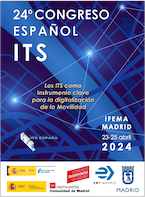
24º Congreso Español ITS
Francisco Alonso
(2024). Participació en congressosEl Dr. Francisco Alonso, Director del INTRAS, ha participado en el 24º Congreso Español ITS, que se ha celebrado del 23 al 25 de abril de 2024. El Dr. Alonso ha presentado la ponencia titulada "Solución eficiente para la formación de los profesionales del sector ITS: Diplomado ITS", en la que ha expuesto las tipologías de formación, las necesidades, con el análisis de la oferta existente y consiguientes déficits, y la oferta y propuestas desde ITS España/ITS Iberoamérica. El lema del Congreso de este año “Los ITS como instrumento Clave para la Digitalización de la Movilidad” está en consonancia con la realidad de que continuamos con el pujante, incluso trepidante, momento que viven los...
El Dr. Francisco Alonso, Director del INTRAS, ha participado en el 24º Congreso Español ITS, que se ha celebrado del 23 al 25 de abril de 2024. El Dr. Alonso ha presentado la ponencia titulada "Solución eficiente para la formación de los profesionales del sector ITS: Diplomado ITS", en la que ha expuesto las tipologías de formación, las necesidades, con el análisis de la oferta existente y consiguientes déficits, y la oferta y propuestas desde ITS España/ITS Iberoamérica. El lema del Congreso de este año “Los ITS como instrumento Clave para la Digitalización de la Movilidad” está en consonancia con la realidad de que continuamos con el pujante, incluso trepidante, momento que viven los ITS, gracias al impulso de los fondos Next Generation de la UE, que al menos se mantendrá así hasta finales del año 2025. Ello se nota en los diferentes ámbitos de los ITS: el transporte público, la movilidad urbana, los datos y modelos para la movilidad, etc.
Leer más Ocultar -
The Role of News Media in Reducing Traffic Accidents
Antonio J. Lucas, Francisco Alonso, Mireia Faus, Arash Javadinejad
(2024). ArticleSocieties. Num.14(5):56
Traffic accidents represent a major problem worldwide. Public and private entities launch communication campaigns in order to educate the population about this problem. The aim of this study is to analyze the evolution of the presence of road safety in the Spanish media and its influence on the reduction of road accidents. A content analysis of six major Spanish newspapers between 2000 and 2008 (an important period in the reduction of the accident rate in Spain) was carried out in which the presence of news related to traffic accidents and the intensity of them were quantified using a set of criteria designed for this study. Furthermore, the correlation between the accident rates and the...
Traffic accidents represent a major problem worldwide. Public and private entities launch communication campaigns in order to educate the population about this problem. The aim of this study is to analyze the evolution of the presence of road safety in the Spanish media and its influence on the reduction of road accidents. A content analysis of six major Spanish newspapers between 2000 and 2008 (an important period in the reduction of the accident rate in Spain) was carried out in which the presence of news related to traffic accidents and the intensity of them were quantified using a set of criteria designed for this study. Furthermore, the correlation between the accident rates and the presence and intensity of news in the same time frame was measured. There has been an evident increase in the news related to traffic accidents during the analyzed period, both in terms of the presence of such news in general and in terms of intensity. The correlation analysis also shows a strong relationship between the increase in news presence and intensity and a sharp fall in accident rates in Spain. Although correlation analysis is not enough to establish a causal relationship between the variables studied here, the findings suggest that informative campaigns had a positive effect on encouraging pro-social behavior, were successful in disseminating related information, and, therefore, contributed significantly to lowering accident rates, although that was not the only reason.
Leer más Ocultar DOI: 10.3390/soc14050056ISSN: 2075-4698 -
Promoting (Safe) Young-User Cycling in Russian Cities: Relationships among Riders’ Features, Cycling Behaviors and Safety-Related Incidents
Sergio Useche, Francisco Alonso, Aleksey Boyko, Polina Buyvol, Irina Makarova, Gleb Parsi, Mireia Faus
(2024). ArticleSustainability. Num.16(8):3193
Background: Promoting cycling, walking and other ‘active’ transportation means continues to be a shared guideline in urban planning, closely aligned with the Sustainable Development Goals of the United Nations. Nonetheless, young cyclists’ safety figures and their potential contributors, including behavioral issues, remain an ongoing concern for researchers, practitioners, and policymakers. Aim: This study aimed to analyze both risky and protective riding patterns of young Russian cyclists in relation to cycling safety factors using the Cycling Behavior Questionnaire (CBQ). Methods: This study used the data provided by 374 young Russian cyclists, aged M = 21.6 (SD = 4.8) years, who...
Background: Promoting cycling, walking and other ‘active’ transportation means continues to be a shared guideline in urban planning, closely aligned with the Sustainable Development Goals of the United Nations. Nonetheless, young cyclists’ safety figures and their potential contributors, including behavioral issues, remain an ongoing concern for researchers, practitioners, and policymakers. Aim: This study aimed to analyze both risky and protective riding patterns of young Russian cyclists in relation to cycling safety factors using the Cycling Behavior Questionnaire (CBQ). Methods: This study used the data provided by 374 young Russian cyclists, aged M = 21.6 (SD = 4.8) years, who responded to an electronic survey on cycling behavior and safety outcomes. Results: Beyond demographic characteristics, the key road rule knowledge and risk perception of young cyclists were significantly associated with their self-reported cycling behaviors. Although both traffic violations and riding errors were negatively correlated with safety incidents, predictive analyses show that errors (though not violations) play a predictive role in young cyclists’ safety-related incidents. Conversely, positive cycling behaviors have been shown to be significant reducers of riding crash likelihood. Conclusion: The results of this study support the idea that addressing key issues such as risk perception, road rule knowledge and protective riding habits, while also targeting risky behaviors on the road, could enhance cycling safety outcomes. Additionally, these findings offer valuable insights into understanding the factors contributing to riding risks and crashes among young cyclists, particularly in the context of the increasing need to promote safer and more sustainable urban mobility in a country with a still young cycling culture.
Leer más Ocultar DOI: 10.3390/su16083193ISSN: 2071-1050 -
Using demographic, psychosocial, behavioural and safety-related factors to assess cyclists' behaviour: A comparative approach across 19 countries
Sergio Useche, Francisco Alonso, Aleksey Boyko, Polina Buyvol, Isaac Castañeda, Boris Cendales, Arturo Cervantes, Tomas Echiburu, Mireia Faus, Zuleide Feitosa, Cesareo Fernandez, Javier Gene-Morales, Bas de Geus, Jozef Gnap, Mohd K. Ibrahim, Kira H. Janstrup, Ignacio Lijarcio, Irina Makarova, Miroslava Mikusova, Mette Møller, Sylvain G. Ngueuteu-Fouaka, Steve O'Hern, Mauricio Orozco-Fontalvo, German Rojas, Ksenia Shubenkova, Felix Siebert, Jose Soto, Amanda Stephens, Yonggang Wang, Linus Zeuwts, Zahir H. Zulkipli, Rich McIlroy
(2024). ArticleData in Brief. Num.54:110278
This Data in Brief (DiB) article presents the differences in cycling behaviors related to violations, errors, and positive behaviors by region. The study data were collected by means of a structured questionnaire applied to a full sample of 7,001 participants from 19 countries, distributed over 5 continents. This paper proposes descriptive statistics, as well as common statistical tests. The aim is to enable authors to make their own analyses, not to provide precise interpretations. For further information about the macro project supporting the collection of these data, it is advised to refer to the paper titled “Cross-culturally approaching the cycling behavior questionnaire (CBQ):...
This Data in Brief (DiB) article presents the differences in cycling behaviors related to violations, errors, and positive behaviors by region. The study data were collected by means of a structured questionnaire applied to a full sample of 7,001 participants from 19 countries, distributed over 5 continents. This paper proposes descriptive statistics, as well as common statistical tests. The aim is to enable authors to make their own analyses, not to provide precise interpretations. For further information about the macro project supporting the collection of these data, it is advised to refer to the paper titled “Cross-culturally approaching the cycling behavior questionnaire (CBQ): Evidence from 19 countries”, published in Transportation Research Part F: Traffic Psychology and Behavior.
Leer más Ocultar DOI: 10.1016/j.dib.2024.110278ISSN: 2352-3409 -

Editorial: Data science methods for solving real-world problems in transportation, security and beyond
Mireia Faus, Francisco Alonso, Begoña Guirao, Mahdi Rezapour
(2024). ArticleFrontiers in Built Environment. Num.10:1388714
The contemporary world is rife with opportunities and challenges in the fields of security and transportation. Urbanization, globalization, digitalization, and population growth have all contributed to creating dynamic, complicated problems that need creative, practical solutions. Large and complex data sets generated in these domains can be analyzed, understood, and used with the help of solid tools provided by data science, which includes a wide range of techniques, including computer vision, machine learning, deep learning, statistics, natural language processing, etc. In fact, data science can potentially improve society’s safety and wellbeing as well as the effectiveness and...
The contemporary world is rife with opportunities and challenges in the fields of security and transportation. Urbanization, globalization, digitalization, and population growth have all contributed to creating dynamic, complicated problems that need creative, practical solutions. Large and complex data sets generated in these domains can be analyzed, understood, and used with the help of solid tools provided by data science, which includes a wide range of techniques, including computer vision, machine learning, deep learning, statistics, natural language processing, etc. In fact, data science can potentially improve society’s safety and wellbeing as well as the effectiveness and performance of security and transportation systems. In this sense, some reflections linked to the Research Topic are raised, such as how data science can contribute to improving transport management and what is the impact of road infrastructure, urban design and transport systems in developing more sustainable and safer mobility for citizens? Or can data science identify which variables influence users’ driving decisions and behaviours? Consequently, this Research Topic aims to respond to these issues and demonstrate the state-of-the-art research and advances in data science that can address real-world problems in transportation, security and beyond.
Leer más Ocultar DOI: 10.3389/fbuil.2024.1388714ISSN: 2297-3362 -
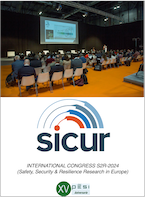
International Congress S2R-2024 (Safety, Security & Resilience Research in Europe)
Francisco Alonso
(2024). Participació en congressosEl Dr. Francisco Alonso, Director del INTRAS, ha participado en el International Congress S2R-2024 (Safety, Security & Resilience Research in Europe) SICUR 2024, celebrado en Madrid del 27 de febrero al 1 de marzo de 2024. El Dr. Alonso ha impartido su ponencia en la S11 "Mesa Digitalización en la Movilidad (segura) Empresarial y la Seguridad Vial Laboral (nuevo Marco)" donde se ha comentado el Marco de referencia para la Movilidad Segura y Seguridad Vial en el ámbito laboral que debemos actualizar pensando en la Movilidad 5.0 de la Empresa 5.0 SICUR es el gran referente internacional en España de la Seguridad que reúne a empresas, asociaciones, profesionales y usuarios de la seguridad...
El Dr. Francisco Alonso, Director del INTRAS, ha participado en el International Congress S2R-2024 (Safety, Security & Resilience Research in Europe) SICUR 2024, celebrado en Madrid del 27 de febrero al 1 de marzo de 2024. El Dr. Alonso ha impartido su ponencia en la S11 "Mesa Digitalización en la Movilidad (segura) Empresarial y la Seguridad Vial Laboral (nuevo Marco)" donde se ha comentado el Marco de referencia para la Movilidad Segura y Seguridad Vial en el ámbito laboral que debemos actualizar pensando en la Movilidad 5.0 de la Empresa 5.0 SICUR es el gran referente internacional en España de la Seguridad que reúne a empresas, asociaciones, profesionales y usuarios de la seguridad global en los ámbitos público y privado. La innovación y el desarrollo tecnológico son los grandes protagonistas de este encuentro profesional que aborda la seguridad integral desde cinco grandes áreas (Security, ciberseguridad, seguridad contra incendios y emergencias, seguridad laboral), con el objetivo de seguir favoreciendo el bienestar y el desarrollo social.
Leer más Ocultar -

Invasion of privacy or structural violence? Harassment against women in public transport environments: A systematic review
Sergio Useche, Natura Colomer, Francisco Alonso, Mireia Faus
(2024). ArticlePLoS ONE. Num.19(2):e0296830
Background Despite being neglected for several decades, and in many countries, public transport environments have transformed into a reflection of social disparities and inequalities. Among these issues, harassment–a pervasive and worldwide gendered dynamic–has been demonstrated to negatively impact women’s behavioral trends, daily opportunities, and health impacts, as well as safety and security outcomes. Aim This systematic review aimed to examine a set of studies analyzing harassment against women in public transport environments, with a focus on key issues such as its prevalence, impact on transport dynamics, preventive strategies, and policing avenues documented in the scientific...
Background Despite being neglected for several decades, and in many countries, public transport environments have transformed into a reflection of social disparities and inequalities. Among these issues, harassment–a pervasive and worldwide gendered dynamic–has been demonstrated to negatively impact women’s behavioral trends, daily opportunities, and health impacts, as well as safety and security outcomes. Aim This systematic review aimed to examine a set of studies analyzing harassment against women in public transport environments, with a focus on key issues such as its prevalence, impact on transport dynamics, preventive strategies, and policing avenues documented in the scientific literature. Method A total of 575 indexed articles were filtered using the PRISMA methodology, resulting in a final selection of 28 original articles directly addressing the issue up to December 2023. Search strategies were developed and implemented across WOS, Scopus, NCBI, Google Scholar, and APA databases. Results Besides high frequency, widespread underreporting, and adverse effects on women’s safety, this review has identified correlations between harassment and travel behavioral adaptations. Furthermore, it reveals a noticeable disparity between the existing measures and those perceived as more effective by potential victims. These findings underscore the pressing need to listen to and promote the inclusion of women in decision-making regarding transport affairs. Conclusion The findings of this systematic review suggest that, despite a slightly limited body of research, the impact of transport harassment on women’s health and welfare is consistently supported in the literature. In addition to being largely explained by existing inequalities rooted in social determinants, transit harassment further exacerbates gender gaps, gaining prospective importance for transport settings.
Leer más Ocultar DOI: 10.1371/journal.pone.0296830ISSN: 1932-6203



