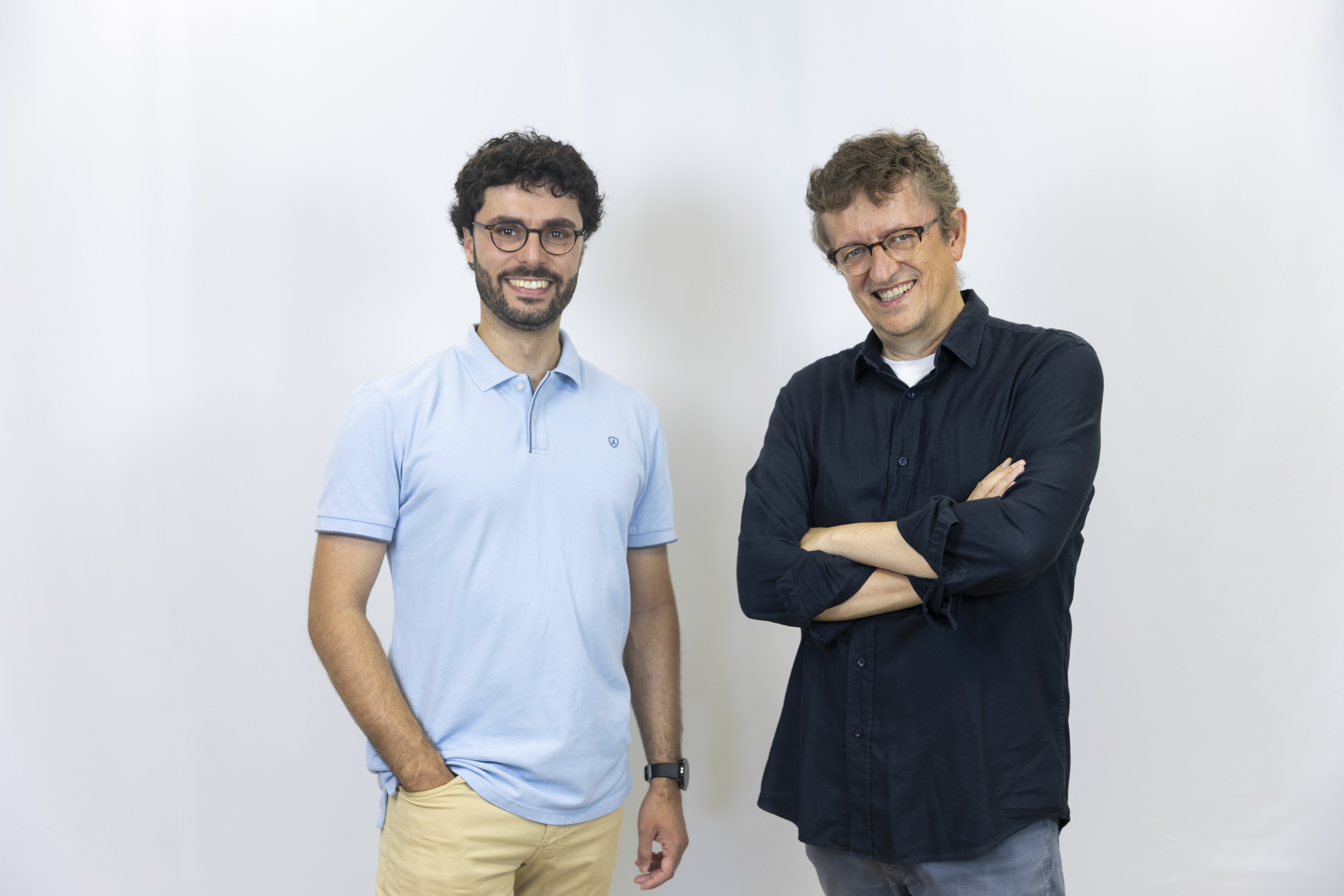
The paper, titled Evaluating culture-led growth strategies in Asian economies: A multi-regional input-output analysis, uses a global multi-regional input-output model (GMRIO) to show that one million dollars of final demand in the cultural and creative industries (CCI) generates 1.59 million dollars in value added and 80 jobs in Asia
The paper, titled Evaluating culture-led growth strategies in Asian economies: A multi-regional input-output analysis, uses a global multi-regional input-output model (GMRIO) to show that one million dollars of final demand in the cultural and creative industries (CCI) generates 1.59 million dollars in value added and 80 jobs in Asia
The Universitat de València's research unit on the Economics of Culture and Tourism (Econcult) takes part in a new study published in Humanities and Social Sciences Communications (2026) that evaluates the economic impact of the cultural and creative industries (CCI) in the Asian region using a global multi-regional input-output model (GMRIO). Culture-led growth strategies have been widely adopted across Asian economies to stimulate territorial growth through policies and initiatives aimed at fostering the CCI, and this study quantifies their effects.
According to the GMRIO model multipliers, a one-million-dollar increase in final demand for the CCI generates 1.59 million dollars in value added, 0.70 million dollars in income and 80 jobs in Asia.
"Through the global multi-regional input-output model (GMRIO) with OECD data, we have shown that the cultural and creative industries generate a large-scale economic return. Globally, for every million dollars invested in the final demand for culture, 1.66 million dollars in value added, 0.77 million in wage income and 54 jobs are generated. In Asia, the figure reaches 1.59 million in value added and 80 jobs. These results confirm that culture must sit at the centre of regional and industrial development agendas"
— Fernando Álvarez-Teresa, first author of the studyHowever, the effects vary by region and depend on development trajectories: East Asia shows high value-added and income multipliers but more moderate employment effects, while South and Southeast Asia show the opposite trend.
"Our research shows that culture-led growth strategies do not work the same way everywhere. There is a structural trade-off: while the more developed economies of East Asia —such as Japan, South Korea or Taiwan— obtain a high impact in value added and income but lower job creation, the middle- and low-income economies of South and Southeast Asia absorb a massive amount of employment. Public policies must be tailored to the economic structure of each territory"
— Fernando Álvarez-TeresaThese findings highlight how the structural differences observed in the multiplier effects suggest possible trade-offs: more developed economies show higher value-added and income multipliers, while lower-income economies tend to register higher employment multipliers. These patterns can inform debates and strategic planning on how to make the most of the CCI according to regional characteristics.
- 1East Asia — high value-added and income multipliers, but more moderate employment effects.
- 2South and Southeast Asia — opposite trend: higher employment multiplier.
- 3Mainland China — high multipliers in all dimensions (value added 1.77; income 0.88; 76 jobs per million dollars).
In the analysis, mainland China's economy outperforms the global average in all three dimensions: it reaches a value-added multiplier of 1.77, an income multiplier of 0.88 and generates 76 jobs per million dollars.
"In our analysis, mainland China's economy stands out exceptionally by exceeding the global average in all three dimensions. This is due to the combination of the large scale of its domestic market and structural characteristics that allow the CCI to fully harness their potential, boosting productivity and creating jobs in the creative sector"
— Fernando Álvarez-TeresaConventional economic theory holds that culture suffers from Baumol's "cost disease", i.e. that its costs grow without generating productivity gains. The study's data show the opposite: across much of Asia, the cultural industries display a pull effect on value added that exceeds that of other conventional service sectors and traditional industries.
"Conventional economic theory holds that culture suffers from Baumol's 'cost disease', i.e. that its costs grow without generating productivity gains. Our data show the opposite: across much of Asia, the cultural industries display a pull effect on value added that exceeds that of other conventional service sectors and traditional industries. Culture and creative talent drive the productive fabric"
— Fernando Álvarez-TeresaEconcult is the Universitat de València's research unit on the Economics of Culture and Tourism (GIUV2016-297), led by Pau Rausell Köster, co-author of the study. With more than two decades of track record, it is a national and international reference centre in the economic analysis of culture, taking part in European projects such as MESOC, CREATIVEMED, DESIGNSCAPES or CHEBEC, and collaborating intensively with cultural institutions and bodies at local, regional, national and international level.
Econcult · Universitat de València