

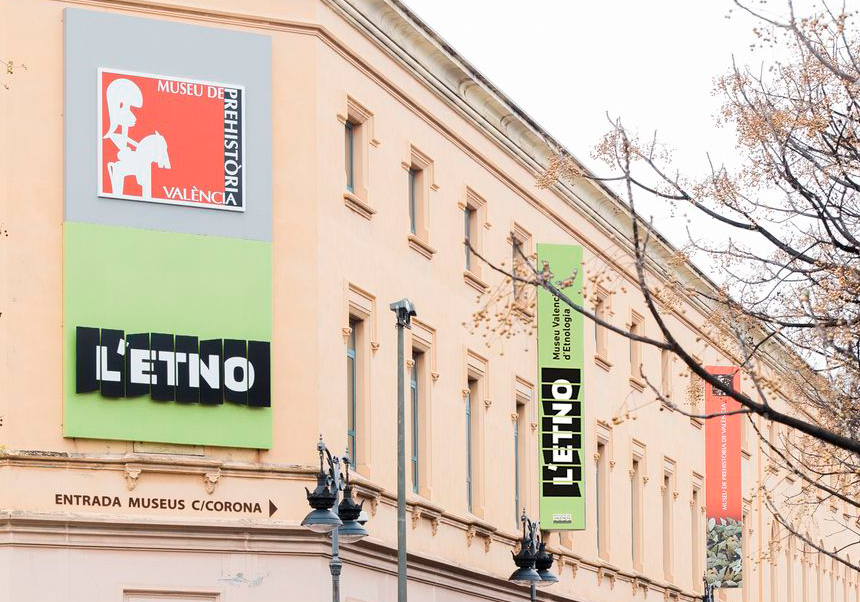
Econcult, together with L'ETNO, the Museu de la Rajoleria de Paiporta and the Museu Comarcal de l'Horta Sud, is promoting an audience analysis in collaboration with the University of Leeds
The University of Valencia will study barriers to museum access for people with disabilities and socioeconomic difficulties in Valencian museums
Econcult, together with L'ETNO, the Museu de la Rajoleria de Paiporta and the Museu Comarcal de l'Horta Sud, is promoting an audience analysis in collaboration with the University of Leeds
The Research Unit in Cultural Economics and Tourism at the University of Valencia (Econcult) is launching a research project to analyse museum attendance and barriers to access among people with disabilities and those experiencing socioeconomic difficulties. The twelve-month study involves three museum institutions —the Museu Valencià d'Etnologia (L'ETNO), the Museu de la Rajoleria de Paiporta and the Museu Comarcal de l'Horta Sud “Josep Ferris March” in Torrent— and includes international collaboration with the University of Leeds (United Kingdom) on the methodological design of the measurement instrument.
A necessary diagnosis for more inclusive museums
Museums are cultural institutions serving society, but cultural participation is not distributed evenly across the population. Physical, cognitive, communication and economic barriers, as well as barriers arising from social circumstances, limit regular access to these spaces for certain groups —particularly people with disabilities or those in situations of socioeconomic vulnerability. The project led by Econcult aims to determine the extent to which these groups are underrepresented among visitors to Valencian museums, compared with their actual share of the population in the metropolitan area of València and across the Valencian Land.
Five phases and fieldwork in three museums
The research is structured into five phases over twelve months. The first, which began this September and will run until mid-December 2026, consists of designing the questionnaire that will serve as the central instrument for data collection. It is being developed in collaboration with a team from the University of Leeds, which brings proven experience in audience and cultural participation studies. Once the instrument has been validated, the project will enter its fieldwork phase, with the questionnaire administered in person to visitors at the three participating museums until statistically representative samples are achieved (with a 95% confidence level and a 5% margin of error). The results will be systematised and compared with reference population statistics, and the final report —including its main findings, graphs and recommendations— will lead to a subsequent phase focused on designing policies and actions to reduce the barriers identified.
Team and collaborations
The project is led by Virgilio Pérez, a researcher at Econcult, and includes the participation of Pau Rausell Köster, director of the unit, Chuan Li as well as the collaboration of Culturalink, a consultancy specialising in research and strategic planning in the cultural and creative sectors, which will coordinate data collection during the fieldwork.
About Econcult
Econcult is the Research Unit in Cultural Economics and Tourism at the University of Valencia (GIUV2016-297), directed by Pau Rausell Köster. With more than two decades of experience, it is a leading centre at national and international level in the economic analysis of culture, participating in European projects such as MESOC, CREATIVEMED, DESIGNSCAPES and CHEBEC, and maintaining extensive collaboration with cultural institutions and organisations at local, regional, national and international levels.



